

Rains Arrive in Gujarat, But the Threat of an Active El Niño Remains

Summarized by AI; it may make mistakes. Check important info
Summarized by AI; it may make mistakes. Check important info
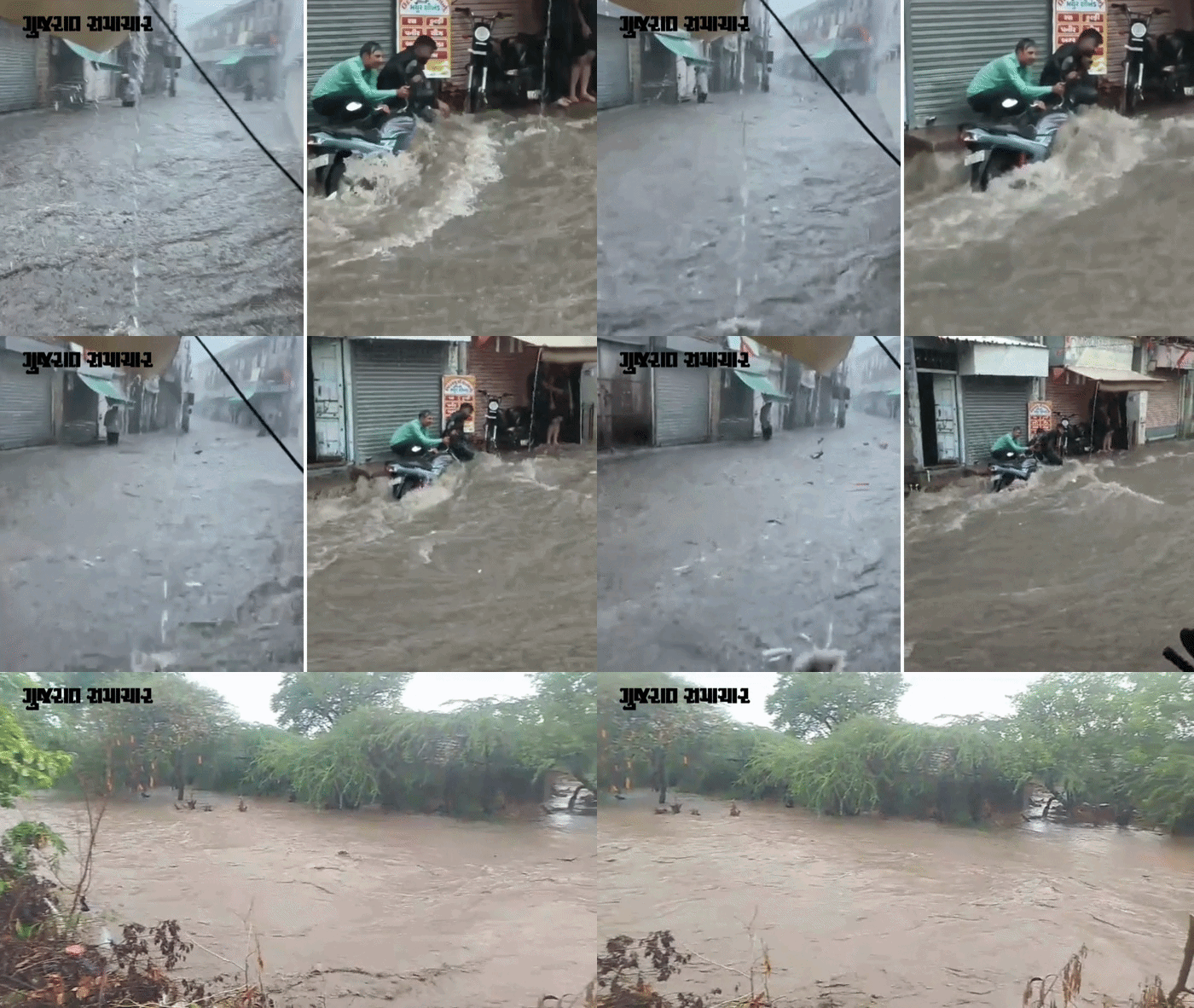
After a brutal, parched June, the skies have finally opened up over Gujarat. For farmers watching their fields crack and dry, this rain is nothing short of a lifeline. Sowing for kharif crops at last may gain.
But nobody in the fields should be calling this a turnaround. This isn't a passing rough patch or a shaky forecast. El Niño is active in the tropical Pacific right now, and the World Meteorological Organization says it remains the dominant force reshaping this year's monsoon. The global agency further adds that El Niño situation is no more a possibility but an active phenomenon.
The Reality of the Crisis
The warning signs have been hard to miss. Sea surface temperatures in the Niño 3.4 Degree C. region — the Pacific's key monitoring zone — have climbed steadily and sharply in recent weeks. That's not just a line on a graph. It's a physical mechanism, one that has been steering moisture away from the subcontinent for months.
That pattern is exactly what strangled the monsoon at its onset. India recorded its fifth-driest June in a century, with the national rainfall deficit touching nearly 40 percent. Gujarat fared worse still, with an 82 percent shortfall that brought early sowing to a near-standstill. The scale of that early damage is a reminder that this season's troubles didn't begin this week — they were baked in from the start.
The Missing Buffer
In a normal year, the Indian Ocean acts as a kind of insurance policy. When it swings into a "positive" Indian Ocean Dipole phase, it can push moisture back toward India and soften whatever damage El Niño is doing from the Pacific side. As per Indian Meteorology Department, IOD index in May was negative 0.39 Degrees. For any positive IOD phase, the index. should be positive 0.4 Degrees.
That insurance hasn't kicked in. The Dipole is sitting in a neutral state, offering no real counterweight to the dry conditions. Unless it tilts positive soon, India is left facing the Pacific's warming largely on its own, with no ocean-driven cushion to fall back on.
The Road Ahead
The recent showers are keeping crops alive, but the season is far from safe. Sowing for cotton, pulses, and oilseeds still trails well behind last year's numbers at this point in the calendar. Everything is balanced on a knife's edge.
The next 30 days are a red-alert waiting game. A late-season shift in the Indian Ocean could still save the harvest and fill our reservoirs, but the India Meteorological Department warns that the damage from a dry June is deep. We should be grateful for the rain today, but we must be realistic: this active El Niño threatens our food security, and the final outcome of this season is far from certain.


