

Why Moviegoers Are Crying Again: Compassion Is Making a Comeback to Cinemas

Summarized by AI; it may make mistakes. Check important info
Summarized by AI; it may make mistakes. Check important info

For years, conventional wisdom in cinema insisted that the theatrical experience had to be justified by scale. Bigger explosions. Bigger superheroes. Bigger visual effects. If audiences were going to leave the comfort of their homes, they needed something they couldn't recreate on a television screen.
Yet some of the most talked-about theatrical experiences today are proving the opposite.
Films such as Project Hail Mary, Main Vaapas Aaunga (MVA), The Voice of Hind Rajab, and Sheep Detectives are drawing audiences into cinemas not because they promise the loudest spectacle, but because they deliver something increasingly rare—genuine compassion.
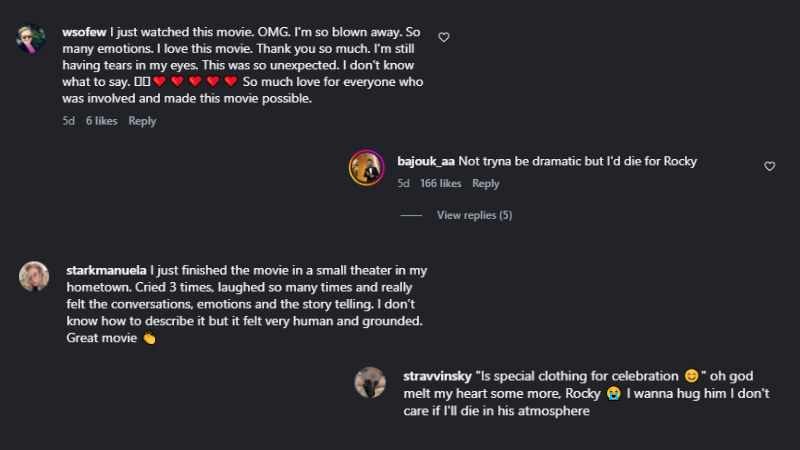
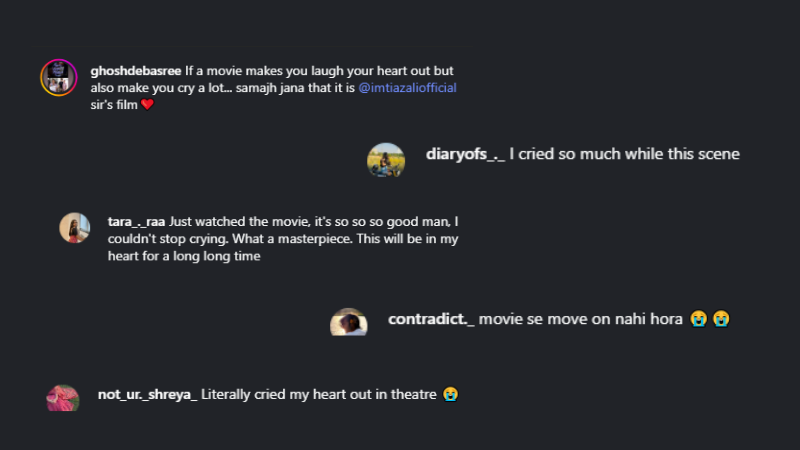
Once the Dhurandhar fever washed away, across social media, viewers were speaking less about action sequences and more about moments that left entire theatres silent before breaking into tears.
It appears that cinema's greatest special effect may once again be human emotion.
The Return of Empathy
For much of the past decade, blockbuster filmmaking has been dominated by spectacle. Emotional beats often existed to serve action rather than define it, the Marvel Cinematic Universe - and other similar stories - proved it.
The new wave of audience favourites is reversing that equation.
Instead of asking how much bigger a film can become, these stories ask how deeply they can make people feel.
The result is an experience uniquely suited to the cinema. Hundreds of strangers sitting together, sharing laughter, silence and grief, creates an emotional resonance that streaming rarely replicates.
Project Hail Mary: Hope Beyond Words
On paper, Project Hail Mary is science fiction.
In practice, audiences are describing it as a story about friendship, trust and compassion.
Its emotional centre isn't built around planetary destruction or interstellar warfare. Instead, it rests on the unlikely relationship between two intelligent beings who don't share a language, a culture or even biology. Communication is painstaking. Trust is earned. Friendship grows without grand speeches.
The film reminds viewers that empathy does not require shared words. It requires curiosity, patience and the willingness to understand someone completely different from ourselves.
Many moviegoers have admitted that these quiet moments—not the cosmic visuals—were what left them wiping away tears.
Main Vaapas Aaunga: Love Across Borders and Time
If Project Hail Mary explores compassion across species, Main Vaapas Aaunga examines compassion across generations.
The film intertwines refugee crises separated by decades, connecting historical displacement with the human cost of migration today. Rather than reducing refugees to headlines or political debates, it frames them through deeply personal stories of family, memory, love and loss.
Its emotional strength comes from refusing to treat history as something finished. The pain of displacement echoes across time, affecting new generations in familiar ways.
Audiences have responded to the film's emotional honesty, with many describing it as one of those rare movies that lingers long after the credits roll.
Sheep Detectives: Healing Through Laughter
Not every tear comes from tragedy.
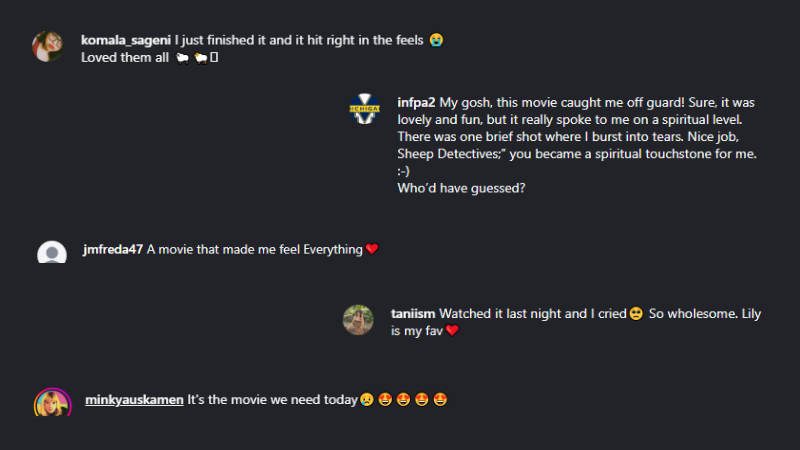
Sheep Detectives demonstrates that grief can coexist with warmth, absurdity and humour.
Built around an old-school detective mystery, the film embraces classic comedic storytelling while quietly exploring loss and the ways people process it. Instead of overwhelming viewers with melodrama, it allows comedy to become a path toward healing.
Its emotional payoff feels earned precisely because it spends so much time making audiences laugh.
The combination of gentle humour, memorable characters and heartfelt emotion has made it one of those films viewers recommend not simply because it's entertaining, but because it makes them feel better.
Why This Moment Matters
These films are arriving at a time when audiences have spent years navigating a world shaped by pandemics, wars, economic uncertainty and growing social division.
People aren’t necessarily looking to escape reality.
Increasingly, they seem to be looking for reassurance that kindness still exists within it.
Modern life has quietly become more connected and more isolated at the same time. Conversations that once happened around dining tables or neighbourhoods increasingly take place through messages, comments and short videos. We communicate constantly, yet many people admit to feeling lonelier than ever.
Nuclear families, demanding careers and the relentless pursuit of achievement—whether academic success, professional growth or social media validation—have left little room for the slow, emotionally sustaining relationships that once defined everyday life. Many people are surrounded by others, yet still experience a profound sense of emotional distance.
At the same time, daily news cycles are dominated by wars, humanitarian crises, and political conflict. Social media often rewards outrage over empathy, where strong opinions, cyberbullying and constant online confrontation have become part of everyday life. In such an environment, people instinctively become more guarded, more defensive and, often, more emotionally exhausted.
That may explain why compassion has become cinematic again.
Stories about cooperation instead of conquest, understanding instead of conflict and healing instead of vengeance are resonating because they offer something audiences are finding increasingly difficult to experience elsewhere: emotional safety.
Ironically, this emotional intimacy feels larger on the biggest screen possible.
The New Definition of a Blockbuster
The emotional reactions to these movies suggest audiences are rediscovering the shared experience of feeling.
A packed theatre laughing together, sitting in complete silence during a heartbreaking scene or collectively reaching for tissues is itself a form of spectacle—one measured not in box office budgets, but in emotional impact.
These experiences helped both Homebound and Main Vaapas Aaunga find larger audiences in their second week, as word of mouth spread through conversations about how the films made people feel rather than how much action they contained.
Perhaps that is the real shift taking place.
In an age where so much of life is filtered through screens, algorithms and carefully curated online identities, audiences are gravitating toward stories that remind them what genuine human connection feels like.
Perhaps the future of cinema isn't about making films bigger.
Perhaps it's about making audiences feel less alone.


