

Gujarat Posts lower jobless rate than national average in Jan-March qtr

Summarized by AI; it may make mistakes. Check important info
Summarized by AI; it may make mistakes. Check important info

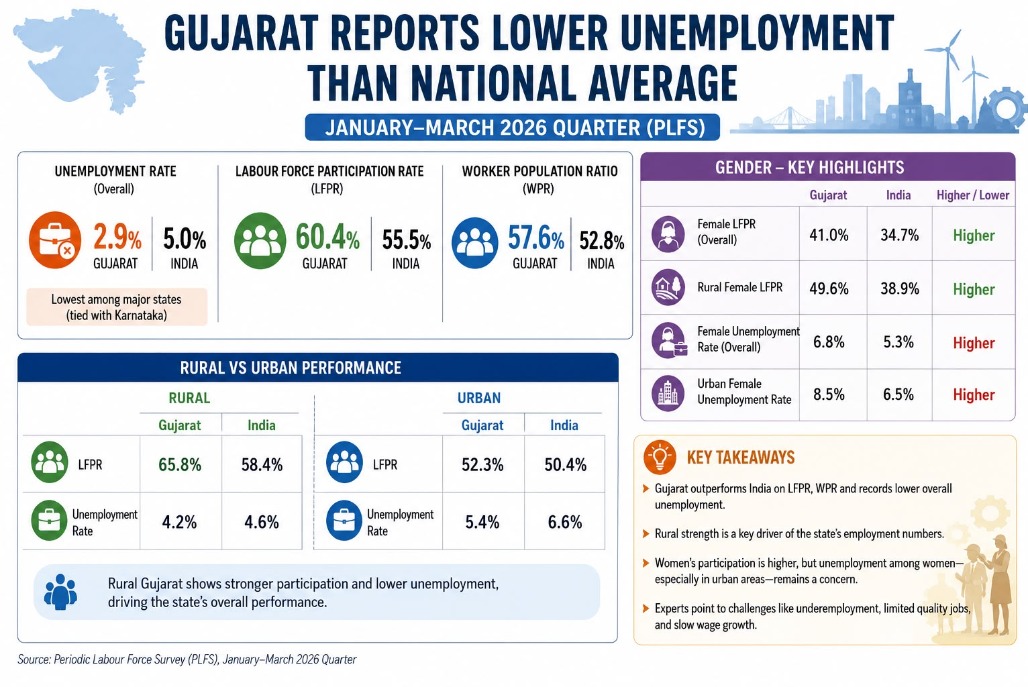
Gujarat outpaced the national average across major labour indicators in the January-March 2026 quarter, recording higher workforce participation and lower overall joblessness, according to the latest Periodic Labour Force Survey (PLFS) bulletin.
However, labour market experts highlight that these strong headline numbers mask growing urban stress, widespread underemployment, and persistent concerns over job quality and stagnant entry-level wages.
Gujarat vs India: The Headline Numbers (Jan-Mar 2026)
- Overall Unemployment: Gujarat recorded an overall unemployment rate (UR) of 2.9%—tying with Karnataka for the lowest among major Indian states—significantly below the national average of 5%.
- Workforce Participation: The state's Labour Force Participation Rate (LFPR) for ages 15 and above reached 60.4%, beating the pan-India average of 55.5%.
- Employment Share: Gujarat’s Worker Population Ratio (WPR) stood at 57.6%, higher than the all-India average of 52.8%.
Rural Growth Drives Numbers, But Urban Pressures Evident
The latest PLFS data shows a clear divide between booming rural participation and a much tighter urban job market:
Rural Surge: Rural Gujarat registered a massive LFPR of 65.8%, comfortably outperforming the national rural average of 58.4%.
Urban Friction: Urban Gujarat's LFPR stood at 52.3% (vs 50.4% nationally), while urban unemployment was recorded at 5.4%. Though lower than the national urban rate of 6.6%, it is noticeably higher than Gujarat's own rural unemployment rate of 4.2%.
The Female Participation Paradox
A key takeaway from the report is the stark contrast in women's employment trends. Driven by rural areas, Gujarat's female LFPR stands at an impressive 41% (national average: 34.7%). In rural Gujarat alone, female participation reached a stellar 49.6%.
However, formal job creation has failed to match the rapid influx of women entering the job market. This demand-supply gap pushed Gujarat’s female unemployment rate to 6.8%—higher than the national average of 5.3%. The friction is steepest for educated women in cities, with Gujarat's urban female unemployment hitting 8.5%.


