

Surat Civic Body’s ₹1 Lakh Bhajiya Bill Raises Questions Over Public Spending

Summarized by AI; it may make mistakes. Check important info
Summarized by AI; it may make mistakes. Check important info

A bill of nearly ₹1 lakh for bhajiyas served at a Surat Municipal Corporation (SMC) general board meeting has raised fresh questions over how public money is spent by civic bodies. The controversy comes months after a disputed refreshment bill during Rajkot’s Jangleshwar demolition drive prompted scrutiny and an investigation, while concerns over pricing differences in municipal purchases have also emerged in Madhya Pradesh.
At the centre of the latest controversy is the reported purchase of more than 130 kg of bhajiyas for the SMC’s last general board meeting before Diwali. The snacks were reportedly ordered at ₹800 per kg, with a discount of just ₹50, bringing the final rate to ₹750 per kg.
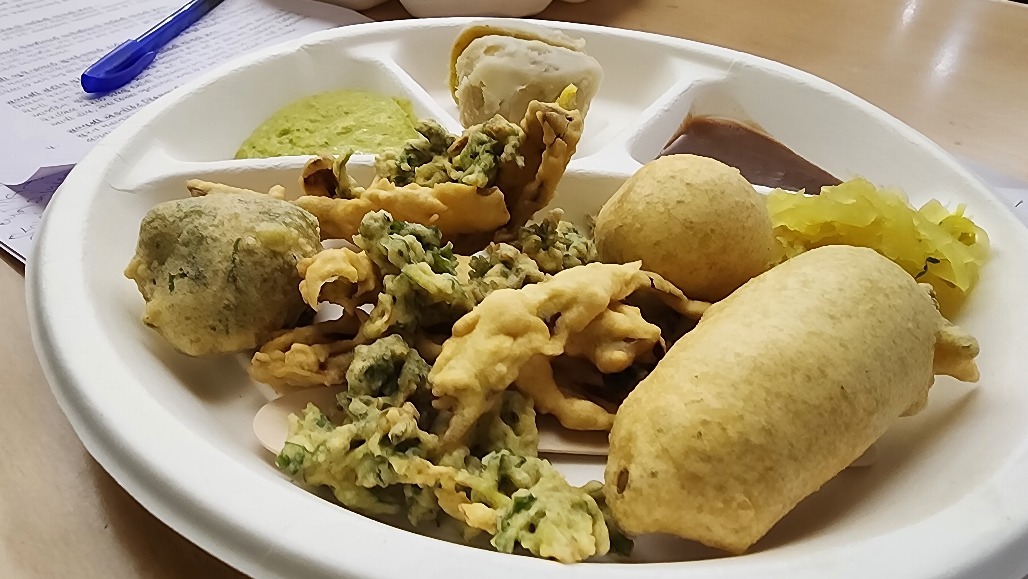
This is significantly higher than the ₹350–₹500 per kg at which bhajiyas are generally available in the local market.
The reported expenditure has revived a broader question: are civic bodies exercising adequate financial checks when spending taxpayers’ money on refreshments and other administrative requirements?
Surat’s Expensive Diwali Snacks
The SMC reportedly arranged refreshments for corporators, officials and other attendees at its pre-Diwali general board meeting. Bhajiyas were ordered at a rate of ₹750 per kg after a discount, with the quantity exceeding 130 kg and the total bill approaching ₹1 lakh.
The meeting also featured ghari for Chandi Padva, with the bill reportedly amounting to around ₹20,000.
The figures have prompted questions over the choice of supplier, the basis for the price and whether more economical alternatives were considered. The available report does not establish who approved the purchase or whether the corporation followed a formal price-comparison process.
The issue is particularly relevant because the expenditure comes from a civic body funded through public revenue. While refreshments at official meetings are not unusual, the price difference between the reported purchase rate and prevailing market rates has drawn attention.
Madhya Pradesh’s ₹250 Crore Potential Savings
Questions over public procurement have also surfaced beyond Gujarat.
A report published by Gujarat Samachar English on October 22 said purchases worth around ₹1,134 crore by 374 urban local bodies in Madhya Pradesh over three years had come under scrutiny after an analysis identified potential savings of nearly ₹250 crore.
The review highlighted price differences in purchases of garbage collection vehicles, dumper trucks and other equipment. One example cited a local body purchasing a garbage vehicle for around ₹2 lakh, while another reportedly paid around ₹6 lakh for a similar vehicle supplied with four dustbins.
The estimated ₹250 crore represents potential savings identified through price comparisons, not a confirmed loss or proven overbilling. Differences in specifications and included equipment also need to be considered when comparing prices.
The findings nevertheless put the focus on the need for urban local bodies to compare prices, verify specifications and maintain adequate checks before making purchases with public funds.
Rajkot’s ₹70 Lakh Demolition Bill Had Already Triggered Scrutiny
The Surat controversy follows a similar episode in Rajkot, where the Rajkot Municipal Corporation (RMC) faced questions over a ₹70.31 lakh logistical bill submitted for a nine-day anti-encroachment drive in Jangleshwar in February 2026.
The claimed expenditure covered food and refreshments, videography, bottled water, tents and seating arrangements. Of the total, ₹27.20 lakh was attributed to food and refreshments, while ₹12.40 lakh was listed for bottled water.
The food bill itself drew attention to the reported cost of individual items, including kaju katli billed at ₹231 per piece and ₹34,650 for 150 snack plates.
The controversy led to scrutiny of the claims. The RMC Standing Committee put the proposal on hold, and the civic administration ordered a Special Investigation Team (SIT) to examine the expenditure. The investigation was intended to verify the bills and examine possible irregularities; the allegations should not be treated as established findings.
The episode raised questions about spending on official arrangements during a demolition drive that affected hundreds of families.
A Common Question: Who Checks the Bills?
The three cases involve different types of expenditure: refreshments at an official meeting in Surat, logistical arrangements during a demolition drive in Rajkot and equipment purchases by urban local bodies in Madhya Pradesh.
However, they raise a common administrative question about how public expenditure is assessed before bills are approved and payments are made.
In Rajkot, the disputed claims prompted an inquiry and a hold on the proposal. In Madhya Pradesh, the reported price differences pointed to the scope for savings through better procurement checks. In Surat, the reported bhajiya bill has prompted questions about the purchase rate and the decision-making process.
The Surat figures, on their own, do not establish financial wrongdoing. However, a clear explanation of the procurement process, the prices paid and the approvals obtained would help address concerns over the expenditure.
For civic bodies that rely on taxpayers’ money, transparency in even routine spending can help demonstrate that public funds are being used carefully.


