

Seals and Notices Won’t Stop Food Mafia, Enact Stricter Laws: Former Guj Health Minister Writes to Praful Pansheriya

Summarized by AI; it may make mistakes. Check important info
Summarized by AI; it may make mistakes. Check important info

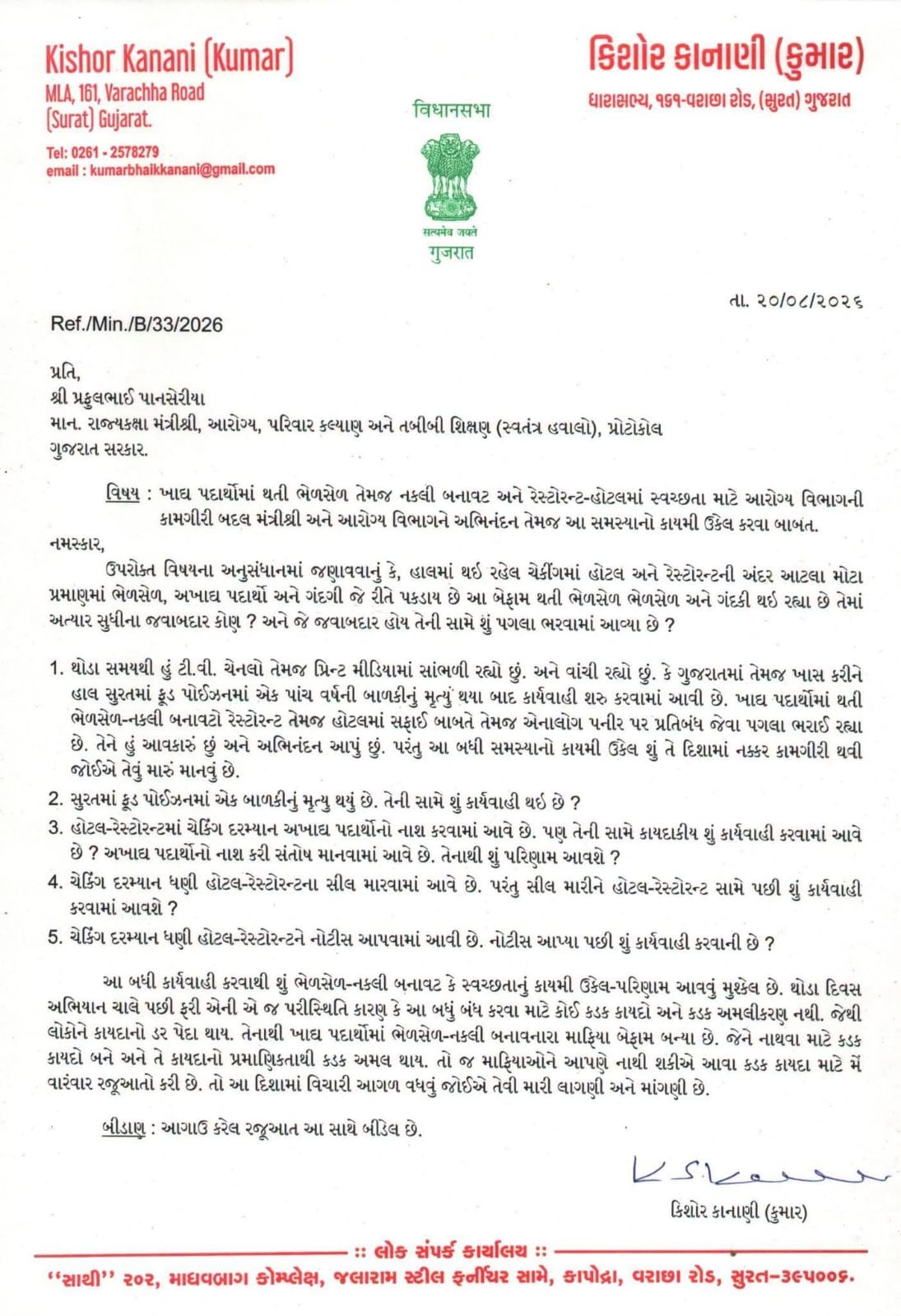
Following a tragic food poisoning incident in the Puna area of Surat that led to the death of a five-year-old girl, former Gujarat health minister and current ruling party MLA Kumar Kanani has fired off a scathing letter to Minister of State for Health Praful Pansheriya. Challenging the efficacy of temporary drives, Kanani demanded permanent, stringent legislation rather than mere routine inspections, unit closures, and notices.
The letter highlights the systemic failure of food safety mechanisms, raising five piercing questions over the government's response to rampant food adulteration and unhygienic conditions across local eateries.
Kanani's Five Direct Questions to the Health Ministry
- Accountability for the Child's Death: What concrete legal action has been taken so far regarding the Puna food poisoning incident that claimed the life of a five-year-old girl, and has clear responsibility been fixed?
- Prior Negligence: If widespread adulteration, rotten food, and filth are continuously uncovered during current hotel and restaurant raids, who was held responsible for this severe oversight prior to these drives, and what action was taken against them?
- Action Beyond Food Destruction: When unhygienic food is seized and destroyed, what penal steps are taken against those who manufacture, store, or sell it before it reaches consumers, given that simple destruction fails to create a legal deterrent?
- Follow-up Post-Sealing: When eateries are sealed during drives, where does the prosecution actually lead, are criminal cases filed against proprietors, are fines collected, and is strict compliance ensured when units reopen?
- Legislative Deterrence: How does the state intend to instill long-term fear among adulteration mafias if actions remain limited to temporary crackdowns rather than tough new legal provisions and honest enforcement?
Superficial Crackdowns Fail to Deter Repeat Offenders
The lawmaker asserted that routine health department drives follow a predictable pattern: food samples are seized, rotten produce is dumped, and premises are temporarily sealed. However, once the inspection campaign cools down, rogue operators resume business as usual.
Kanani stressed that mere administrative sealing cannot serve as the final punishment. Without strict laws backed by rigorous prosecution, adulterators and fake food manufacturers will continue to operate without fear of consequences.
Escalating Pressure from Within Ruling Ranks
Attaching his previous official representations regarding food safety to the letter, Kanani noted that his intervention is not merely a reaction to the latest tragedy but part of an ongoing crusade against compromised public health standards.
With a senior lawmaker from the ruling party openly questioning the executive system, the state health department now faces immense pressure to detail its legal proceedings and demonstrate whether the current campaign will translate into permanent structural reform.


