




What is Comet Wierzchos and will it be visible in India?
Updated: Feb 9th, 2026


 |
| Image: X |
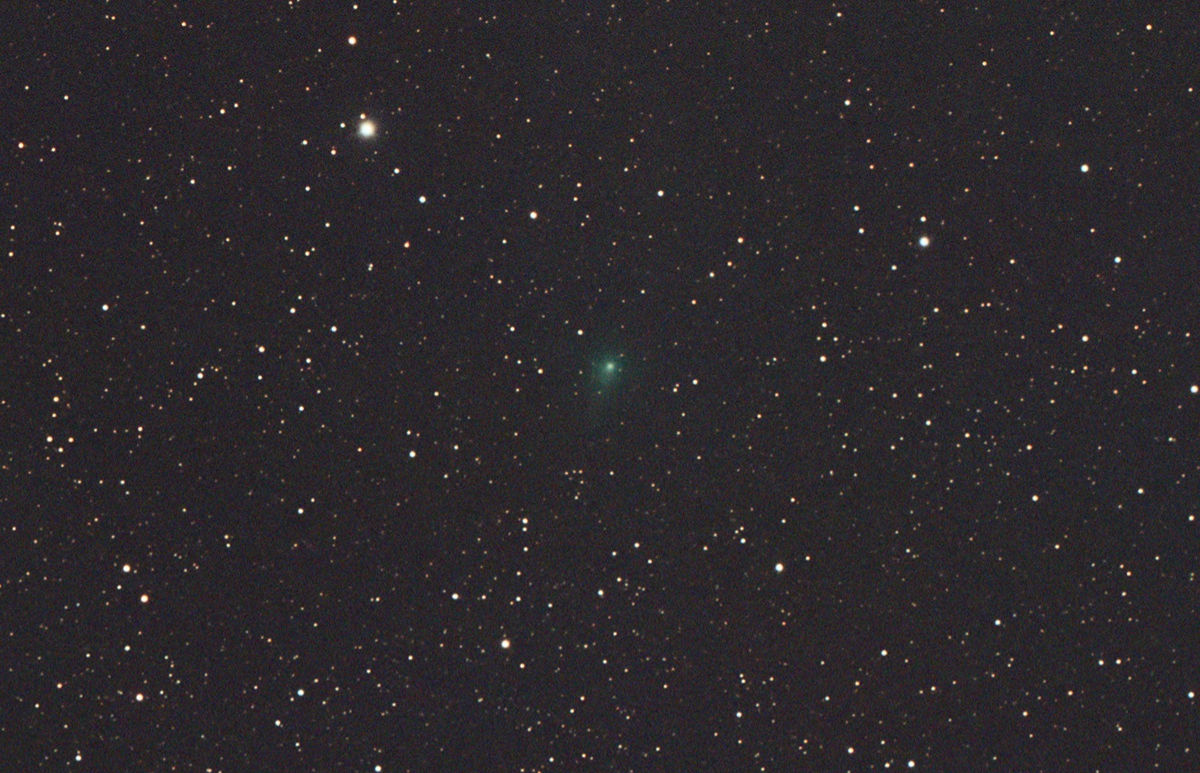
A newly discovered comet, C/2024 E1 (Wierzchos), is travelling through the inner solar system, offering astronomers and skywatchers a fresh opportunity to observe a visitor from its distant edges.
According to Space.com, the comet will not be easily visible right now, but observers in the Northern Hemisphere will get a better chance to spot it in the coming weeks after its closest approach to Earth on February 17.
What is Comet Wierzchos?
Comet C/2024 E1 (Wierzchos) was discovered in March 2024 during observations by the Catalina Sky Survey, a NASA-supported programme run by the University of Arizona that scans the sky for near-Earth objects.
Scientists believe the comet originated in the Oort Cloud, a massive, icy region that surrounds the solar system far beyond Pluto. When first detected, it was about 8 astronomical units (AU) from the Sun, indicating it had travelled a vast distance before becoming visible.
The comet was later studied by the James Webb Space Telescope, which found unusually low levels of carbon monoxide in its chemical signature. Astronomers say this could mean the compound was lost early in the comet’s history or stripped away due to gravitational interactions with large planets closer to the Sun.
When and where can it be seen?
While the comet has already passed close to the Sun, it remains faint. After February 17-when it makes its closest pass to Earth-it is expected to become observable again, especially with binoculars or small telescopes.
For India and other Northern Hemisphere regions, visibility will be:
Low on the western or southwestern horizon
Shortly after sunset
Best seen from dark locations away from city lights
The comet is not bright enough to be seen with the naked eye, but amateur astronomers with basic equipment may be able to spot it under clear sky conditions.
Astronomers note that although Comet Wierzchos is not a spectacular naked-eye object, it is scientifically important and is expected to be the brightest comet visible in early 2026, making it one to watch in the months ahead.
