




US astronomers discover 11 new moons of Saturn, 4 more of Jupiter, total count now 442
Updated: Mar 26th, 2026


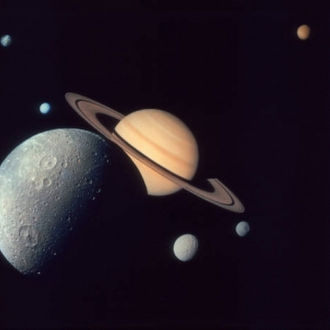 Astronomers at the Minor Planet Center (MPC) in the United States have discovered new moons around Saturn and Jupiter. With these discoveries, the total number of known moons in our solar system has reached 442.
Scientists found 11 new moons orbiting Saturn. This increases Saturn’s total number of known moons to 285. At the same time, four new moons were discovered around Jupiter, taking its total moons to 101. MPC announced the discovery on March 16, 2026. Only the largest of Jupiter’s and Saturn’s moons have proper names, such as Ganymede and Titan. The majority of these two planets’ moons are small and dim. For example, out of Saturn’s 285 moons, only 64 have proper names. The International Astronomical Union’s Committee for Planetary System Nomenclature is in charge of naming these moons .
These discoveries were made by astronomers using advanced telescopes and observation techniques. Finding new moons helps scientists better understand how planets and their satellites form and evolve.
Astronomers now use a “shift and stack” method, where multiple images of the same sky area are combined to strengthen the signal of very faint objects moving in orbit. Jupiter’s new moons were identified by Scott Sheppard and David Tholen, while Saturn’s batch was found by a team led by Edward Ashton.
Updated planetary moon counts
Saturn: 285 confirmed moons. Saturn remains the "Moon King," having gained 11 new moons
Jupiter: 101 moons. The discovery of four new moons pushes Jupiter past the 100-moon milestone for the first time.
Other planets: The counts for other planets remain stable: Uranus (28), Neptune (16), Mars (2), and Earth (1). Mercury and Venus have no moons.
