

Tourist’s Facebook Photo Leads to Discovery of Six Dinosaur Footprints Dating Back 120 Million Years in Thailand

Summarized by AI; it may make mistakes. Check important info
Summarized by AI; it may make mistakes. Check important info

Thailand has confirmed the discovery of six dinosaur footprints, believed to be around 120 million years old, at Phu Phrabat National Park in Udon Thani province, as per reports. Authorities have temporarily closed the site to protect the fossils while scientists examine the findings.
The Department of Mineral Resources reportedly confirmed the discovery on October 20 after park rangers inspected the marks. The footprints, preserved in sandstone near a stream, are believed to have been made by meat-eating dinosaurs.
Tourist’s Photo Triggers Investigation
The discovery began when Pichai Prathetsena, a 32-year-old Thai tourist, spotted unusual marks near a stream while walking along a nature trail in the national park. He photographed the impressions and reportedly shared them in a Facebook group on October 18, asking members whether they resembled dinosaur footprints.
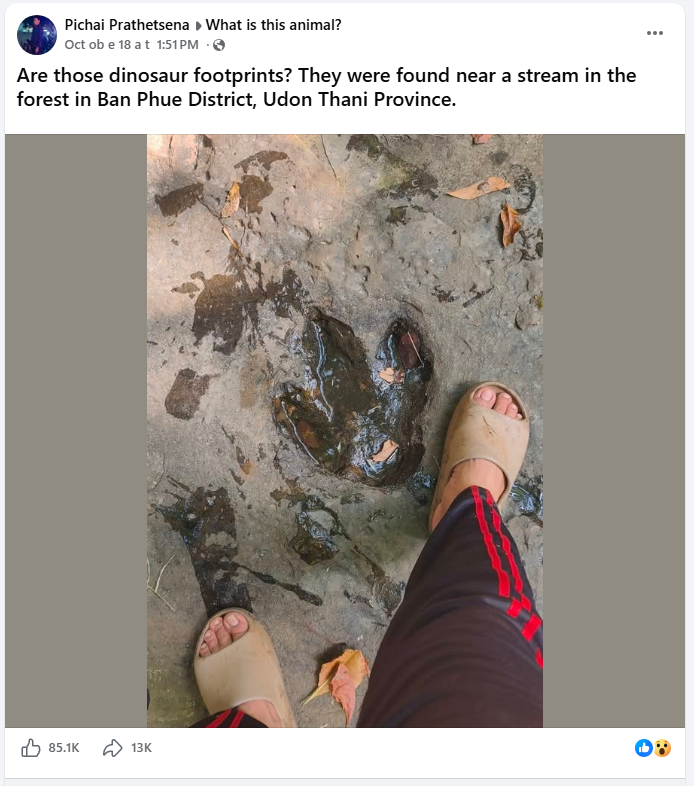
The department responded to his post and said it would investigate. Park rangers visited the site on October 19 to examine and measure the marks. The following day, the department confirmed that the impressions were genuine dinosaur footprints.
Pichai reportedly said the stream was relatively dry when he visited, exposing the rocks bearing the footprints. His family was in a hurry, so he did not report the discovery to park officials at the time. Instead, he shared the photographs online, bringing the site to the attention of experts.
Footprints Receive Legal Protection
According to Thailand’s Department of Public Relations, the discovery consists of a single trail containing six prints preserved in the Phu Phan formation. The footprints date to the Early Cretaceous period, around 120 million years ago. Each print measures approximately 29 centimetres long and 26 centimetres wide.
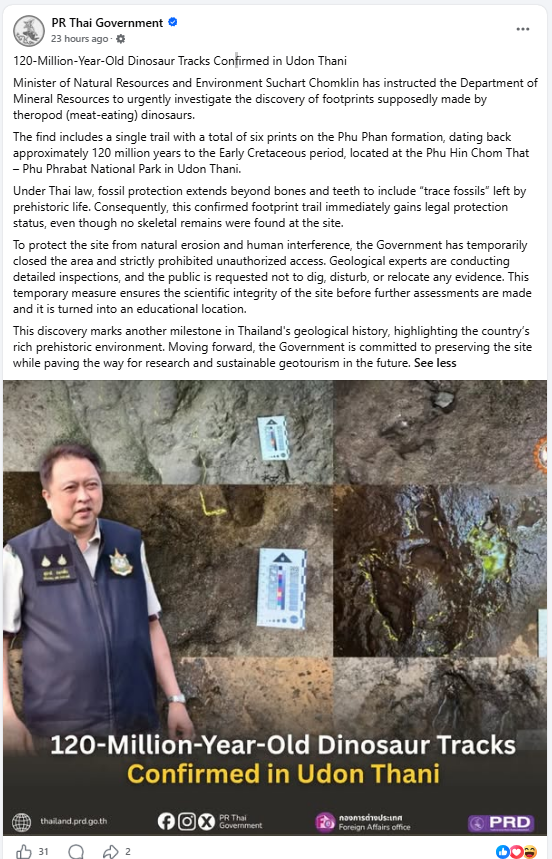
No dinosaur bones or other skeletal remains were found at the site. However, Thai law also protects trace fossils, including footprints, giving the newly confirmed discovery legal protection.
Authorities have temporarily barred tourists from entering the area to prevent damage from human activity and natural erosion. Geologists are continuing their inspections, and officials have reportedly urged the public not to dig, disturb or move any evidence.
Once the assessments are complete, authorities plan to develop the site as an educational attraction, allowing visitors to learn about dinosaurs and Thailand’s ancient history.


