




Tech plays vital role as internet users double in rural India in 7 yrs, IAMAI VP weighs in
Updated: Jan 2nd, 2026


Technology is turning villages of India into active participants in the country’s digital ecosystem, according to Gaurav Chopra, senior vice president of the Internet and Mobile Association of India (IAMAI).
In a data-backed assessment of India’s evolving digital landscape, Chopra said that rural India has emerged as the primary driver of internet growth, with usage patterns now matching, and in some cases surpassing, urban India.
“Technology is no longer just a ‘nice-to-have’ in rural India. It is the backbone of opportunity,” Chopra said.
Rural India overtakes urban in internet users
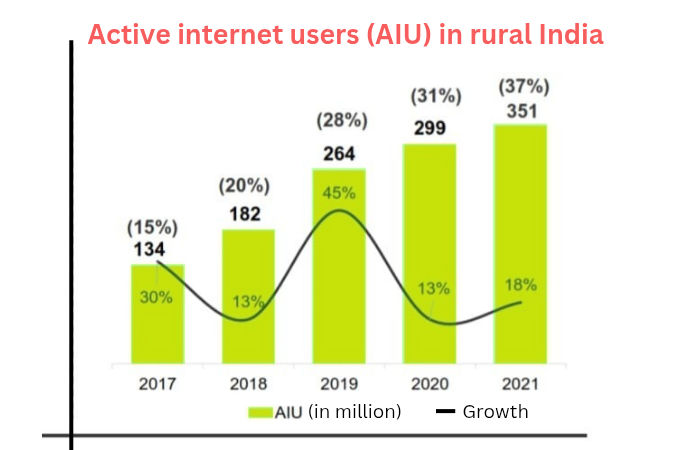
IAMAI data shows a sharp rise in rural internet adoption over the last few years. From 134 million users in 2017, rural internet users have grown to 351 million, more than doubling in seven years. More recent estimates place rural users at 488 million, officially overtaking urban India.
An IAMAI study published in January 2025 revealed that India’s overall internet penetration growth is in rural areas, reversing the long-held perception that digital adoption is city-centric.
Rural, urban users spend nearly equal time online
The study also highlights a narrowing gap between rural and urban internet behaviour. Rural users now spend nearly the same amount of time online as their urban counterparts — around 1.5 hours daily.
Importantly, this time is not limited to entertainment. Rural users are increasingly accessing healthcare services, skill development platforms, education content, government services, and agricultural tools, reflecting a shift towards productive digital engagement.
Aspirational migration
Chopra said technology is playing a key role in addressing “aspirational migration” — the movement of young people from villages to cities in search of better opportunities.
“When aspirations can be met locally, the pressure to migrate reduces,” he said.
According to IAMAI, access to digital education, local entrepreneurship platforms, and online marketplaces is enabling rural youth to build livelihoods without leaving their hometowns.
Rural India is also adopting advanced technologies at scale. From drones being used for crop spraying to UPI-based digital payments helping small shopkeepers go cashless, villages are leapfrogging traditional barriers.
Interestingly, rural users are leading adoption in voice-based technology, using local languages to access weather updates, market prices, and government information.
“You don’t need to be a tech expert to benefit from the digital age,” Chopra noted, pointing to voice-enabled tools as a major enabler.
Bridging the gap
To ensure technology solutions reflect real rural needs, IAMAI, in collaboration with NABARD, has launched initiatives such as the Earth Summit, held in cities including Gandhinagar and Hyderabad. These platforms bring together farmers, policymakers, and technology developers.
The objective, Chopra said, is to ensure innovation is grounded in on-field realities rather than built in isolation.
“Rural India isn’t just a market anymore — it’s the engine driving the nation’s future,” he concluded.
