




Southeast Asia’s largest dinosaur weighing 27 tonnes found in Thailand
Updated: May 15th, 2026


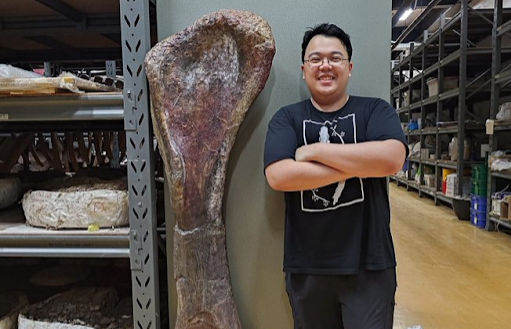 Scientists have discovered the largest dinosaur ever found in Southeast Asia. The new dinosaur species, named Nagatitan chaiyaphumensis, was found in Chaiyaphum province in north-eastern Thailand. Researchers said the giant dinosaur weighed around 27 tonnes and was about 27 metres long.
The species has provided fresh insights into the diversity of long-necked sauropods that lived in Southeast Asia during the Early Cretaceous period, according to a study titled “The first sauropod dinosaur from the Lower Cretaceous Khok Kruat Formation of Thailand enriches the diversity of somphospondylan titanosauriforms in southeast Asia” published in Nature.com.
The study was authored by Thitiwoot Sethapanichsakul, Sasa-On Khansubha, Sita Manitkoon, Rattanaphorn Hanta, Philip D. Mannion and Paul Upchurch. Researchers identified the new species based on a partial postcranial skeleton unearthed from Thailand’s Khok Kruat Formation, a fossil-rich geological unit dating back to the Aptian–Albian age of the Lower Cretaceous.
The discovery was confirmed after nearly 10 years of research by scientists from University College London, Mahasarakham University, Suranaree University of Technology, and Thailand’s Sirindhorn Museum.
The dinosaur belonged to the ‘sauropod group’, which included large plant-eating dinosaurs with long necks. Fossils found at the site included ribs, vertebrae, pelvis bones, and huge leg bones. One leg bone measured more than 5.8 feet long.
Scientists believe the dinosaur lived around 120 to 100 million years ago during the Early Cretaceous period. The area had rivers, fish, crocodiles, and freshwater sharks at that time.
The newly discovered dinosaur belonged to a subgroup called Euhelopodidae, a family of sauropods found only in Asia. Scientists said its close relatives, known as titanosaurs, were once spread across different continents, including Antarctica. Researchers said the fossil site also contained remains of fish, freshwater sharks, and crocodiles. These remains helped scientists understand what the ancient ecosystem of the region looked like millions of years ago.
Scientists stated that the dinosaur was discovered in Thailand’s youngest dinosaur-bearing rock formation. Because the region later turned into a shallow sea, experts believe dinosaur fossils from later periods may be rare in Thailand.
Researchers said the discovery significantly improves understanding of sauropod evolution and biogeography in Southeast Asia. The fossil was discovered at the Ban Pha Nang Sua locality in northeastern Thailand, where excavations conducted between 2016 and 2024 also yielded remains of sharks, crocodile relatives, pterosaurs and theropod dinosaurs from the same formation.
