




Second Sphinx under Giza? New study claim hidden structure underground
Updated: Mar 27th, 2026


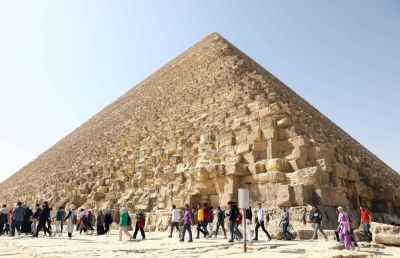
A new study has sparked curiosity about what lies beneath Egypt’s famous Giza Plateau. Researchers suggest there may be a second Sphinx buried underground, along with a large network of tunnels and structures hidden below the surface.
Italian researcher Filippo Biondi and his team used satellite scans and radar technology to study the area. They noticed a strong geometric pattern between the pyramids and the great Sphinx. This pattern appears to be symmetrical, meaning there could be a similar structure on the opposite side. According to them, there is about an 80% chance that another Sphinx exists in that location.
Their idea is also linked to an ancient carving called the Dream Stele, located between the paws of the Great Sphinx. The carving shows two sphinx-like figures, which researchers believe could represent two actual monuments instead of just symbolic art.
The scans also revealed vertical shafts and horizontal tunnels underground. These structures appear to match on both sides, forming what researchers describe as a large and organized underground system. Some possible entrances have also been identified, but they are currently blocked and need excavation.
Whereas Dr Zahi Hawass, renowned Egyptologist, has stated that the rumors suggesting the presence of columns beneath the Pyramid of Khafre are nothing but fabrications propagated by individuals with no expertise in ancient Egyptian civilization or the history of the pyramids. He further emphasized that the Supreme Council of Antiquities has not granted these individuals any permits to conduct work inside the Pyramid of Khafre.
Hawass confirmed that no radar devices have been used inside the pyramid and that all claims regarding the existence of columns beneath it are entirely unfounded. There is no scientific evidence to support these assertions, and no archaeological missions are currently working inside the Pyramid of Khafre.
He added that the base of the Pyramid of Khafre was carved directly from the bedrock to a height of approximately 8 meters. According to extensive scientific studies and research conducted in recent years, there are no columns beneath this base.
