




Scientists discover powerful winds that may kill entire galaxies
Updated: Jun 11th, 2026


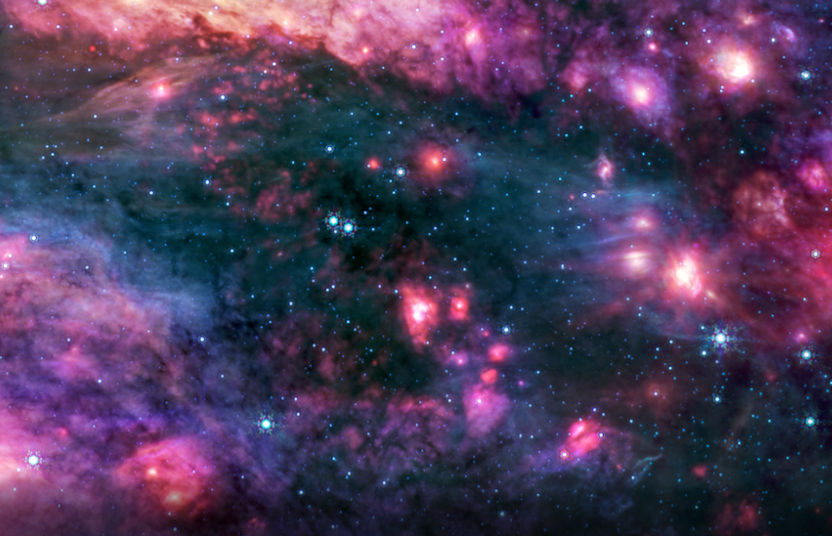
Society suggests that powerful galactic winds may be responsible for the large number of “dead” galaxies found in the early universe.
Using the James Webb Space Telescope, astronomers studied a distant galaxy called CRISTAL-02, which existed about one billion years after the universe was formed. They discovered a huge stream of cold gas being blown out of the galaxy. Since gas is needed to create new stars, its loss could eventually stop the galaxy from producing stars and lead to its death.
According to the study, lead author Rebecca Davies, an astronomer at Swinburne University of Technology in Melbourne, said that if the gas continues to be expelled at the current rate, the galaxy could become “dead” in less than 50 million years.
A galaxy is considered dead when it can no longer form new stars. Scientists were surprised when the James Webb Space Telescope discovered many such galaxies in the early universe, as they were expected to still be growing and producing stars.
The study suggests that powerful winds created during intense star formation may be the reason. CRISTAL-02 is made up of several galaxies that are in the final stages of merging. Such collisions were more common in the early universe and often triggered rapid star formation.
Using data from both the James Webb Space Telescope and the Atacama Large Millimeter/submillimeter Array (ALMA), researchers found that CRISTAL-02 was forming stars at nearly twice the rate of similar galaxies. However, many of these newly formed massive stars quickly explode as supernovas, creating strong winds that push gas out of the galaxy.
The findings could help explain why so many galaxies stopped forming stars at a very early stage in the universe’s history. Researchers say galaxy mergers and supernova explosions may play a much bigger role in the evolution and death of galaxies than previously thought.
