




Putin’s $26 billion bid to beat aging: Russia invests in gene therapy, lab-grown organs
Updated: May 30th, 2026


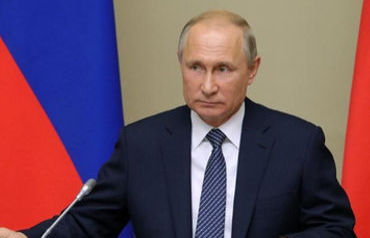
When Russian President Vladimir Putin was caught on a hot microphone discussing the possibility of achieving immortality through organ replacement with Chinese President Xi Jinping during a military parade in Beijing last year, many viewed the conversation as little more than an unusual exchange between two aging world leaders. However, the remarks appeared to reflect a much larger reality. The Kremlin has quietly elevated longevity research into one of Russia’s most ambitious scientific priorities, backing a sweeping programme aimed at extending human life through advanced medical technologies.
Like several prominent technology billionaires in the West, including Jeff Bezos, Sam Altman and Peter Thiel, Putin has shown a longstanding interest in anti-aging science. In Russia, however, the pursuit of longer life has evolved into a state-backed mission involving gene therapy, organ bioprinting, xenotransplantation and even cryotherapy, according to a report by The Wall Street Journal.
In April, Russian authorities announced that scientists were developing a gene-therapy treatment designed to slow cellular aging under a national programme known as ‘New Health Preservation Technologies’. The initiative forms a key part of a broader longevity strategy unveiled by Putin in 2024 and valued at approximately $26 billion.
Officials have described the experimental therapy as one of the country’s most promising avenues for combating age-related decline and extending healthy lifespan.
Another major area of focus is the creation of transplantable organs in laboratories. The technology, which Putin reportedly referenced during his conversation in Beijing, is among the flagship projects included in the government’s longevity agenda. The programme aims to save roughly 175,000 lives by the end of the decade, a target that critics noted was strikingly similar to some independent estimates of Russian military losses in Ukraine.
Russian scientists working under state-supported institutions have concentrated on two major fields: bioprinting, which involves the 3D printing of living tissue, and xenotransplantation, a process that seeks to grow human organs inside specially bred miniature pigs considered genetically compatible with humans.
Researchers involved in the projects have reported success in bioprinting human cartilage tissue and a mouse thyroid gland. Their long-term objective is to make human organ replacement possible by around 2030. Similar timelines have reportedly been discussed for producing transplantable organs inside pigs.
According to the Kremlin, a wide range of scientific programmes are currently being pursued in this field, with numerous research institutions receiving state support and participating in the effort.
According to The Wall Street Journal, the longevity initiative is being led by individuals within Putin’s inner circle, most notably his daughter Maria Vorontsova, an endocrinologist involved in government-supported genetics programmes, and physicist Mikhail Kovalchuk, who heads the Kurchatov Institute, Russia’s historic nuclear research centre.
Kovalchuk, whose brother Yuri Kovalchuk is among Putin’s closest allies, has emerged as one of the leading intellectual forces behind Russia’s longevity strategy. He has repeatedly argued that future scientific advances will significantly improve humanity’s ability to repair damaged organs and replace failing body parts.
Despite the ambitious claims surrounding the initiative, some experts remain sceptical. Unlike comparable longevity projects funded by wealthy entrepreneurs in the United States, Russia’s efforts have generated relatively little peer-reviewed research in internationally recognised scientific journals.
Alexander Ostrovskiy, a scientist widely credited with pioneering bioprinting technology in Russia, has questioned the lack of published evidence supporting many of the programme’s claims. After leaving Russia following the full-scale invasion of Ukraine, Ostrovskiy sold his company, which continues to collaborate with Russian authorities.
He has argued that meaningful scientific progress is difficult in isolation and suggested that international sanctions have limited Russia's access to global scientific collaboration. According to him, some researchers may be overstating progress in order to secure continued government funding.
Kovalchuk’s vision extends beyond medicine and frequently overlaps with broader ideological themes promoted by the Kremlin. Over the years, he has warned about what he sees as Western efforts to manipulate humanity through biotechnology and has advanced controversial theories regarding global events, including the origins of the Covid-19 pandemic.
Putin has often expressed sympathy toward similar narratives. Kovalchuk has publicly praised the 1968 Soviet film ‘Dead Season’, which depicts a plot involving former Nazi scientists and Western intelligence agencies attempting to control humanity. Putin has previously said that the movie played a role in inspiring his decision to join the KGB.
Another influential figure in Russia’s longevity movement was Vladimir Khavinson, often referred to in Russian media as Putin’s personal gerontologist. Khavinson became known for promoting peptide-based anti-aging therapies derived from calf tissue.
Peptides, which are short chains of amino acids marketed for purposes ranging from muscle recovery to anti-aging, have gained popularity among several prominent wellness advocates in the United States despite ongoing debate about the effectiveness of many of their claimed benefits.
Khavinson received one of Russia’s highest state honors from Putin for his contributions to medicine. He frequently argued that humans were biologically capable of living to 120 years and reportedly believed that extending Putin’s life was important for maintaining stability in Russia. Khavinson died in 2024 at the age of 77.
Although both Khavinson and Kovalchuk possessed strong scientific credentials, Putin has also displayed interest in less conventional approaches to health and longevity.
One notable example emerged during a 2018 meeting with former Austrian Chancellor Sebastian Kurz. Putin reportedly recommended cryotherapy, a treatment involving exposure to temperatures as low as minus 170 degrees Fahrenheit. Kurz later recalled being surprised by Putin’s enthusiastic description of the practice and its supposed health benefits.
At 73 years old, Putin has spent much of his political career cultivating an image of exceptional physical fitness. Public appearances featuring horseback riding, hunting trips, hockey games and motorcycle rides have long been used to reinforce the image of a vigorous and energetic leader.
Yet alongside these carefully managed displays of strength, Putin has often appeared deeply concerned about health and aging. During the Covid-19 pandemic, he implemented strict quarantine measures for visitors, including lengthy isolation requirements and extensive sanitation procedures. The unusually long tables used during meetings with foreign leaders became symbolic of both social distancing and concerns about infection.
Media outlets in both Russia and the West have also speculated for years about possible cosmetic procedures as Putin’s appearance has changed over time.
Many of the figures who make up Putin’s inner circle are themselves in their seventies, including members of the Kovalchuk family and senior officials such as Yuri Ushakov, Sergei Chemezov and Nikolai Patrushev. Their collective interest in extending lifespan reflects a broader historical pattern among Russian rulers and political elites.
The fascination with longevity has deep roots in Russian and Soviet history. In the 1920s, Soviet intellectual Alexander Bogdanov attracted official attention through experiments involving rejuvenating blood transfusions. The experiments ultimately contributed to his death at the age of 55.
A decade later, physician Oleksandr Bogomolets organised what is widely regarded as the world's first conference dedicated to longevity research. His claims that humans could potentially live to 150 years reportedly earned praise from Soviet leader Joseph Stalin. Bogomolets later died at 65.
Despite the significant resources being directed toward anti-aging science, Russia continues to face some of the highest mortality rates among developed countries. Official statistics place average male life expectancy at approximately 68 years, well below the roughly 76 years recorded in the United States and more than 80 years in much of Western Europe.
