




Possible Godzilla El Nino could impact India’s farms, water supply and power sector
Updated: Jun 10th, 2026


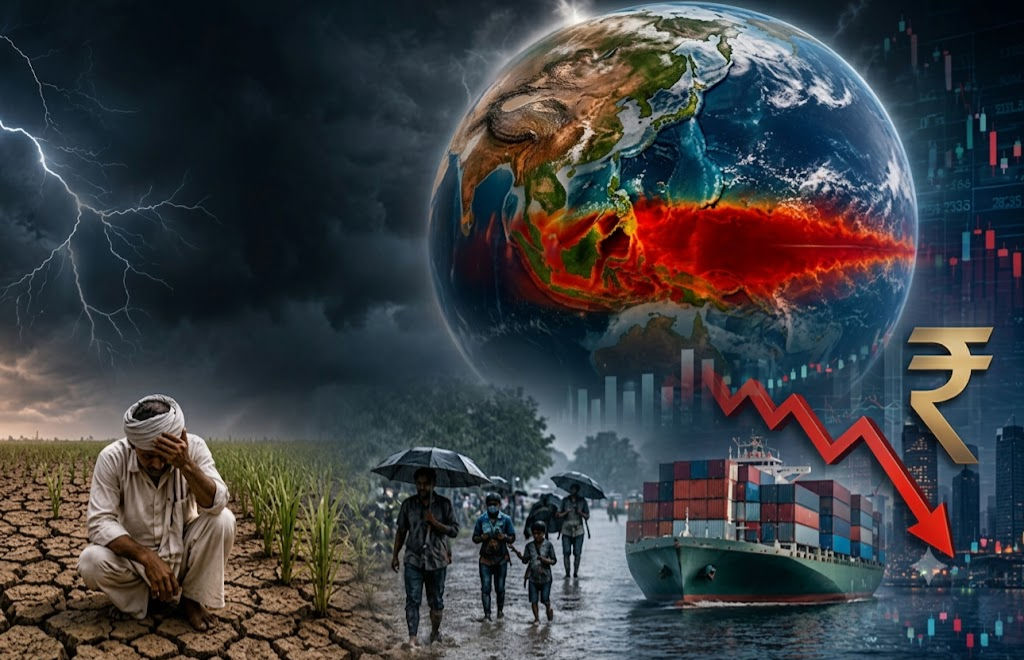 |
| (AI-generated image) |
Scientists are closely watching the development of El Nino, a climate pattern that begins in the Pacific Ocean but can affect weather around the world, including India, as per reports.
Experts reportedly warn that if El Nino becomes stronger, it could impact India's monsoon, agriculture, water supply, electricity demand, and food prices.
India depends heavily on the southwest monsoon for farming. Nearly half of the country's farmland relies on rainfall. A weaker monsoon could reduce rainfall, delay crop planting and lower production of important crops such as rice, pulses, cotton, soybean and maize.
Lower crop production may lead to shortages of food supplies and higher prices of essential food items. Farmers may also need to use more irrigation or switch to crops that require less water.
The effects may not stop at agriculture. Reduced rainfall can lower water levels in rivers and reservoirs, affecting drinking water supplies and hydropower generation.
Many cities that already face water shortages could experience more difficulties as per reports. Hotter weather linked to El Nino may also increase the use of air conditioners, fans and refrigerators. This could push electricity demand even higher and put extra pressure on power grids. India has already recorded record high power demand in recent years.
Climate experts reportedly said that El Nino is not simply a weather event but a phenomenon with economic and social consequences. Governments, farmers, businesses and power companies are therefore monitoring its development closely. Also they warn that El Nino can disrupt global trade routes. In the past, it has contributed to droughts that affected shipping through the Panama Canal, an important route for international trade.
Although El Nino develops far from India, its impact could be felt across the country. Scientists and policymakers are monitoring the situation closely as it could affect millions of people through changes in weather, farming, water availability and household expenses.
