

NASA Satellite Tracks Down Fresh Moon Crater Left by Colliding SpaceX Rocket

Summarized by AI; it may make mistakes. Check important info
Summarized by AI; it may make mistakes. Check important info
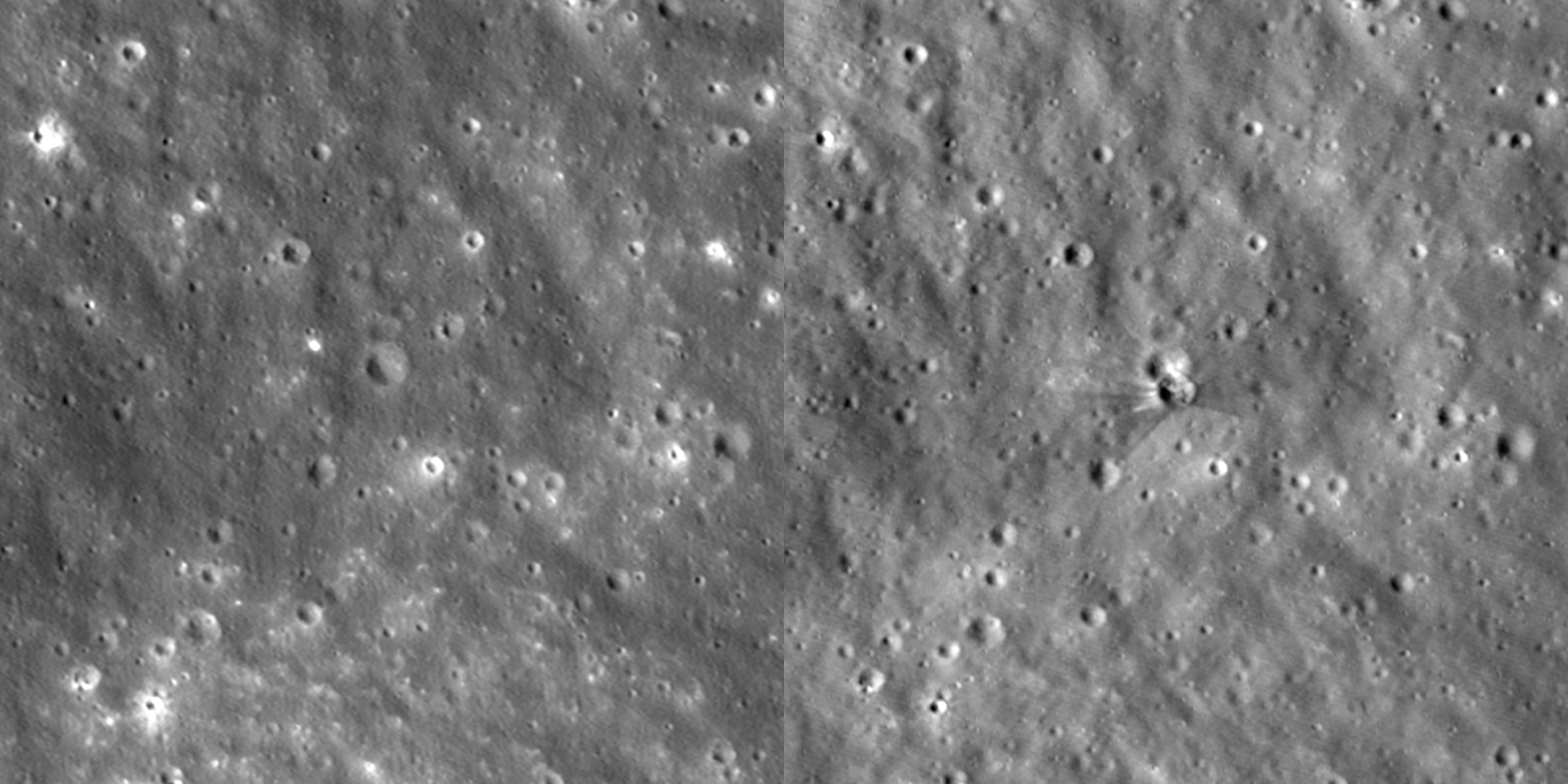
NASA’s Lunar Reconnaissance Orbiter (LRO) has successfully mapped and photographed a fresh, 60-foot-wide impact crater left on the far side of the Moon by a spent SpaceX Falcon 9 rocket stage.
The upper-stage booster collided with the lunar surface at high velocity on 5 August, following a trajectory that began with the January 2025 launch of the Firefly Blue Ghost 1 mission. Between 11 August and 12 August, LRO controllers tilted the orbiting spacecraft to align its Narrow-Angle Camera with the target site, capturing detailed imagery that revealed structural details of the strike point.
Precision Manoeuvres Capture Fresh Scar from 60 Miles Above
Photographing the impact zone required tight coordination between NASA, international partners, and orbital mechanics specialists. Travelling at roughly one mile per second in a polar orbit 60 miles above the Moon, LRO had to wait six days for the lunar rotation to bring the collision site into view.
Flight engineers had to execute camera angling with extreme precision; a timing deviation of just 10 seconds would have pushed the target 10 miles out of the frame. The camera sequence was further refined using target coordinates supplied by South Korea's Danuri spacecraft (Korea Pathfinder Lunar Orbiter), which had imaged the location hours earlier using its high-resolution LUTI camera system.
Shadow Measurements and Ejecta Patterns Reveal Impact Physics
Analysis of the high-resolution images shows that the collision dug a shallow bowl less than 10 feet deep, surrounded by distinct asymmetrical blast patterns. The impact exposed subsurface material that had lain buried beneath the top layer of lunar dust:
- Dark Ejecta Rays: Weathered soil and rock altered over millennia by galactic cosmic rays, solar radiation, and micrometeorites were excavated from roughly 1.5 feet below the surface.
- Bright Rim Streaks: Fresh, unweathered material thrown out from deeper underground formed high-contrast, reflective streaks close to the crater rim.
Researchers with NASA’s Center for Near Earth Object Studies used the trajectory data to test and validate hazardous object impact tools for planetary defence programmes. Updated orbital data confirms the fresh crater sits at 19.4759°N, 266.7138°E on the lunar landscape.


