




Mini planetary parade to light up Indian skies tonight
Updated: Jun 12th, 2026


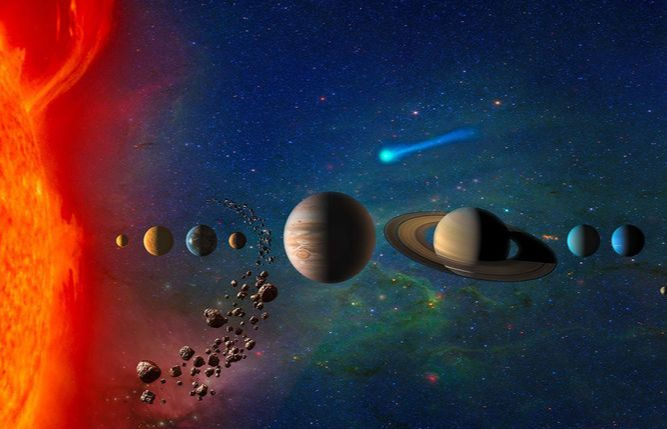 Skywatchers across India will have a chance to witness a beautiful celestial event on June 12 as Mercury, Venus, and Jupiter appear together in the evening sky in a rare mini planetary parade. The three planets will be visible shortly after sunset and can be seen with the naked eye from most parts of the country, weather permitting.
Astronomers say the best time to observe the event is around 30 to 45 minutes after sunset. People should look toward the western horizon, the direction where the Sun sets. Venus, often called the ‘Evening Star’. Jupiter will appear close to Venus, while Mercury will be located lower near the horizon and may be more difficult to spot because of the remaining twilight.
The planetary parade can be viewed from major Indian cities including Delhi, Mumbai, Ahmedabad, Kolkata, Chennai, Bengaluru, Hyderabad, Jaipur, Lucknow, Bhopal, and many others. To get the best view, areas with less artificial light will offer better visibility.
According to space experts, the planets are appearing close together because they orbit the Sun along a similar path known as the ecliptic. From Earth, this creates the illusion that the planets are gathered in one region of the sky.
However, the planets are actually separated by millions of kilometres in space and are not physically close to one another. Larger planetary alignments involving five, six, or seven planets are much rarer. While the planets may seem lined up in illustrations, they do not form a perfect straight line in reality because each planet follows its own orbit around the Sun.
The celestial display will continue until June 15, although June 12 is considered the best day for viewing. Astronomers also note that on June 17, a thin crescent Moon will join the planetary grouping, creating a striking triangular pattern in the evening sky. Mercury's visibility is expected to decrease as the month progresses. By June 23, the planet will become much dimmer and may no longer be visible to the naked eye shortly after sunset. Venus and Jupiter, however, will remain easier to observe because of their greater brightness.
Experts encourage people to take advantage of the clear evening skies and enjoy the event. No telescope or binoculars are required, although optical equipment may provide a clearer view.
For many observers, the mini planetary parade offers a rare chance to witness the beauty of the solar system from their own backyard. This will provide another opportunity for skywatchers and photographers to capture a unique astronomical scene.
