




Hubble captures rare galaxy in transition image of NGC 1266, located nearly 100 mn light-years away
Updated: May 19th, 2026


 |
| Image credit: NASA |
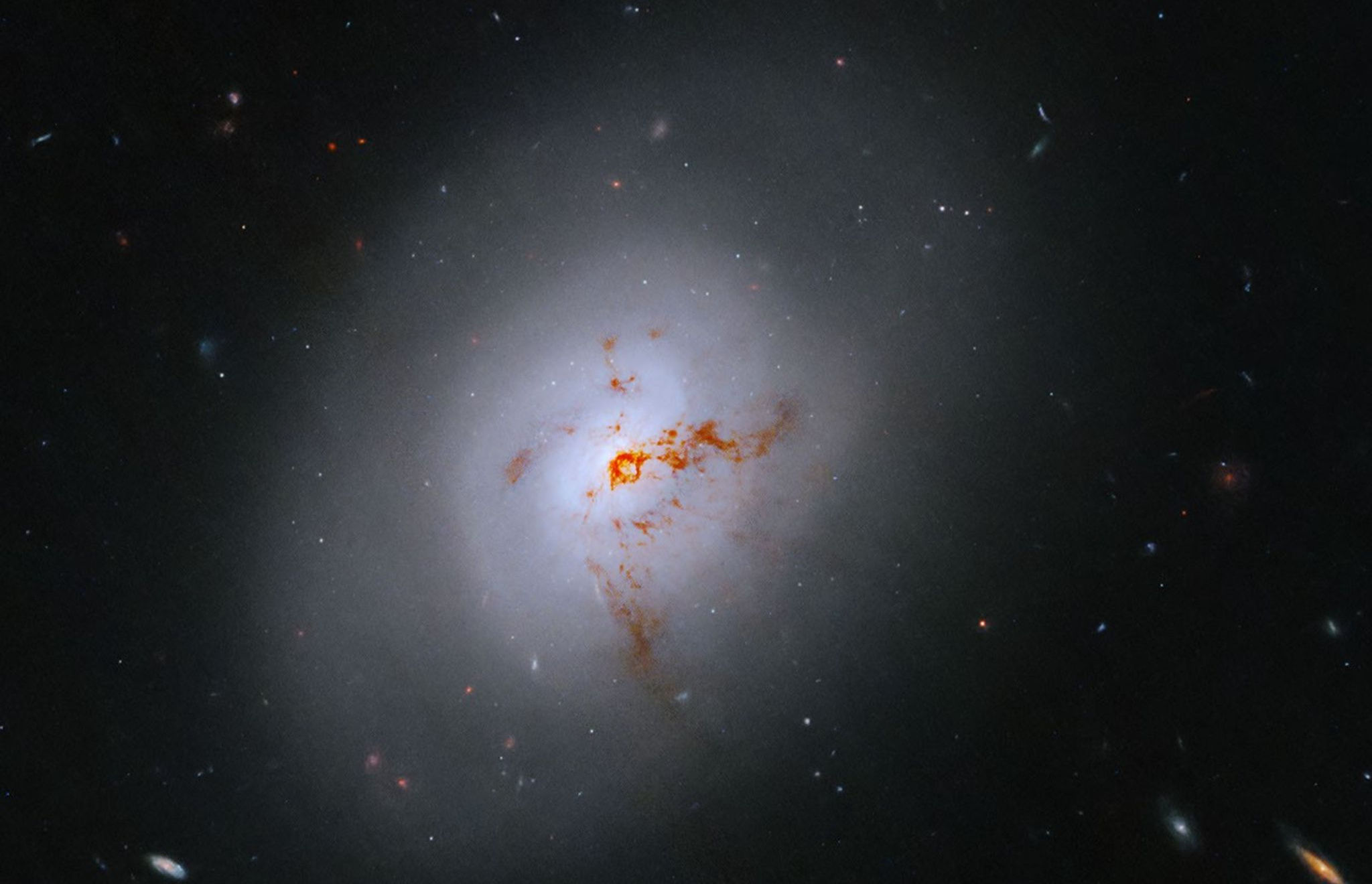
The NASA Hubble Space Telescope has captured a new image of a mysterious galaxy called NGC 1266, located nearly 100 million light-years away in the Eridanus constellation. What makes this galaxy unusual is that it looks similar to a spiral galaxy but does not have clear spiral arms.
The image shows a bright centre surrounded by reddish-brown dust clouds, while light from distant galaxies can also be seen through its outer regions. Scientists have classified NGC 1266 as a lenticular galaxy, which is considered a middle stage between spiral and elliptical galaxies.
Lenticular galaxies have a bright central bulge and a flat disk like spiral galaxies, but they lack spiral arms and usually show very little new star formation. Researchers say NGC 1266 is also a “post-starburst” galaxy, meaning it is moving from a phase of active star formation to a quieter stage. Only around one percent of nearby galaxies are believed to be in this rare phase.
Astronomers think the galaxy went through a minor merger with another galaxy around 500 million years ago. This event likely triggered heavy star formation and pushed gas toward the massive black hole at the centre of the galaxy.
As the black hole became more active, it started releasing powerful winds and gas jets. Scientists believe this activity pushed out or disturbed the gas needed to create new stars. Because of this, star formation in the galaxy has almost stopped, except for a few small regions near the centre.
Observations from Hubble and other telescopes show that the gas inside the galaxy remains highly disturbed, giving scientists a better understanding of how galaxies change and evolve over time.
