




Google joins ‘6-7’ bandwagon, makes screen bounce upon searching the term
Updated: Jan 8th, 2026


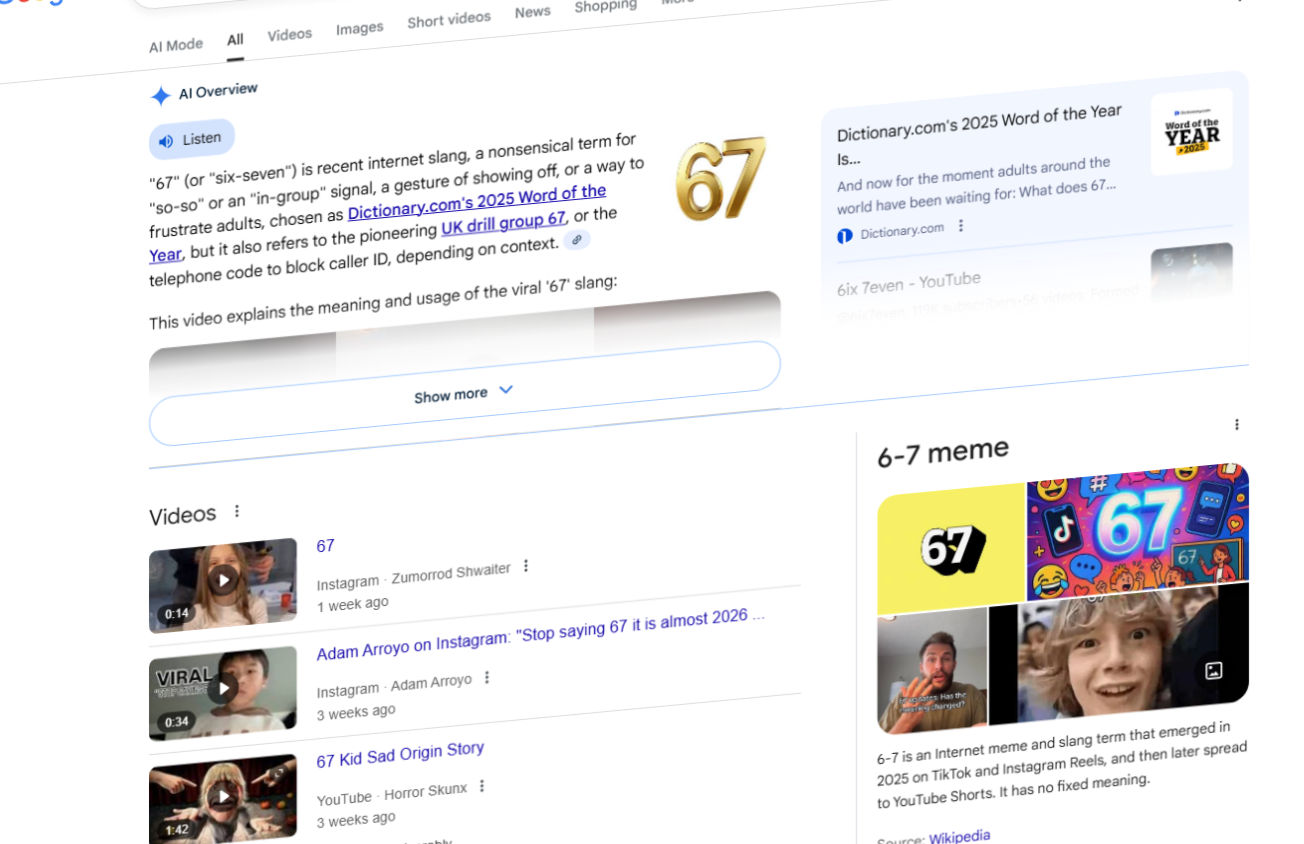
A quirky internet phenomenon known as “six-seven” — often written as 6-7 or 67 — has become one of the most talked-about trends online, with even Google joining in the fun.
If you type “6-7”, “6 7” or “67” into the Google search bar, the results page briefly shakes or bounces up and down, surprising users who encounter the effect. This playful visual trick is not a glitch but a deliberately hidden feature—known as an “Easter egg”—that Google has added in response to the meme’s popularity.
The origin of the trend lies in a viral internet meme that swept through social media platforms such as TikTok, Instagram and YouTube Shorts in 2025.
The phrase “six-seven” has no fixed meaning; it emerged from a song titled Doot Doot (6 7) by the rapper Skrilla and was widely circulated in short videos and meme edits. The numbers also became associated with an exaggerated hand gesture representing rhythm or movement, which helped fuel its spread.
As the meme gained traction among younger users, Google opted to embrace it by embedding a subtle animation into its search results. When users enter the query, the search page mimics the meme’s characteristic motion by bobbing the screen — a playful nod to internet culture rather than a technical error.
The “6-7” phenomenon has grown far beyond its social media roots. It was named Dictionary.com’s Word of the Year for 2025, despite having no conventional definition, highlighting how viral phrases can shape online language and youth culture.
While older generations may find the craze baffling, it underscores a broader trend in which internet humour and memes influence mainstream platforms and everyday interactions — even extending to global tech products like Google Search.
Whether users encounter the shaking effect as a meme Easter egg or chuckle at its widespread repetition across feeds, “six-seven” has firmly secured its place as one of the most recognisable online trends of 2025.
