




UK museum to return over 2,000 Jain manuscripts in landmark restitution move
Updated: May 16th, 2026


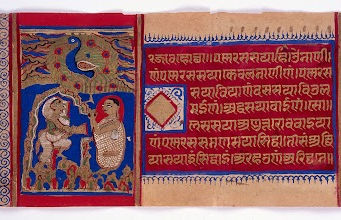 |
Image: Wellcome Collection Website |
Wellcome Collection, one of the United Kingdom’s leading museums exploring human health and experience, has announced a ‘landmark’ decision to return more than 2,000 Jain manuscripts believed to be the largest such collection outside South Asia.
The manuscripts, which have been housed in the London collection for more than a century, will be returned following collaboration and dialogue with the Institute of Jainology.
The collection includes manuscripts dating from the 15th to the 19th centuries and covers subjects including religion, literature, medicine and culture in Prakrit, Sanskrit, Gujarati, Rajasthani and early Hindi scripts.
Among the collection is an early document reflecting ethical principles later associated with India’s independence movement and popularised by Mahatma Gandhi. The manuscript reportedly contains criticism of British colonial rule in India.
Other rare texts include an illustrated 16th-century copy of the Jain scripture ‘Kalpasutra’ and what is believed to be one of the earliest surviving copies of ‘Vaidyamanotsav’ (‘A Celebration of Physicians’), a medical treatise written in early Hindi in 1592.
Under the agreement, the collection will initially be transferred to the Dharmanath Network in Jain Studies at the University of Birmingham, where it will be made accessible to researchers, scholars and Jain faith communities.
Mehool Sanghrajka, managing trustee of the Institute of Jainology, described the decision as pioneering.
“Wellcome Collection’s brave decision to return these 2,000 sacred manuscripts is both pioneering and a model for other faith communities,” he said.
He acknowledged that some manuscripts may not have survived historical upheavals in India after independence and thanked the museum for preserving them with care and respect.
A memorandum of understanding was signed this week between the Wellcome Trust, the Institute of Jainology and the University of Birmingham, with a formal legal agreement expected to follow.
Daniel Martin, associate director of Collections and Digital at the Wellcome Collection, said the institution aimed to adopt a “collaborative and compassionate approach” towards restitution.
“We have set the bar high for a collaborative and compassionate approach to restitution that recognises the hurt caused by unethical acquisition and retention of material heritage,” Martin said.
According to the museum, more than half of the manuscripts were acquired during the colonial period by British entrepreneur Sir Henry Wellcome from a Jain temple in Punjab that no longer exists.
The museum stated that the manuscripts had been purchased at a low price and “against the best interests of their original owners”.
Dr Marie-Helene Gorisse, head of the Dharmanath Network in Jain Studies, said the collaboration would help maximise public access and research opportunities linked to the collection.
The cataloguing of the manuscripts was largely completed in the early 2000s by scholars Dr Kanhaiyalal Virji Sheth and Dr Kalpana Sheth through the Institute of Jainology, with the notes set to be made publicly accessible on the museum’s website.
Art Fund, which supported the initial research into the restitution project, welcomed the agreement and said historical research played a key role in uncovering the origins of objects held in museum collections.
