





Three-day census of endangered Nilgiri tahr begins on April 29
Updated: Apr 21st, 2024


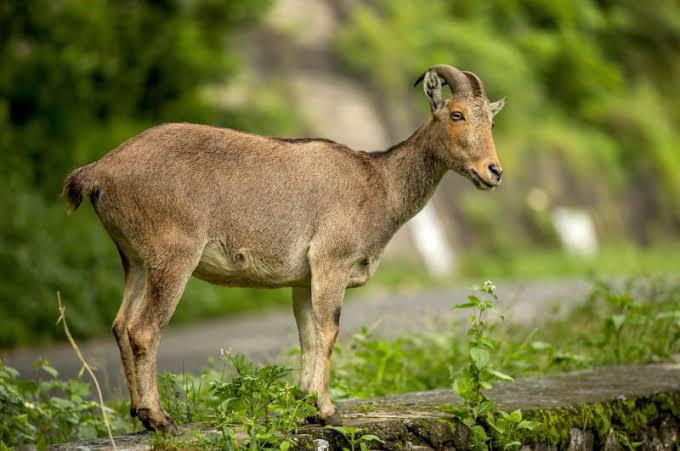
The first synchronised census of the endangered Nilgiri tahr will commence on Apr 29 and around 700 personnel, including volunteers and officials, will participate in the exercise that will take three days.
The Kerala Forest Department will also be part of the survey. The Nilgiri tahr habitat is spread across 13 forest divisions, 100 beats and 140 blocks. The terrain in some of the areas is highly challenging.
The volunteers are chosen based on physical fitness and past trekking experience, besides having a wildlife conservation background.
The World Wide Fund for Nature - India (WWF-India), which has been studying the Nilgiri tahr for several years, the Wildlife Institute of India (WII) and the Advanced Institute of Wildlife Sciences (AIWC) will be part of the synchronised survey.
WWF-India in association with the Tamil Nadu forest department in a study found that the Nilgiris tahr has become locally extinct from around 14% of its shola-grassland habitat within the past few decades.
The Eravikulam National Park in Kerala will be part of the census, but sources in the Tamil Nadu forest department told the news agency that they have yet to get confirmation from Silent Valley National Park in Kerala.
An official with the Tamil Nadu Forest Department told the news agency that necessary training on the synchronised census of the Nilgiri tahr has been given to personnel of the Coimbatore, Pollachi, Gudalur, Udumalpet and Kanyakumari forest range.
He also said that training for personnel in the Mudumalai and Srivilliputhur forest ranges will be completed on Monday.
It may be recalled that Tamil Nadu chief minister M K Stalin had launched Project Nilgiri tahr nine months ago.
An officer with the Project Nilgiri tahr while speaking to the news agency said, “The project team was able to identify and catalogue nine major plant species and three grass varieties that the Nilgiri tahr predominantly feed on.”
The official said that the identification and cataloguing were very important for habitat assessment as the main goal is reintroducing this endangered species in their original habitat.”
It may be recalled that the Nilgiris Thar has become locally extinct, especially in the Glenmorgan mountains in the Nilgiris.
The Tamil Nadu forest department had successfully radio-collared a Nilgiri tahr a month ago in Mukurthi National Park. The department said that the radio collaring has already given several valuable insights about the animal.
(Source: IANS)
Edited for style