




Supreme Court says ‘bail rule, jail exception’ even under UAPA, questions earlier Umar Khalid bail verdict
Updated: May 18th, 2026


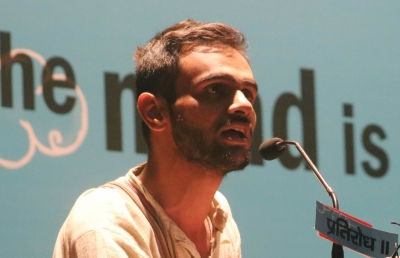 The Supreme Court reportedly said that ‘bail is the rule and jail is the exception’ even in cases filed under the Unlawful Activities (Prevention) Act (UAPA). The court raised concerns over an earlier judgment that denied bail to former JNU student leaders Umar Khalid and Sharjeel Imam in the riots conspiracy case.
A bench of Justice BV Nagarathna and Justice Ujjal Bhuyan reportedly said that the earlier verdict appeared to weaken the important Supreme Court ruling in the Union of India vs KA Najeeb case.
The observations came while the Supreme Court granted bail to Syed Iftikhar Andrabi, who has been in jail since June 2020 in a narco terror case investigated by the National Investigation Agency. The court reportedly referred to the Gulfisha Fatima vs State judgment and said it did not properly apply the principles laid down in the KA Najeeb ruling.
The bench reportedly said that the constitutional right to a speedy trial under Article 21 cannot be denied only because a person is charged under anti terror laws. The judges held that Section 43D(5) of the UAPA should remain limited and must operate under constitutional protections provided by Articles 21 and 22. The judges reportedly said that no trial court, High Court, or smaller bench of the Supreme Court can dilute or disregard that ruling.
Justice Bhuyan reportedly said that the court was concerned about the ‘hollowing out’ of the KA Najeeb judgment. Justice Nagarathna described the verdict as a ‘very good judgment’ and said it was ‘reportable’, meaning it would serve as an important legal precedent for future cases. The judges also said that prolonged incarceration without completion of trial violates the constitutional right to a speedy trial.
What was the case?
Syed Iftikhar Andrabi was arrested by the National Investigation Agency in June 2020 in a narco-terror case.The case involved Syed Iftikhar Andrabi from Handwara in Jammu and Kashmir’s Kupwara district.
The NIA accused him of being part of a cross border heroin trafficking network that allegedly funded terror organisations including Lashkar-e-Taiba and Hizbul Mujahideen. Andrabi faces charges under the UAPA, the NDPS Act, and criminal conspiracy sections of the Indian Penal Code.
His bail plea was reportedly earlier rejected by both the Special NIA Court and the Jammu and Kashmir High Court because of the seriousness of the allegations and the early stage of the trial.
Granting him bail, the Supreme Court said that long imprisonment without conclusion of trial cannot be justified only on the basis of strict bail conditions under the UAPA.
In January this year, the Supreme Court refused to grant bail to Khalid and co-accused Sharjeel Imam in the alleged larger conspiracy case arising out of the 2020 Delhi riots.
However, the apex court granted bail to five other accused Gulfisha Fatima, Meeran Haider, Shifa Ur Rehman, Mohd Saleem Khan and Shadab Ahmed while declining relief to Imam and Khalid.
Pronouncing the verdict, the Justice Kumar-led Bench had held that the prosecution material disclosed a prima facie case against the duo, attracting the statutory bar on bail under Section 43D(5) of the Unlawful Activities (Prevention) Act.
The apex court had observed that the prosecution material and evidence on record did not justify Khalid’s release on bail and indicated his involvement at the level of planning, mobilisation and issuance of strategic directions.
Rejecting the contention that no overt act of violence was attributed to Khalid, the top court had said that in conspiracy cases, “the law does not demand that every conspirator execute the terminal act, but demands a prima facie nexus between the accused and the unlawful design to be inferred from cumulative conduct.”
The Supreme Court had clarified that its observations were confined to the question of bail and would not influence the trial.
(with inputs from syndicated feed)
