





Same-sex marriage, adoption rights refused, disappointment and hope persist
Feels like being treated as a “second-class citizen”, reacted an LGBTQ member on the verdict
Updated: Oct 18th, 2023


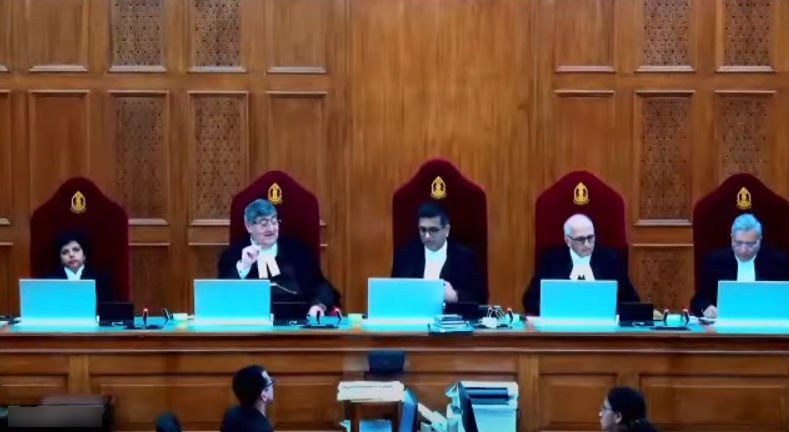
In a five-judge bench headed by chief justice of India (CJI) hearing, the Supreme Court refused to grant any legal sanction to same-sex marriage on Oct 17.
The Supreme Court gave a decision with a 3:2 majority, holding that a civil union cannot be recognised under the constitution.
It also asked the union government to set up a high-powered committee to be chaired by the cabinet secretary to take steps to decide the rights and social entitlements of same-sex couples.
What does 3:2 judgement mean?
The four judgments were written by CJI DY Chandrachud, justice SK Kaul, justice Ravindra Bhat, and justice PS Narasimha respectively.
Out of the five judges on the constitution bench, the majority verdicts delivered by three judges, justice Ravindra Bhat, justice Hima Kohli, and justice PS Narasimha held that civil unions between same-sex couples are not recognised under law and they cannot claim the right to adopt children either.
In two separate minority judgments, CJI DY Chandrachud and justice Kaul ruled that same-sex couples are entitled to recognise their relationships as civil unions and can claim consequential benefits.
Both the judges held that such couples have the right to adopt children and struck down Central Adoption Resource Authority (CARA) regulations to enable the same.
However, justice Bhat maintained that CARA regulations were in fact not void for not allowing queer couples to adopt. Justice Kohli concurred with justice Bhat. Justice Narasimha agreed with justice Bhat’s view and stated that CARA regulations could not be held unconstitutional.
The voice matters
23-year-old Aditi Parasher, who identifies as a bisexual woman, voiced her concerns and views on the SC’s judgement.
Parasher, who works with a brand marketing company says, “The fact that our community’s voice has been heard and our rights acknowledged by the Supreme Court instils hope in us.” She adds, “The court’s recognition of the lack of basic rights (e.g., pension, PF, gratuity, insurance rights, and healthcare rights associated with marriage) could serve as a pivotal moment for our cause.”
Parasher felt disappointed and felt like being treated as a “second-class citizen”. She was among the many who were livestreaming the hearing. She says, “There was a brief moment of optimism when CJI DY Chandrachud stated that queer people should be allowed to adopt, but unfortunately, that optimism was short-lived.”
One positive outcome, in her view, was when CJI DY Chandrachud issued directives to the police, emphasising no harassment of queer couples solely based on their gender identity or sexual orientation.
Decriminalisation of Section 377
Decriminalisation of Section 377 in 2018 was a historic step toward recognizing and protecting the rights and dignity of LGBTQ+ individuals in India. Parasher says, “The decriminalisation of Section 377 was a pivotal moment for us. At this stage, the ability to marry would be a significant step towards leading a normal, socially accepted life as a human being.”
Does a constitutional nod matter? To which she says, “The decriminalisation of Section 377 marked a significant step towards our social acceptance within families and public gatherings. It removed the first layer of queerphobia by decriminalising being queer.” She adds, “SC hearing acknowledged the rich history of queer identities within Hindu culture. I am confident that granting us these basic rights will help society realise the normalcy of being queer.”
(With inputs from IANS)
For more such updates and news on the go, follow us on