





Ramdev’s ‘sharbat jihad’ remark while promoting Patanjali's rose drink sparks row
Updated: Apr 10th, 2025


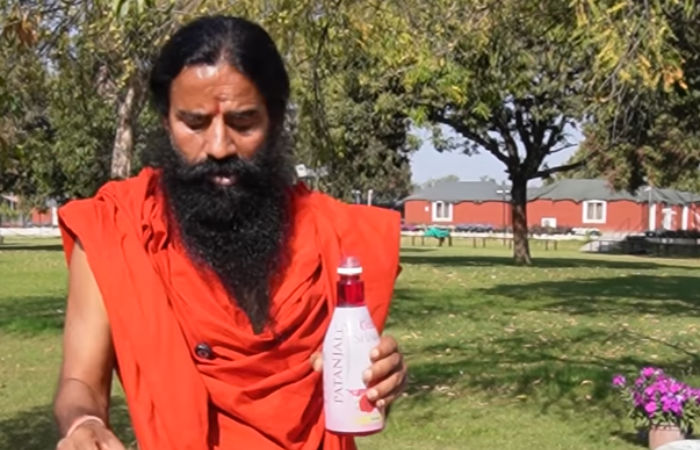
Yoga guru and Patanjali founder Baba Ramdev has sparked a controversy by using the term “sharbat jihad” in a viral video, where he claimed that a company selling sharbat is using its earnings to build mosques and madrasas, while he was promoting Patanjali’s sharbat.
In the video, which has garnered over 38 million views, Ramdev is seen promoting Patanjali’s rose-flavoured beverage. He contrasts it with a competitor’s product, saying, “If you drink that sharbat, there will be masjids and madrasas made. But, if you drink Patanjali's ‘gulaab’ sharbat, then gurukuls, Patanjali University and the Bharatiya Shiksha Board will be made.”
This is not the first time the Patanjali founder has been in trouble for hyping up his products.
The Kerala High Court last week stayed criminal proceedings against Ramdev and Acharya Balkrishna, in the misleading advertisement case by Patanjali.
A single-judge bench of Justice VG Arun stayed the proceedings pending before the district court in Palakkad for three months.
The prosecution against Patanjali and its promoters was instituted based on a complaint filed by the Palakkad Drug Inspector, alleging that they shared a misleading advertisement for a product, ‘Mukta Vati Extra Power’, on September 30, 2023.
The complainant alleged that the ‘Mukta Vati Extra Power’ advertisement violated the provisions of the Drugs and Magical Remedies (Objectionable Advertisement) Act, 1954.
The petitioner further alleged that the advertisement was published in a newspaper to induce patients to purchase the drugs, which will result in self-medication and use of the drug without the direction of a medical practitioner, leading to undesirable and irreparable effects on the health of persons.
Later, an inspection was conducted on the premises of Patanjali, and the drug was found stocked on the premises for sale.
As per the complaint, “It was a drug as defined under Section 2(b) of the Act and that the label of the product contained ‘Indications- Useful in Blood Pressure (Cardiac Disorder)’, which is alleged to be an advertisement within the meaning of Section 2(a) of the Act.”
After that, Ramdev and Balkrishna approached the High Court seeking quashing of the criminal proceedings against them.
In their plea, they further pointed out, “The word magic remedy is defined as a drug having miraculous powers. The object of section 3(d) is to suggest/calculate to lead the use of the drug, such as a magical remedy is not advertised.”
“The advertisement says that the medicine can be used only after a prescription by a registered medical practitioner, which means that it does not lead to the drug’s use straightaway. So, the offence under section 3(d) is not made out,” they claimed.
In April last year, Ramdev and Acharya Balkrishna orally tendered their “unqualified and unconditional apology” before the Supreme Court.
The Indian Medical Association has sought action against Patanjali for violation of the Drugs and Magic Remedies (Objectionable Advertisements) Act, 1954 – which prohibits the advertisement of certain products for the treatment of specified diseases and disorders, including diabetes, heart diseases, high or low blood pressure and obesity.