





Plea filed in SC against nationwide rollout of E20 in India
Updated: Aug 25th, 2025


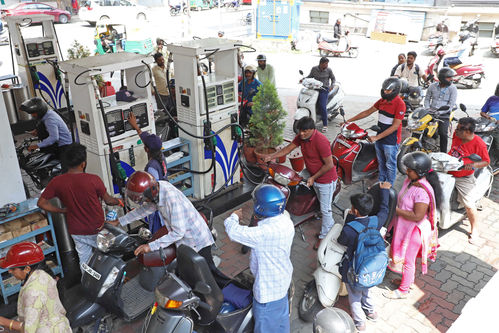
A Public Interest Litigation (PIL) has been filed in the Supreme Court against the nationwide rollout of 20% Ethanol Blended Petrol (E20), alleging that people are forced to use the fuel, which is not compatible with their vehicles.
The plea, filed by advocate Akshay, has sought directions to the Ministry of Petroleum and Natural Gas to ensure that ethanol-free petrol (E0) remains available at all fuel stations across the country, according to reports.
According to the petition, a large segment of vehicles — including cars and two-wheelers manufactured before 2023, and even certain newer BS-VI models — are not compatible with high ethanol blends like E20.
The PIL reportedly highlights issues of engine corrosion, reduced fuel efficiency, higher maintenance costs, and insurance claim rejections – issues that have recently surfaced on the internet.
E20 consists of 20% ethanol blended with 80% petrol. Many old vehicles are compatible with E5 or E10, and not E20, and the concerns were raised for the same.
India’s E20 push
The Indian government, on the other hand, has aggressively pushed for E20, as the nationwide rollout slated for 2030 has been advanced to 2025.
The government has refuted media reports which raised concerns about the potential negative impact of E20, particularly with regard to older vehicles and customer experience.
“These concerns, however, are largely unfounded and not supported by scientific evidence or expert analysis,” the Petroleum Ministry said in a statement, adding that the narrative that ethanol blending in petrol is harming vehicles or causing undue hardship to consumers is “not based on real facts and lacks technical foundation”.
“Material compatibility and drivability tests by Automotive Research Association of India (ARAI), Indian Institute of Petroleum (IIP) and Indian Oil Corporation (R&D) have confirmed that legacy vehicles also showed no significant variations, performance issues or abnormal wear-and-tear when operated with E20. Moreover, E20 fuel passed hot and cold startability tests without any engine damage,” the ministry said in an X post.
On fuel efficiency, the ministry said that ethanol, being lower in energy density than petrol, results in a marginal decrease in mileage, estimated at 1–2% for four-wheelers designed for E10 and calibrated for E20, and around 3–6% in others.
“This marginal drop in efficiency can be further minimised through improved engine tuning and use of E20-compatible materials, which leading automobile manufacturers have already adopted. In fact, the Society of Indian Automobile Manufacturers (SIAM) has confirmed that E20-compliant vehicles with upgraded components began rolling out from April 2023. Thus, the allegation that E20 leads to drastic drop in fuel efficiency is factually incorrect,” the ministry highlighted.
“E20 blending significantly strengthens India’s energy security by reducing dependence on crude oil imports. In fact, since 2014-15 India has already saved more than ₹1.40 lakh crore in foreign exchange through petrol substitution. Ethanol blending supports the rural economy, with expeditious payment of over ₹1.20 lakh crore to farmers, thereby creating income and employment opportunities in the agricultural and biofuel sectors,” the ministry further stated.
(with inputs from syndicated feed)