





Pakistan says Indus Treaty abeyance ‘act of war’, shuts airspace for Indian airlines
Updated: Apr 24th, 2025


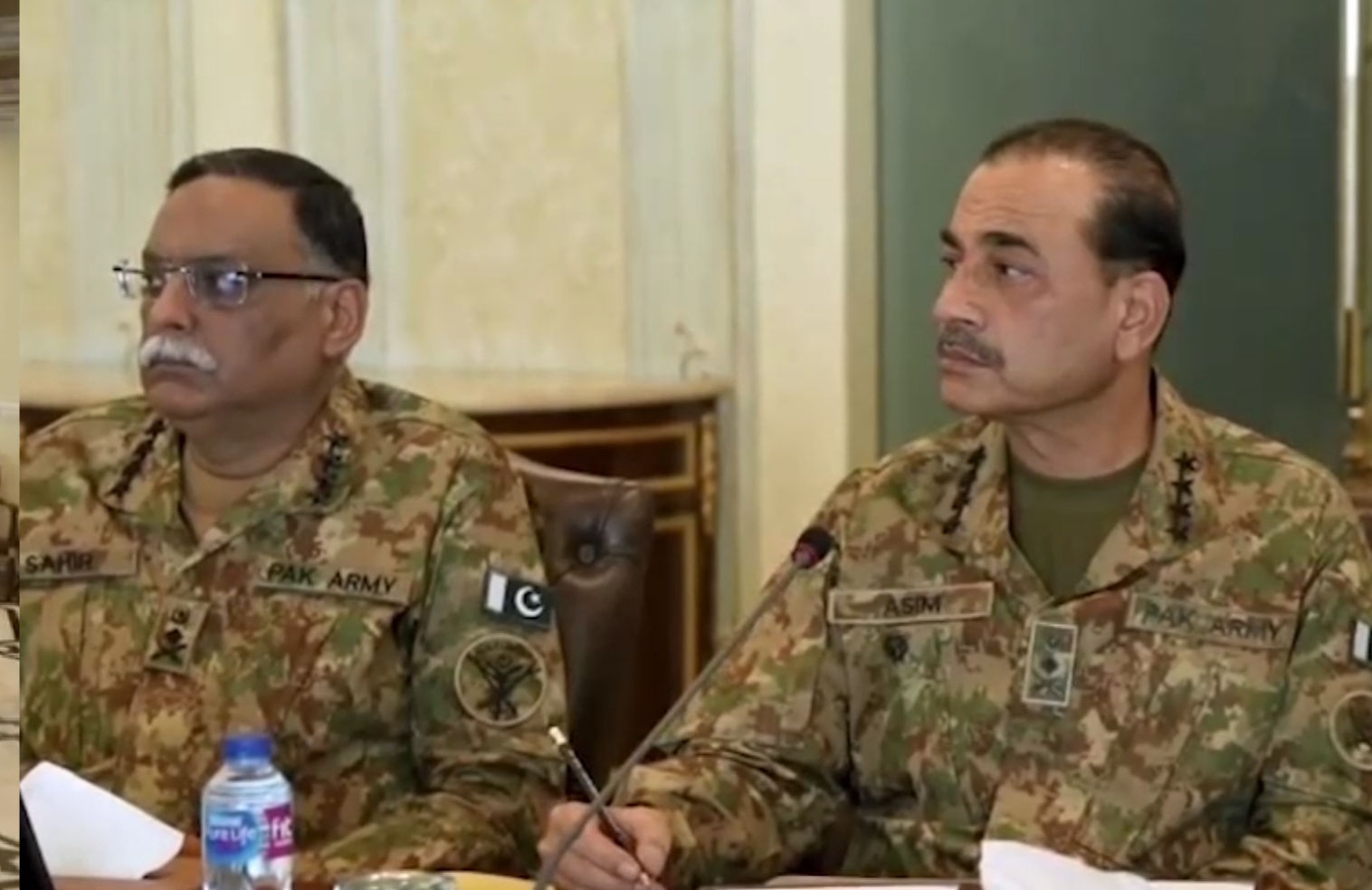
The high-level emergency meeting of Pakistan's National Security Committee (NSC) chaired by Prime Minister Shehbaz Sharif ended late Thursday afternoon with some important decisions taken in response to India’s announced measures after the Pahalgam terror attack.
While condemning the Pahalgam incident and loss of innocent lives, the committee also rejected New Delhi’s accusation of Pakistan’s involvement in cross-border terrorism.
The meeting, attended by the country’s trop-brass comprising top civil and military leadership, seconded the recommendations made by the Pakistan's Ministry of Foreign Affairs and decided an immediate closure of its airspace for India.
Islamabad also said that India’s decision to suspend the Indus Waters Treaty (IWT) will be considered as an “act of war”, stating that Pakistan will use its national power to tackle any unilateral decision taken by India in this matter.
NSC rejected the Indian accusations, terming them as “baseless and concocted”. The committee also decided to expel Indian defence, navy and air force advisors stationed at the Indian High Commission in Islamabad, giving them and their support staff a deadline of April 30 to leave Pakistan.
The diplomatic staff at the Indian High Commission will also be limited to 30 officers and the same will be applied to the Pakistan High Commission in India.
The NSC decided that the Pakistan government will call on the World Bank and other global forums to raise the issue of India's unilateral decision to suspend the Indus Waters Treaty (IWT), stating that India has no authority to take any unilateral decision on the IWT as global forums including the World Bank are also party in the case.
NSC has also decided to close the Wagah-Attari border with India as a reciprocal action against the Indian border closure decision.
The NSC expressed satisfaction on the preparedness of Pakistan Armed forces and vowed to give a “fitting response” if India opts for any misadventure.
Pakistan’s NSC termed India’s decision as inconsistent, and “part of the habit” to accuse Islamabad without any proof or evidence to spread what it termed as the Indian government's anti-Pakistan agenda.
Islamabad also closed country's airspace for Indian Airlines.
Islamabad threatened to put abeyance to all bilateral agreements, including Simla Agreement that consists of normalization of relations between the countries.
Similar to India, Pakistan has also suspended SAARC Visa Exemption Scheme (SVEC) for Indian citizens, and has closed Attari Integrated Check Post from its side.
In a decisive response to the deadly terror attack on April 22 in Pahalgam, Jammu and Kashmir, where 28 people, mostly tourists were killed, India took robust diplomatic measures to hold Pakistan accountable for its role in cross-border terrorism.
The Cabinet Committee on Security (CCS), chaired by Prime Minister Narendra Modi, suspended the Indus Waters Treaty, closed Attari Integrated Check Post, cancelled SAARC Visa exemption scheme for Pakistani nationals, and announced withdrawal of its own Defence, Navy, and Air Advisors from the Indian High Commission in Islamabad, with all such posts deemed annulled.
India also decided to reduce the overall strength of the Indian High Commission in Islamabad and the Pakistani High Commission in New Delhi. The two embassies will be cut to a staff strength of 30, down from the current 55. This reduction will be implemented by May 1, 2025.
(with inputs from syndicated feed)