





‘Not all private property a community resource’: Supreme Court
Updated: Nov 5th, 2024


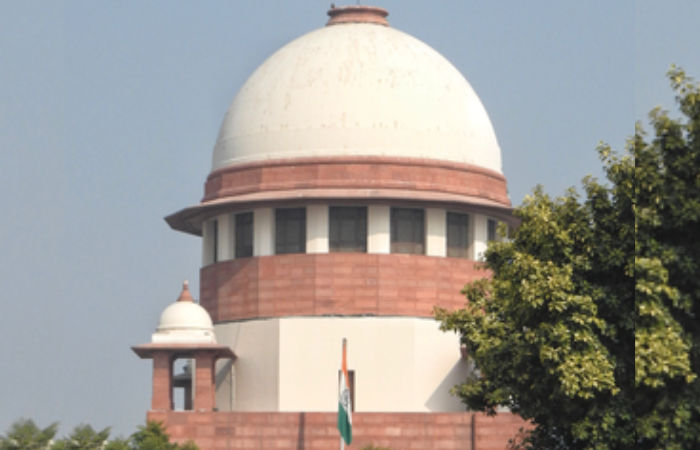
In a landmark judgment today, the Supreme Court of India, led by Chief Justice D Y Chandrachud and the bench comprising of eight other judges observed that not all the private properties should be treated as ‘community resources’ to be distributed by the government for the public good.
The judgment, announced by the 7:2 majority of the bench, noted that important resources like forests, mines, or waterbodies can be considered for public good by the government, but personal belongings should not be counted as community resources.
The bench comprised of CJI Chandrachud, Justices Hrishikesh Roy, B V Nagarathna, Sudhanshu Dhulia, J B Pardiwala, Manoj Misra, Rajesh Bindal, Satish Chandra Sharma, and Augustine George Masih.
While seven judges were in agreement to the judgment, Justice BV Nagarathna partially concurred with it, and Justice Dhulia dissented.
According to the judgment, “the direct question referred to this bench is whether the phrase ‘material resources of the community’ used in Article 39(b) includes privately owned resources. Theoretically, the answer is yes, the phrase may include privately owned resources. However, this Court is unable to subscribe to the expansive view adopted in the minority judgement authored by Justice Krishna Iyer in Ranganatha Reddy and subsequently relied on by this Court in Sanjeev Coke.”
The court then clarifies that not all private property should be treated as a community resource
“Not every resource owned by an individual can be considered a ‘material resource of the community’ merely because it meets the qualifier of ‘material needs’,” stated the judgment.
It also clarified the factors that maybe put into the consideration, stating that “the resource in question falls within the ambit of Article 39(b) must be context-specific and subject to a non-exhaustive list of factors such as the nature of the resource and its characteristics; the impact of the resource on the well-being of the community; the scarcity of the resource; and the consequences of such a resource being concentrated in the hands of private players.”
The judgment states that the identification of the resources falling inside or outside the definition of ‘material resource of the community’ can be decided with the help of the Public Trust Doctrine evolved by the SC.
The court also stated that the distribution itself has a wide connotation.
“The various forms of distribution which can be adopted by the state cannot be exhaustively detailed. However, it may include the vesting of the concerned resources in the state or nationalisation. In the specific case, the Court must determine whether the distribution ‘subserves the common good’,” it said.
The decision disagrees with a 1970 ruling by Justice Krishna Iyer, which stated that all private property could be used for the public good. The court however, upheld the Article 31 C to the extent it was upheld in Kesavanda Bharati case remains in force, calling it ‘constitutional’.
The Article 31C of Constitution refers to the equal resource distribution and prevention of wealth concentration, which is centred to Article 39(b) that focuses on distribution of resources to serve common good.
Also read: