




NIA chargesheets three in alleged ISIS-linked bioterror plot to carry out mass poisoning in public places
Updated: May 6th, 2026


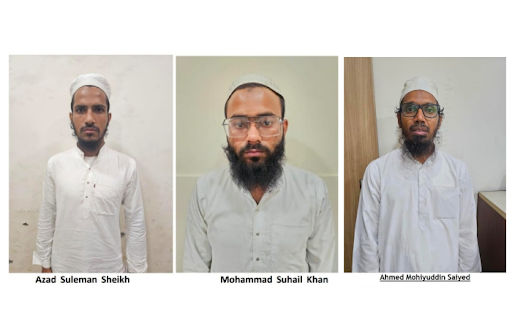
The National Investigation Agency has chargesheeted three men in connection with an alleged ISIS-linked bioterror conspiracy involving plans to carry out mass poisoning in public spaces using the highly toxic substance ricin, the agency said on Tuesday.
The NIA stated that the accused have been charged before the NIA Special Court in Ahmedabad under provisions of the Unlawful Activities (Prevention) Act, the Bharatiya Nyaya Sanhita, and the Arms Act.
The three accused named in the chargesheet are Dr Syed Ahmed Mohiuddin, an MBBS graduate based in Hyderabad, and his alleged associates, Azad and Mohammad Suhel, both residents of Uttar Pradesh.
Alleged plot to use Ricin for mass poisoning
According to the NIA, the accused were part of a coordinated conspiracy directed by foreign-based handlers linked to the proscribed terrorist organisation Islamic State (ISIS).
Investigators allege the group planned to manufacture and deploy ricin, a potent biological toxin derived from castor seeds and listed under Schedule I of the Chemical Weapons Convention, to poison large numbers of people in public places.
The agency claimed the accused had been tasked with recruiting vulnerable and radicalised youth, facilitating terror funding, and spreading extremist ideology in support of jihadist activities.
Hyderabad doctor allegedly ran secret Ricin laboratory
The case was initially registered by the Gujarat Anti-Terrorism Squad after Dr Mohiuddin was arrested in November 2025 at a toll plaza while allegedly transporting illegal firearms, a bottle containing four litres of castor oil, and other incriminating materials in his vehicle. Subsequent investigation led to the arrest of Azad and Suhel the same day.
After taking over the probe in January 2026, the NIA alleged that Mohiuddin had converted his residence in Hyderabad into a clandestine laboratory for extracting ricin from castor seeds.
Investigators further claimed that he had joined the conspiracy after being promised the role of ISIS “Amir” for South Asia by his foreign handlers.
According to the agency, Azad and Suhel knowingly assisted in the conspiracy by maintaining contact with overseas handlers, handling terror proceeds, conducting reconnaissance, and collecting illegal arms and ammunition.
The NIA alleged that the duo had earlier collected parcels containing cash and prohibited weapons from a dead-drop location in Hanumangarh, Rajasthan, and transported them to Chhatral in Gujarat for Mohiuddin to retrieve.
Suhel, investigators said, acted as a key coordinator within the network, serving as an intermediary between the foreign handlers and the accused on the ground. He allegedly handled recruitment, distributed funds, managed weapons consignments, recorded bay’ah (oath of allegiance), and prepared ISIS flags.
The NIA said the investigation in the case is ongoing, and efforts are continuing to identify and trace the foreign handlers and other individuals allegedly involved in the wider conspiracy.
The case marks one of the most serious alleged bioterror plots uncovered by Indian agencies in recent years, with investigators claiming the accused intended to target civilians on a mass scale.
