




‘India not a patriarchal society’: SG Tushar Mehta defends Sabarimala practices in Supreme Court
Updated: Apr 8th, 2026


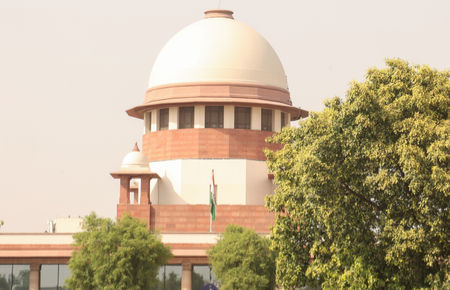
India’s Solicitor General Tushar Mehta on Tuesday argued before the Supreme Court of India that India cannot be viewed through the lens of a patriarchal or gender-stereotypical society, while defending religious practices in the Sabarimala matter.
A nine-judge Constitution Bench headed by Chief Justice of India (CJI) Surya Kant on Tuesday heard the long-pending Sabarimala review matter, involving a batch of petitions raising significant constitutional questions on religious freedom and gender equality.
Citing constitutional principles, Mehta maintained that Indian society has historically accorded respect to women and that equality is already enshrined under Articles 14 and 15 of the Constitution. He argued that recent judicial trends increasingly interpret all issues through a gender lens, which, according to him, may not always be appropriate in the Indian context, as reported by Bar and Bench.
Referring to past practices, Mehta reportedly said that earlier restrictions in religious spaces were not necessarily rooted in gender discrimination but in denominational beliefs. He stressed that the Sabarimala issue should be viewed in terms of religious freedom and the rights of denominations to follow their traditions, rather than solely as a question of individual dignity.
During the hearing, Justice B V Nagarathna raised concerns over the application of the concept of “untouchability” in the context of menstruation, pointing out the inconsistency of applying such a principle for limited days each month. She emphasised the need to consider the lived realities of women, as per reports.
Responding to the concerns, Mehta reportedly reiterated that not all religious practices can be equated with violations of personal autonomy, arguing that certain customs—such as dress codes or entry restrictions—are part of respecting the faith and beliefs of a denomination.
The hearing took up the reference arising out of review petitions filed against its September 2018 judgment permitting entry of women of all ages into the Lord Ayyappa temple at Sabarimala.
Apart from the Sabarimala issue, the Constitution Bench was also to consider allied questions such as the entry of Muslim women into mosques and dargahs, the rights of Parsi women to access fire temples after interfaith marriages, the validity of excommunication practices, and the legality of female genital mutilation in the Dawoodi Bohra community.
Earlier, the CJI Surya Kant-led Bench had fixed a detailed schedule and clarified that the maintainability of the reference stands conclusively settled, while identifying seven substantial questions of law for adjudication.
As per the schedule, arguments by parties supporting the review petitions will be heard from April 7 to 9, followed by submissions from those opposing the review between April 14 and 16.
Rejoinder submissions, if any, will be taken up on April 21, with final arguments by the amicus curiae expected to conclude on April 22.
The top court had directed all parties to file written submissions in advance and stressed strict adherence to timelines, observing that Constitution Bench matters are of paramount importance.
In the run-up to the hearings, written submissions filed on behalf of the Travancore Devaswom Board urged the apex court to adopt a “community-centric” understanding of religion, arguing that courts should refrain from reinterpreting faith-based practices and questioning the continued application of the “essential religious practices” doctrine.
Meanwhile, Mehta informed the court that the Union government supports the review petitions. The Centre, in its submissions, has argued that the issue falls squarely within the domain of religious faith and denominational autonomy and lies beyond the scope of judicial review.
“An inquiry into whether a practice is rational, acceptable to judicial sensibilities or aligned with transformative constitutional doctrines is not constitutional review,” the Centre submitted, adding that judges are neither trained nor institutionally equipped to interpret religious texts or adjudicate theological questions.
(with inputs from syndicated feed)
