





GRAP-III imposed as Delhi’s AQI crosses 400, smog chokes NCR
Updated: Nov 11th, 2025


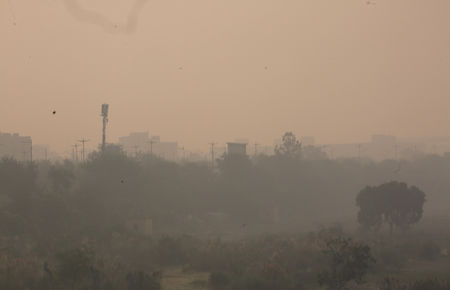
As Delhi’s air quality plunged into the ‘severe’ category for the first time this season, authorities on Tuesday enforced Stage III of the Graded Response Action Plan (GRAP) to curb pollution levels in the capital and its surrounding areas.
According to data from the Central Pollution Control Board (CPCB), Delhi’s overall Air Quality Index (AQI) jumped from 362 on Monday to 425 on Tuesday morning, breaching the 400-mark and triggering emergency-level restrictions.
At 7 am, 34 out of 39 active monitoring stations in the city recorded ‘severe’ air quality. The worst-affected areas included Bawana (462), Wazirpur (460), Mundka (452), and Punjabi Bagh (452). An AQI between 301–400 is considered ‘very poor’, while levels above 400 fall under the ‘severe’ category, posing serious health risks.
Under GRAP-III, authorities have imposed strict measures such as halting construction and demolition activities (except essential public projects), banning stone crushers and mining, and curbing vehicular emissions. The restrictions aim to prevent further deterioration as winter smog thickens over the region.
Neighbouring areas also suffered from poor air quality, with AQI averages of 391 in Noida, 366 in Greater Noida, 387 in Ghaziabad, and 252 in Gurugram.
Experts from the India Meteorological Department (IMD) said falling temperatures and stagnant wind patterns are trapping pollutants near the surface, intensifying the haze. No rainfall is expected in the coming days, and fog conditions are likely to worsen visibility.
Health professionals have urged residents to limit outdoor exposure, particularly for children, the elderly, and those with respiratory or cardiac ailments. They have also advised the use of protective masks and air purifiers indoors.