




Godzilla El Niño' could spell trouble for Gujarat, Maharashtra, and Goa
Updated: Jun 12th, 2026


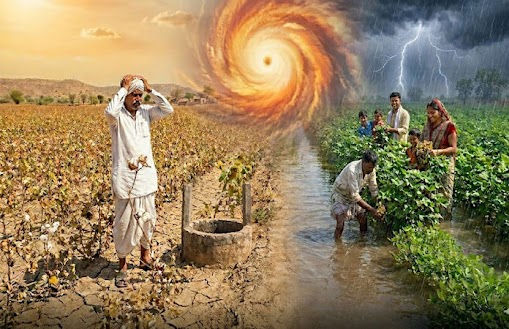
A fresh international forecast by the European Union's Copernicus Climate Change Service (C3S) has raised concerns over India's upcoming monsoon season, with global weather models indicating the possibility of below-average rainfall across large parts of the country during July-September.
The forecast suggests that western and central India could be among the worst-affected regions if a strengthening El Niño event in the Pacific Ocean continues to develop in the coming months.
According to the assessment, Gujarat is among the states that could witness a significant reduction in rainfall, while parts of Maharashtra, including the Konkan region and Goa, may receive 100-200 mm less rainfall than normal.
The projections have triggered concerns over the possible impact on agriculture, water availability, and the broader economy, particularly as the southwest monsoon remains crucial for India's farm sector and reservoir replenishment.
Weather experts said the emerging El Niño conditions are being closely monitored. El Niño is a naturally occurring climate phenomenon characterised by abnormal warming of sea surface temperatures in the central and eastern Pacific Ocean, which often weakens monsoon circulation over the Indian subcontinent.
Scientists use the term "Godzilla El Niño" to describe exceptionally strong El Niño events that can significantly alter global weather patterns.
Preliminary data for June 2026 indicate that warming in the Pacific Ocean is intensifying, potentially affecting atmospheric circulation and reducing the strength of moisture-bearing monsoon winds reaching India.
The India Meteorological Department (IMD) has already projected seasonal rainfall during June-September at around 90-92% of the long-period average, placing it in the "below normal" category.
Experts warned that a weaker monsoon could have far-reaching implications for India's agriculture sector, particularly for kharif crops such as paddy, cotton, pulses, soybean, and oilseeds, which depend heavily on seasonal rainfall.
A shortfall in rainfall could affect crop yields, increase production costs and contribute to higher food prices and inflation, they said.
The forecast has also raised concerns over water storage levels in reservoirs and dams. A prolonged rainfall deficit could affect irrigation supplies in rural areas and increase pressure on drinking water resources in major cities.
Some experts cautioned, however, that seasonal climate forecasts issued several weeks before the peak monsoon period are subject to change and should not be viewed as definitive predictions.
They noted that rainfall patterns are unlikely to be uniform across the country, with some eastern and northern regions expected to fare better than western and central India.
Meteorologists have advised governments and farmers to strengthen water conservation measures, promote drought-resilient crops, and improve irrigation planning in anticipation of possible rainfall shortages.
Globally, a strong El Niño event could also influence weather patterns in other regions. Experts said Australia, Indonesia, and parts of South-East Asia may face drier-than-normal conditions, while some areas of South America could experience excessive rainfall and flooding.
Climate researchers also warned that disruptions to agricultural production in major commodity-producing regions could affect global supplies of products such as coffee, sugar, cocoa, and palm oil.
India has historically witnessed weaker monsoon seasons during strong El Niño years, making the development of the Pacific weather system a key factor being closely watched by meteorological agencies and policymakers ahead of the crucial monsoon months.
