




Five test positive for Nipah virus in West Bengal
Updated: Jan 15th, 2026


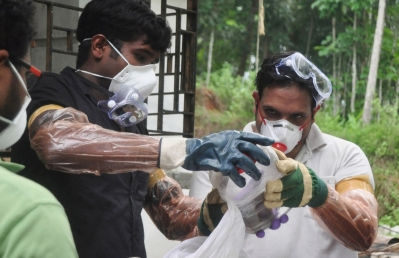
Five people have tested positive for the Nipah virus in West Bengal, as per official reports. Earlier, two health workers were infected; three more individuals have now developed symptoms associated with the virus, taking the total number of cases in the state to five.
The two infected health workers are currently undergoing treatment in an ICU and remain in critical condition.
As per reports, the workers were exposed to the virus while tracing and monitoring around 120 people who were suspected of possible infection. All those identified have since been placed under home quarantine as a precautionary measure.
Doctors and public health authorities have issued an alert amid concerns over the rising number of cases. Medical experts have warned that both the infection rate and the fatality rate of the Nipah virus pose a serious risk, with studies indicating that between 40 and 70 per cent of those infected may succumb to the disease.
Authorities are particularly concerned, as preliminary investigations suggest that the infected individuals do not have any recent travel history outside West Bengal.
The Nipah virus is a zoonotic disease primarily carried by fruit bats. While scientists are still studying how the virus is transmitted from bats to pigs, cattle or humans, it is believed that humans can contract the infection through contact with the saliva or urine of infected bats, or by consuming contaminated food. The virus is considered highly dangerous due to its high mortality rate, which can reach up to 70% in severe outbreaks.
Transmission can occur from animals to humans through the consumption of food contaminated with the saliva, urine or faeces of bats or pigs.
Human-to-human transmission is also possible through close contact with bodily fluids such as saliva, blood or respiratory droplets.
Health experts said symptoms typically appear between four and 14 days after exposure. Early signs include fever, headache, muscle pain, sore throat, vomiting and fatigue. In severe cases, patients may develop breathing difficulties, dizziness, confusion, seizures, coma and encephalitis, or inflammation of the brain.
