




Fares for Vande Bharat sleeper trains announced, RAC and waiting list scrapped
Updated: Jan 12th, 2026


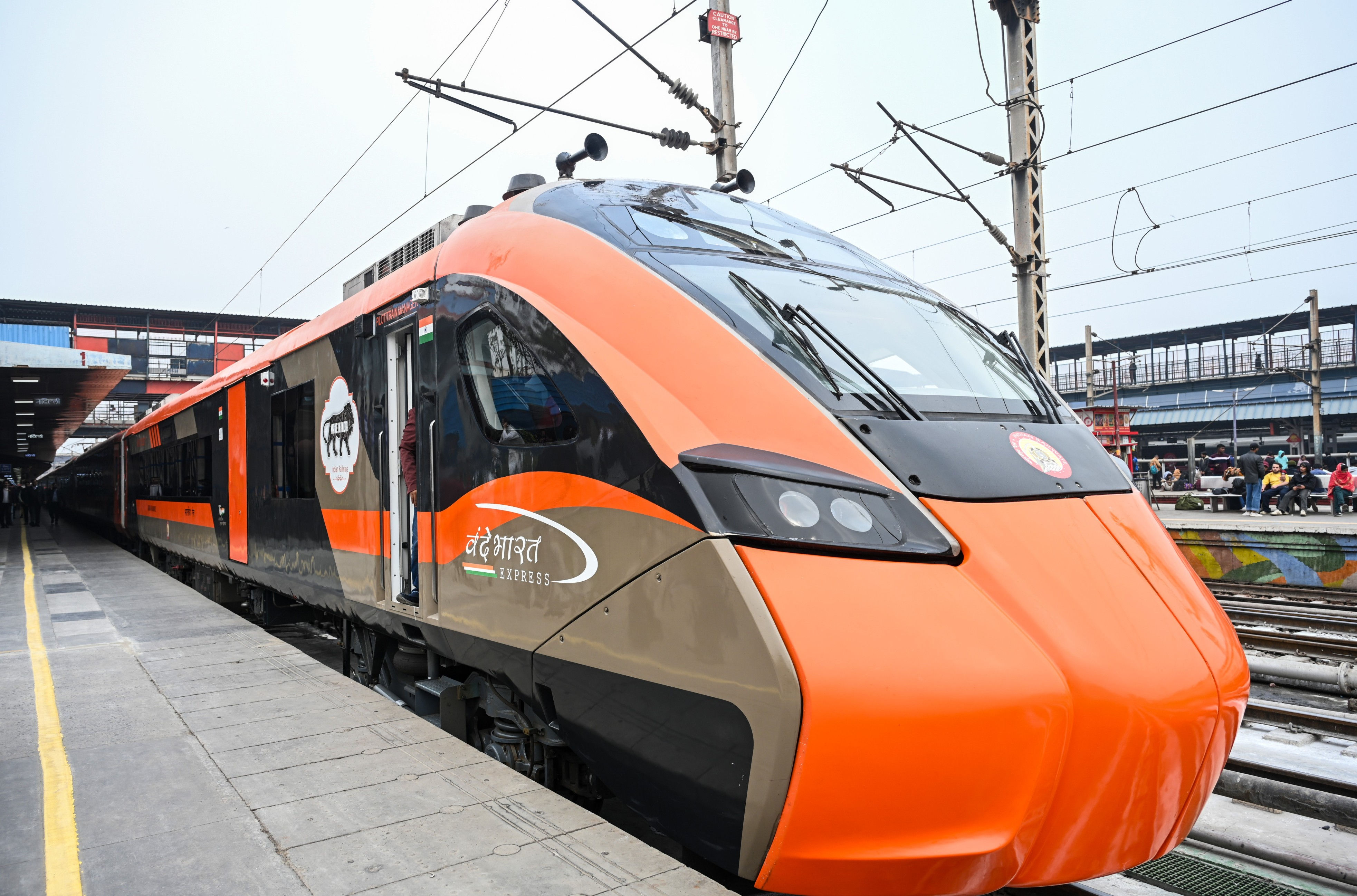
Indian Railways has officially announced the fare and reservation structure for its upcoming Vande Bharat Sleeper Express, marking a major change in long-distance overnight rail travel in India.
Unlike the chair-car Vande Bharat services currently running on short and medium routes, the sleeper variant is designed for journeys of several hundred kilometres and has been positioned firmly in the premium segment.
Alongside higher fares, the new service introduces a major change to booking rules by removing long-established features such as reservation against cancellation (RAC) and waiting lists.
According to the notified structure, the Vande Bharat Sleeper will have a minimum chargeable distance of 400 km, even if a passenger travels a shorter distance. Base fares, excluding GST, have been fixed at ₹2.4 per km for AC 3-Tier, ₹3.1 per km for AC 2-Tier and ₹3.8 per km for AC First Class. This translates into minimum fares of ₹960, ₹1,240 and ₹1,520, respectively, for journeys of up to 400 km, with GST charged separately.
Fares will rise proportionately with distance, and on longer routes ticket prices are expected to exceed those of Rajdhani Express services, underlining the train’s premium positioning.
One of the most significant changes from previous practices is the reservation policy. Tickets will be sold only as fully confirmed berths, with no provision for RAC or waiting lists.
All berths will be released on the first day of the Advance Reservation Period, and only a limited set of quotas will apply, including those for senior citizens, women passengers, persons with disabilities and the duty pass quota.
In a circular issued on January 9, 2026, the Railway Board said that only passes, warrants or similar instruments that are fully reimbursable will be accepted for bookings on the Vande Bharat Sleeper. Concessional tickets and non-reimbursable complimentary passes will not be permitted.
The railways have also indicated a strong preference for digital payments. The circular noted that accepting payments digitally would enable refunds to be initiated within 24 hours of cancellation. Even at booking counters, passengers will be encouraged to pay digitally, although refunds for those unable to do so will be processed under normal rules.
Lower-berth allocation will be attempted for eligible passengers, subject to availability. This includes senior citizens, women above a specified age and passengers travelling with children who do not require a separate berth.
From a design and operational standpoint, the Vande Bharat Sleeper differs markedly from conventional coach-hauled overnight trains. The train will be fully air-conditioned and will offer accommodations in AC First Class, 2-Tier, and 3-Tier classes. The trainsets are designed for speeds of up to 180 kmph, though a maximum of around 130 kmph is expected on existing tracks. Features include automatic sliding doors, modern toilets, improved suspension, individual reading lights and charging points, as well as enhanced safety systems such as surveillance and collision-avoidance technology.
The inaugural service is set to operate between Howrah in West Bengal and Kamakhya near Guwahati in Assam, covering nearly 1,000 km. The corridor, which traditionally relies on overnight trains, is expected to see reduced travel times once the service begins.
Indian Railways plans to roll out additional Vande Bharat Sleeper services in phases on other long-distance routes, subject to manufacturing schedules and operational readiness.
Unlike traditional overnight trains, which use lower per-kilometre fares and rely on RAC and waiting lists to maximise occupancy, the Vande Bharat Sleeper treats each berth as fixed premium inventory. It is positioned as an upgrade above standard long-distance services, prioritising speed, comfort and predictability rather than serving as a direct replacement for existing trains.
