




EC’s SIR unconstitutional, Congress’s Singhvi argues in Supreme Court
Updated: Dec 3rd, 2025


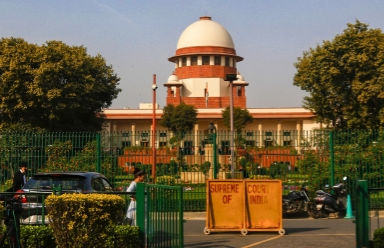
Senior advocate Abhishek Manu Singhvi argued before the Supreme Court that the Election Commission of India (EC) has exceeded its legal authority by enforcing the special intensive revision (SIR) of electoral rolls, which, according to him, effectively compels large groups of voters to re-establish their right to vote. As per reports, Singhvi maintained that only Parliament has the power to alter these substantive requirements, not the EC.
A bench led by Chief Justice Surya Kant, along with Justice Joymalya Bagchi, is reportedly hearing multiple petitions that challenge the constitutional validity of the SIR process first undertaken in Bihar and now reportedly underway in 12 states.
During the hearing on November 27, Singhvi explained why, in his view, the SIR mechanism violates constitutional boundaries. He argued that Article 324, which empowers the Election Commission to supervise and conduct elections, does not permit the body to introduce new rules that change the nature of voter eligibility.
According to Singhvi, the EC’s approach effectively treats citizens as temporary entrants on the electoral roll by demanding fresh proof of citizenship before confirming their status. He highlighted that the SIR process relies on a list of 11 documents for citizenship verification–documents that he said are neither part of any law nor included in the prescribed rules.
He further submitted that Article 324 must be interpreted in harmony with Articles 327 and 328, which give Parliament and state legislatures the authority to frame election-related laws. These constitutional provisions are backed by Entry 72 of the Union List and Entry 37 of the State List, respectively.
As per reports, Singhvi’s broader contention was that the Election Commission’s powers cannot be treated as absolute. Instead, they must operate within the limits set by legislation enacted by Parliament and state assemblies.
