




Drones, SCALP & HAMMER missiles: Tech that made ‘Operation Sindoor’ successful
Updated: May 7th, 2025


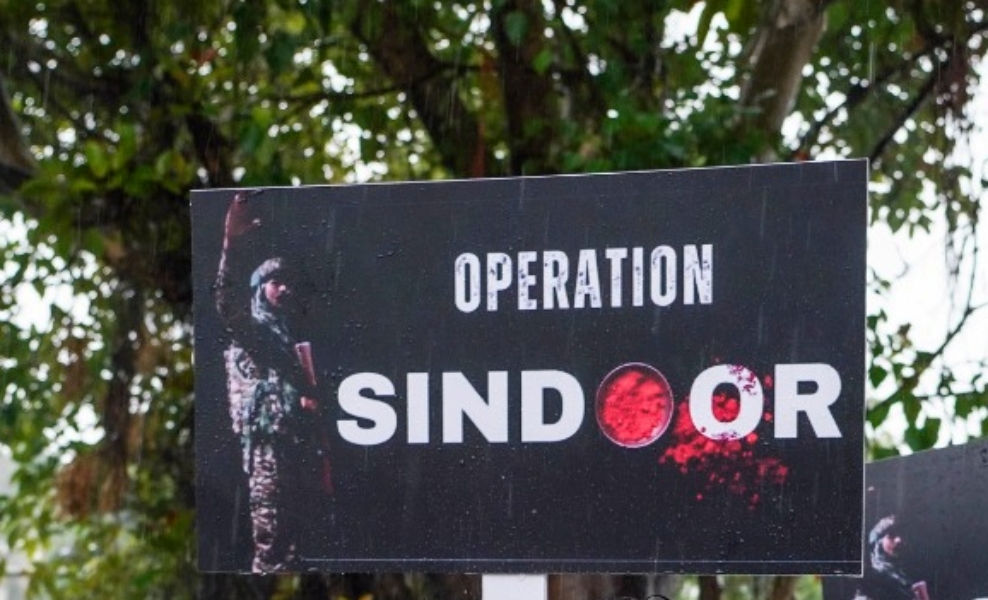
‘Operation Sindoor’ showcased the fusion of airpower, artillery, and unmanned systems in a coordinated, long-duration strike by India in Pakistan and Pakistan occupied Kashmir.
The use of loitering munitions (kamikaze drones) and multiple vector platforms enabled India to target deep and simultaneously across multiple sectors on nine designated targets.
Another key feature of the operation Sindoor was the Indian Air Force’s strike on Bahawalpur, a high-value target that houses Pakistan Army’s 31 Corps Headquarters.
The IAF deployed Rafale jets equipped with SCALP and HAMMER missiles, along with long-range air-to-surface weaponry, extending its strike reach well beyond previous missions.
SCALP
The SCALP missile is a 1,300 kg, 5.10 m long air-launched long-range weapon for precision strikes against strategic, stationary targets such as bunkers, according to MRDA, a multinational European group that manufactures it.
It is armed with conventional explosives for planned operations where accuracy and impact are required.
As per MRDA, it is designed to function in all weather conditions, both day and night, thanks to a guidance system that integrates inertial navigation, GPS, and terrain-following technology.
Once deployed, it flies at low altitudes to evade radar detection. As it nears its objective, an onboard infrared sensor cross-checks the target area with pre-loaded imagery to deliver a strike with minimal risk of collateral damage.
Apart from India, SCALP is also in operational use by the air forces of the UK, France, and Italy, says MRDA website.
Highly Agile Modular Munition Extended Range – HAMMER
The AASM Hammer is a guided weapon developed in France for use in air-to-ground military operations. It is designed to strike targets from aircraft with high accuracy, even in poor weather or areas where GPS signals are unavailable or blocked.
Unlike traditional bombs, the Hammer uses advanced navigation systems to guide it toward its target. One of its key features is the HRG Crystal, a type of gyroscope that helps the weapon stay on course without relying on satellite signals. This makes it less vulnerable to interference or jamming.
It can be equipped with different types of guidance systems depending on the mission—infrared for fixed facilities, laser for moving targets, and others that allow it to operate in difficult environments. It can also be used from a distance of over 70 kilometers, allowing aircraft to strike from outside the range of many defenses.
The Army’s role was equally advanced. With precision-guided Excalibur 155mm artillery shells, M777 lightweight howitzers, and real-time GPS and drone-based targeting, the strikes were surgical in nature yet powerful in impact. The operation also marked one of the rare instances post-1971 where India officially used missile systems across the border.
(with inputs from syndicated feed)
