





Chenab surges again as PM Modi asserts India’s water strategy shift
Updated: May 8th, 2025


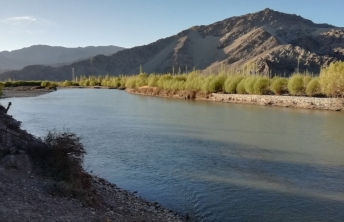 Prime Minister Narendra Modi on Tuesday declared a decisive shift in India’s approach to cross-border river water management, stating that Indian waters would now flow solely in the nation’s interest. His remarks came just hours after a sudden release of nearly 28,000 cusecs of water into the Chenab, which had been running nearly dry in recent days.
The release led to flash flood alerts in parts of Pakistan’s Punjab province, including Sialkot, Gujrat and Qadirabad. The Chenab is one of the three western rivers—along with the Indus and Jhelum—allocated to Pakistan under the 1960 Indus Waters Treaty.
Over the weekend, India had shut the gates of the Salal and Baglihar dams in Jammu and Kashmir, causing the Chenab’s water levels to plummet. However, with the release on Tuesday, the river swelled again, prompting downstream warnings in Pakistan.
Speaking at an event in Delhi, PM Modi said, “Earlier, Indian waters were flowing out of the country and against Indian interests. Now, water will flow only in favour of India and will be stopped where necessary, in line with national interest.”
The shift in water policy follows India’s decision to place the Indus Waters Treaty in abeyance on April 23, two days after the Pahalgam terror attack in which 26 civilians were killed. Since then, India is no longer obliged to share real-time water flow updates with Pakistan, enabling it to regulate seasonal flows more aggressively.
Officials have also decided to fast-track several long-pending hydroelectric projects on the Indus and its tributaries. These include the 1,856-MW Sawalkot project, 1,320-MW Kirthai I and II, 800-MW Bursar, 850-MW Ratle and the 624-MW Kiru project. Once operational, these will boost electricity supply to northern states including Delhi, Rajasthan and Haryana.
Water Resources Minister C R Paatil reiterated the government’s stance, stating that “not a drop” of India’s river water would be allowed to flow into Pakistan.
At the technical level, sources said Tuesday’s water surge in the Chenab was partly due to release through tunnels for power generation. One of the Salal dam’s reservoir gates was also kept open to relieve pressure and prevent structural damage.
According to data from Pakistan’s Indus River System Authority (IRSA), the Chenab’s inflow at the Marala headworks had dropped from 66,548 cusecs on 3 May to 19,966 cusecs on 6 May. Downstream flows also reduced drastically, affecting Pakistan’s agriculture-dependent areas.
The Indian government’s move to unilaterally manage the Indus water flow is being seen as part of its broader post-Pahalgam strategy to impose costs on Pakistan for cross-border terrorism.