





Centre approves ₹3,760 cr funding for creating battery energy storage system
The govt aims to have 50% of the requirement fulfilled through non-fossil and renewable energy by 2030
Updated: Sep 7th, 2023


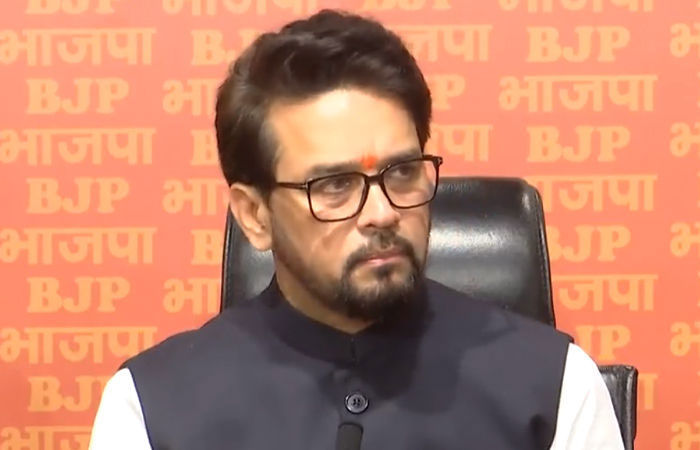
Focusing on reducing carbon emissions and reducing dependency on fossil fuel, the Union Cabinet on Sept 6 approved ₹3,760 crore for the viability gap funding scheme for developing Battery Energy Storage System (BESS).
Addressing the media at a press conference after the Union Cabinet Meeting which was chaired by PM Modi, union minister Anurag Thakur said, “The government has set a target that by 2030 we will have 50% of the requirement fulfilled through non-fossil and renewable energy. Towards this the government is serious and we have achieved a number of targets before time, and today a big decision has been taken in that direction.”
He said, “For Battery storage System a viability gap funding scheme has been approved and over ₹3,760 crore will be spent. By bringing this scheme it will increase the capacity. It will be a 100% Central grant.”
4,000 MW storage will be prepared
Highlighting the benefits of the BESS, Thakur said that electricity demands changes as per the needs. “If the electricity is produced in surplus then it cannot be stored as of now. Thus to make the storage capacity this scheme has been brought up. We don’t have the capacity as of now. After the scheme is launched, 4,000 MW hours of the battery storage will be prepared,” the Minister said.
He said that the scheme envisages development of 4,000 MWh of BESS projects by 2030-31, with the financial support of up to 40% of the capital cost as budgetary support.
The Minister also said that 85% of the production will be given to the discoms (distribution companies) first and after the discoms requirements are fulfilled then it can be given to other consumers.
Less emissions and dependency on fossil fuel
“When this battery energy system will be developed, it will be used during the peak hours. Carbon emissions will be reduced and the dependency on fossil fuel will also be reduced,” he said.
He also said that the government has achieved many new milestones in many sectors in last nine years, one of them is in the field of renewable energy and the energy transition phase.
He said that in renewable energy, solar capacity which was 2.6 GW in 2014 has increased to 71 GW, while the wind energy, which was 21 GW in 2014 is now at 40 GW.
(Source: IANS)
-Edited for style
For more such updates and news on the go, follow us on