




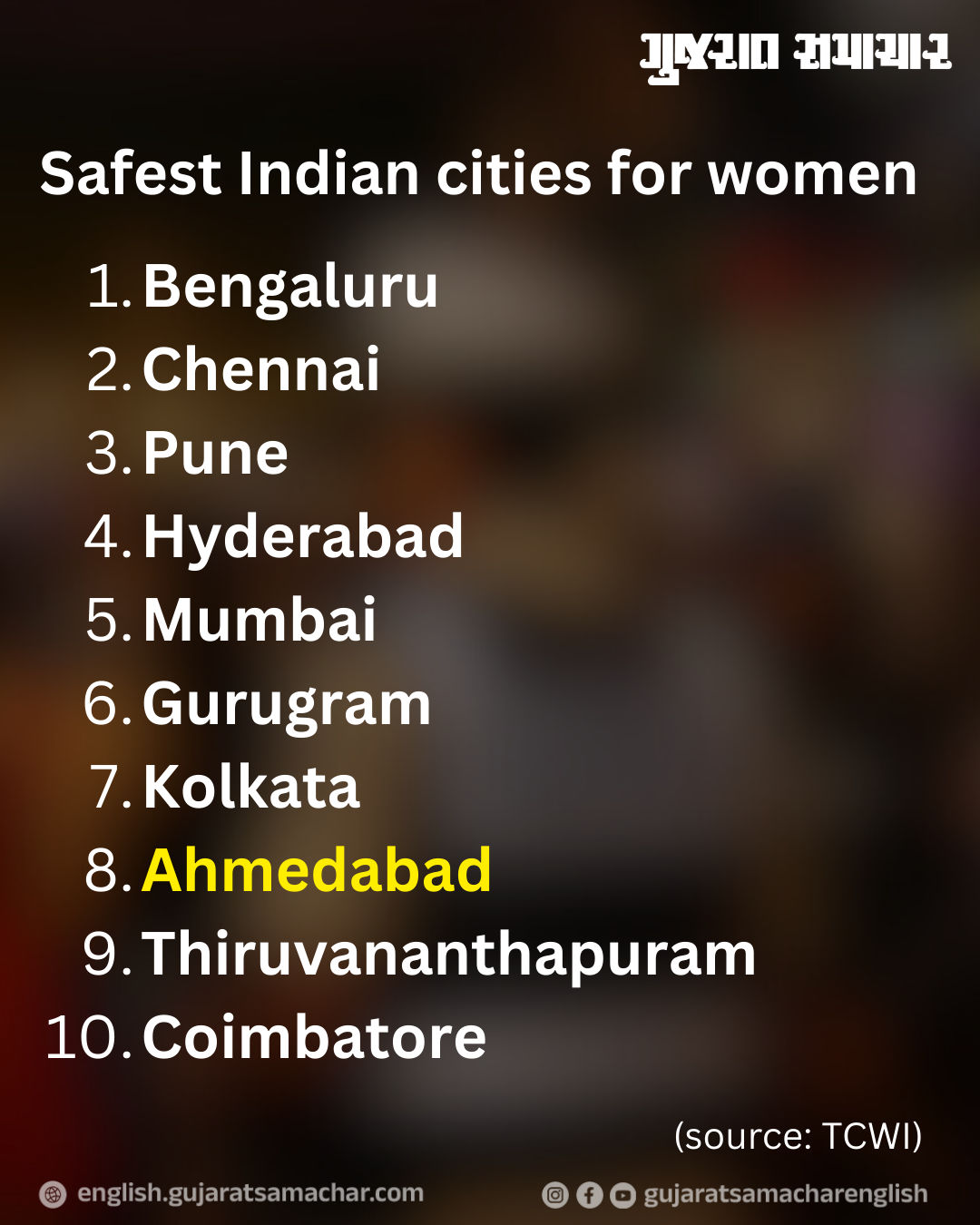
Bengaluru safest city in India for women, Ahmedabad among top 10: TCWI report
Updated: Jan 8th, 2026



Bengaluru has been recognised as the safest city for women in India, topping the ‘Top Cities for Women in India 2025’ report released by Avtar Group, which assessed 125 cities across the country on parameters linked to women’s inclusion, safety, employment and quality of life.
Bengaluru secured the first rank with a City Inclusion Score (CIS) of 53.29.
Meanwhile, Ahmedabad ranked 8th with a CIS score of 33.80, emerging as one of the better-performing cities in the western region, with the report noting steady progress in women’s workforce participation, access to higher education and the presence of women-friendly corporate policies.
The city’s growing start-up ecosystem and expanding service sector were cited as factors contributing to improved employment opportunities for women professionals.
Vadodara, ranked 36th with a CIS score of 19.92, and Surat, ranked 47th with a CIS score of 18.22, have also been recognised as emerging cities offering favourable conditions for women, particularly in education, healthcare access and industrial employment.
Vadodara’s strong academic base and Surat’s large textile and diamond industries were highlighted for providing sustained job opportunities for women across skill levels.
While metros such as Bengaluru, Chennai and Mumbai continue to dominate the national rankings, the presence of Gujarat cities in the report points to a broader shift beyond traditional urban centres.
The report evaluates Indian cities on factors such as women’s economic participation, workplace diversity, safety, social infrastructure and quality of life, with a focus on job creation as well as long-term career growth supported by inclusive policies.
Experts associated with the study noted that tier-I and tier-II cities are increasingly playing a key role in driving women’s participation in the workforce.
However, the report also flags challenges for Gujarat, including the need for greater representation of women in senior leadership roles and improved last-mile safety infrastructure, particularly for women working late hours.
