



Throwback Thursday brought back 2016 on social media
Updated: Jan 15th, 2026


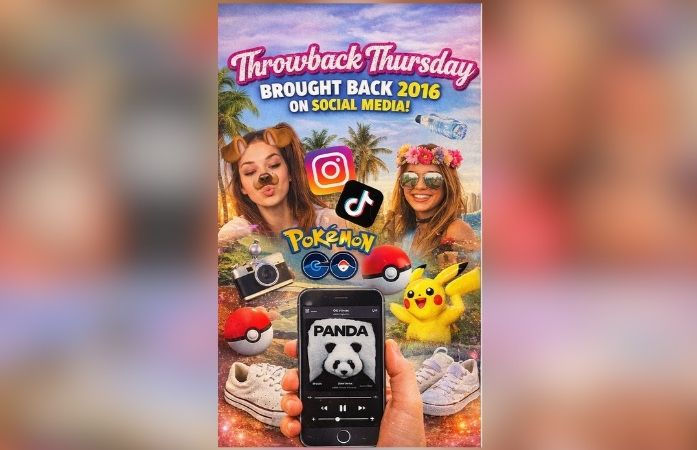
At the start of 2026, social media users around the world appeared less focused on the future and more inclined to look back, with many declaring the new year as “the new 2016”.
Almost immediately after midnight on January 1, platforms such as TikTok and Instagram were flooded with throwback posts, as users shared old photographs, recreated vintage aesthetics and revived digital trends that were popular a decade ago.
From Instagram’s once-iconic Rio de Janeiro filter to Snapchat’s dog-ear effects, the early days of 2026 have been marked by a wave of online nostalgia.
At the heart of the trend is a longing for what many users describe as a “simpler time”. Despite the paradox of labelling something nearly 10 years old as a trend, the revival has gone viral, with users posting compilation videos featuring oversaturated images of palm trees, peace signs, flower crowns and bottle-flipping challenges, alongside their own photographs from 2016.
The hashtag ‘#2016’ has already amassed around 1.7 million posts on TikTok, underscoring the scale of the phenomenon.
The throwback appears to be driven in part by the symbolic milestone of a decade having passed since 2016. Many online commentators have suggested that the moment is ripe for a revival of the cultural “vibes” associated with that year.
One widely shared video, posted by TikTok user @taybrafang on December 31, 2025, anticipated the arrival of 2026 with a montage of defining moments and digital relics from 2016. The clip featured screenshots of Musical.ly, the lip-syncing app that later merged into TikTok, images of flower-crown fashion trends, and references to Desiigner’s hit song ‘Panda’.
“A decade ago TONIGHT,” the creator wrote over the video.
Other users have leaned heavily into early social media culture, posting videos with Snapchat filters, recreating viral challenges, and even reviving once-popular fashion staples such as skinny jeans, chokers and lace bralettes.
Music from the period has also enjoyed a revival, with tracks such as ‘Panda’, ‘Black Beatles’ by Rae Sremmurd, ‘Lean On’ by DJ Snake and Major Lazer, ‘Starboy’ by The Weeknd and ‘Love Yourself’ by Justin Bieber resurfacing as soundtracks to the nostalgic clips.
While the trend largely celebrates fond memories, 2016 was also a year of profound global and national significance.
Internationally, it was marked by the Brexit referendum and the United States presidential election, alongside the deaths of several cultural icons, including Alan Rickman, Gene Wilder, Carrie Fisher, Prince, George Michael and Muhammad Ali.
The mobile game Pokémon Go became a worldwide sensation, bringing millions outdoors in search of virtual creatures.
In India, 2016 saw heightened tensions with Pakistan following the Uri terror attack and India’s subsequent claims of surgical strikes across the Line of Control. The year also witnessed the demonetisation of ₹500 and ₹1,000 notes, a move that disrupted the economy and daily life.
On a more positive note, PV Sindhu’s silver medal and Sakshi Malik’s bronze at the Rio Olympics marked a milestone for Indian women’s sport.
The nostalgia wave has attracted celebrities as well. Singer Charlie Puth joined the trend by posting a heavily filtered video lip-syncing to his 2016 hit ‘We Don’t Talk Anymore’, captioned: “Heard it was 2016 again?”
Hailey Bieber also made a nostalgic nod, sharing a TikTok of herself lip-syncing to MadeinTYO’s ‘I Want (Skr Skr)’, alongside long-time friends Kendall Jenner and Justine Skye.
As 2026 unfolds, the viral return to 2016 suggests that, for many, the past still holds a powerful emotional pull — especially in an increasingly complex digital age.
