

‘World Without Dolly Doesn’t Feel Real’: Country Music Icon Dolly Parton Dies At 80

Summarized by AI; it may make mistakes. Check important info
Summarized by AI; it may make mistakes. Check important info

For six decades, Dolly Parton was more than a country music star. She was a voice that turned heartbreak into anthems, a songwriter who gave the world ‘Jolene’ and ‘I Will Always Love You’, a larger-than-life performer whose wit was as famous as her rhinestone glamour who also won 11 Grammy Awards, and a philanthropist who quietly changed millions of lives.
Now, with the death of the 80-year-old icon after a brief battle with cancer, the world is confronting a loss that, as Taylor Swift put it, “doesn’t feel possible, real, or right”. From the hills of Tennessee to Nashville, Hollywood and concert halls across the world, tributes are pouring in for a woman whose extraordinary life stretched far beyond music — and whose legacy may prove as impossible to contain as the personality that created it.
The music icon breathed her last at the Vanderbilt-Ingram Cancer Center, surrounded by loved ones, her team confirmed. Her nephew, Brian Seaver, shared the sad news with fans through a video message.
From A Tennessee Mountain Cabin To The World Stage
It is difficult to separate the legend of Dolly Parton from the improbable journey that created it.
Born in rural Tennessee in 1946 and raised in a large, poor family in the Smoky Mountains, Parton came from circumstances that offered few obvious routes to global stardom. Yet she possessed an instinct for storytelling, melody and performance that would eventually carry her from local stages to Nashville, Hollywood and concert arenas around the world.
Her journey was not merely the familiar story of a singer becoming famous.
Dolly Parton became a songwriter whose songs travelled across genres and generations. She wrote or composed thousands of songs, with classics including Jolene, Coat of Many Colors, I Will Always Love You, Here You Come Again and 9 to 5 becoming part of the musical vocabulary of millions. Her career produced enormous record sales and recognition across country, pop and mainstream entertainment.
Yet statistics never fully explained her appeal.
There were technically greater singers. There were more conventional actors. There were wealthier celebrities.
But there was only one Dolly.
The Voice Behind ‘Jolene’ And ‘I Will Always Love You’
Her greatest strength was often her ability to take an intensely personal emotion and make it feel universal.
Jolene was, on the surface, a plea from one woman to another. Its simple, urgent repetition created one of the most recognisable songs in popular music.
Then there was I Will Always Love You.
The song would become one of the defining compositions of Parton's career, later reaching an even wider global audience through Whitney Houston's recording. Yet at its core, it remained a Dolly Parton song — tender, restrained and devastatingly direct.
She also understood that country music did not have to remain inside a narrow box.
With 9 to 5, Parton turned the frustrations of working life into an anthem. The song became inseparable from the hit film of the same name, which established her as a major screen star and proved that the country singer with the giant blonde hair and dazzling wardrobe could conquer Hollywood too.
She would go on to appear in films including Steel Magnolias, but music remained the centre of the Dolly universe.
And even when she crossed into mainstream entertainment, she never seemed to abandon the Tennessee woman behind the glitter.
She Built The Dolly Image — And Then Made It A Joke
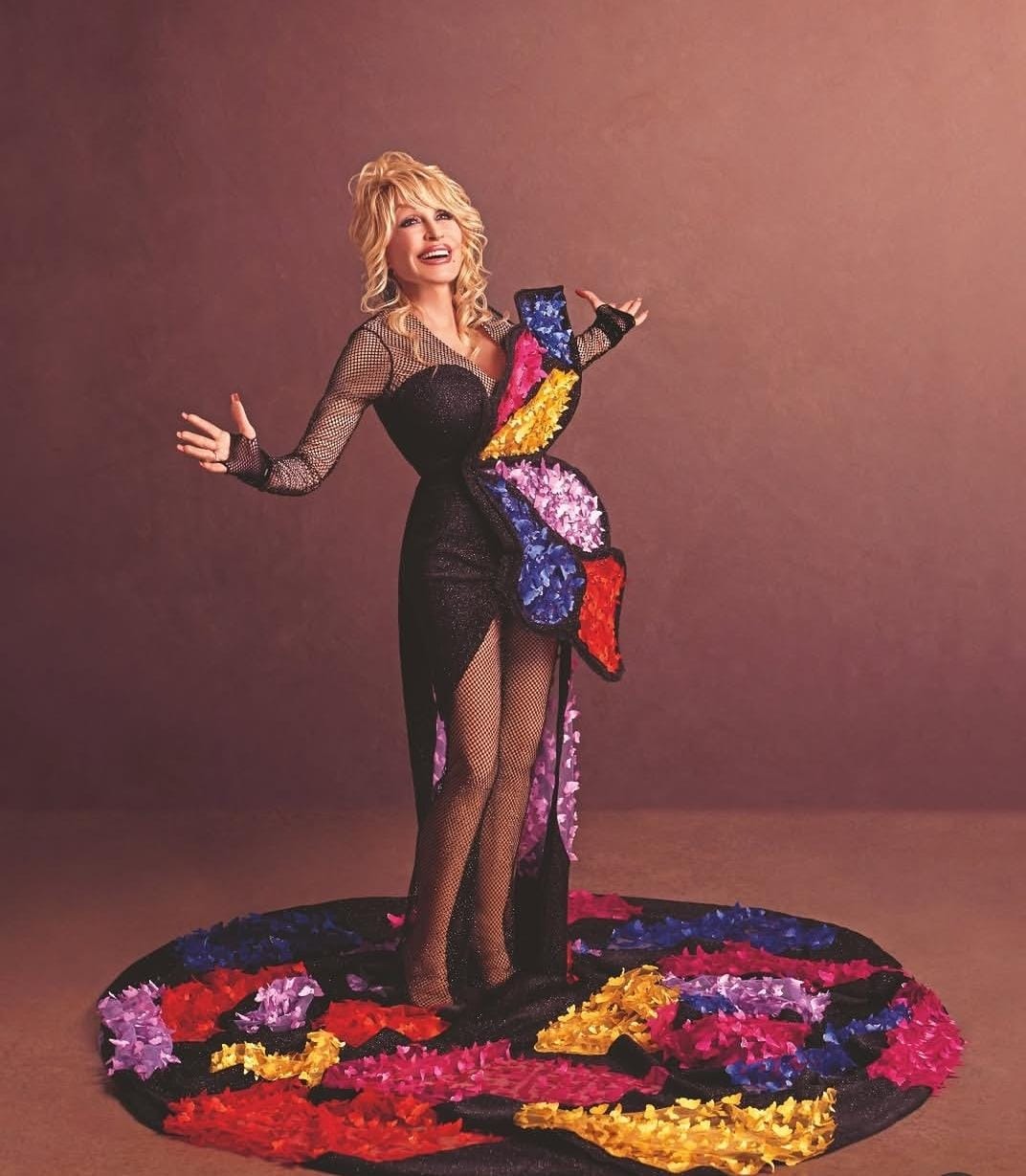
Dolly Parton understood image better than almost any entertainer of her generation.
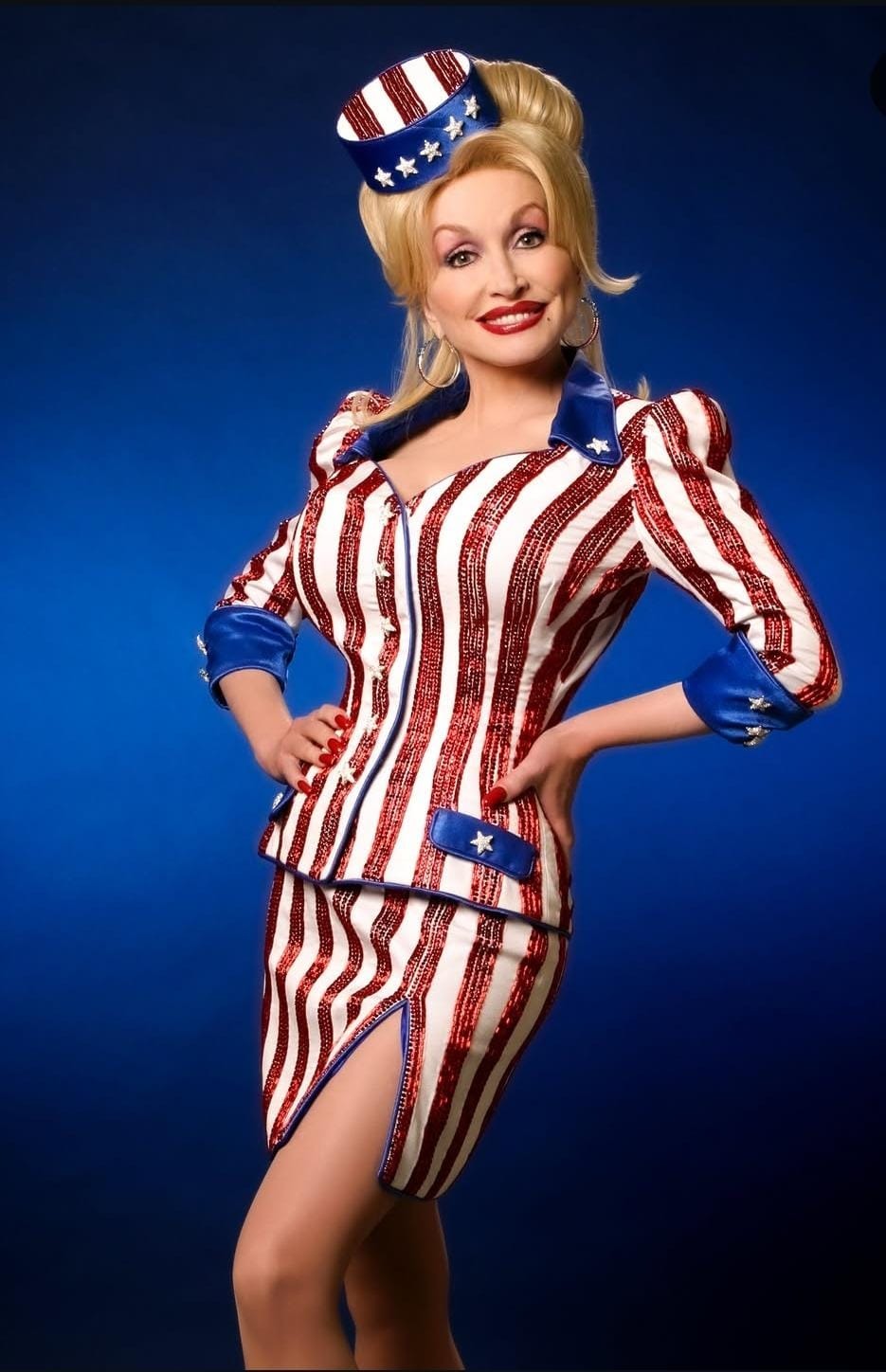
The wigs were bigger. The costumes sparkled brighter. The make-up was unapologetically dramatic.
And whenever anyone tried to dismiss her because of it, she was usually ready with the punchline.
One of her best-known responses to jokes about “dumb blondes” summed up her approach: she knew she was neither dumb — nor naturally blonde.
That ability to turn criticism into comedy became central to her public personality.
Parton never appeared embarrassed by femininity, glamour or the exaggerated image she had created. Instead, she used them on her own terms. The joke was rarely at her expense because she was usually telling it first.
Behind the humour, however, was an artist of remarkable discipline.
She was a singer, songwriter and multi-instrumentalist who could move between guitar, banjo, keyboards and other instruments while holding thousands of people in the palm of her hand.
Her long fingernails became part of the Dolly mythology. So did the rhinestones. So did the wigs.
But none of them ever overshadowed the songs.
The Businesswoman Behind The Rhinestones
Parton also understood something that many artists learn too late: fame alone is not ownership.
Over the decades, she built an entertainment empire that extended far beyond record sales.
Her investment in Dollywood helped transform a regional attraction in Pigeon Forge, Tennessee, into one of the best-known theme park destinations in the United States. For Parton, the venture was more than a business success. It was also tied to the place she came from and the region that shaped her.
Her official website was still celebrating new global sales certifications and major projects in the weeks before her death, underlining how active her creative and commercial world remained even at the age of 80.
There were books, films, television appearances, musicals, attractions and business ventures.
Dolly Parton had become a brand.
But unlike many celebrity brands, hers remained unusually personal.
The public did not merely know the name. People felt they knew Dolly.
Who Could Inherit Dolly Parton’s Estimated $450 Million Fortune?
Beyond the music, the films and the philanthropy, Parton also leaves behind an estate estimated at around $450 million.
Who will eventually inherit that fortune, however, remains unclear.
Parton was married to businessman Carl Dean for nearly six decades before his death in March 2025 at the age of 82. The famously private couple did not have children, and Parton had previously spoken publicly about having no regrets over not becoming a mother.
She is survived by members of her extended family, including her siblings.
However, no details of Parton's will or estate plan have been publicly disclosed. It is therefore not known exactly who will inherit her estimated fortune or how her assets may eventually be distributed.
Given Parton's long association with charitable causes, there has also been speculation that a significant portion of her estate could potentially be directed towards philanthropy. However, there has been no official confirmation regarding the distribution of her wealth.
For a woman who spent decades giving away books, supporting communities and investing in causes close to her heart, the eventual fate of her fortune will inevitably draw attention. But until details of her estate plan emerge, any suggestion about who stands to inherit remains speculative.
The Other Legacy: Millions Of Books And Quiet Acts Of Giving
If the music made her famous, philanthropy gave her legacy another dimension.
Her Imagination Library grew into one of the world's best-known childhood literacy initiatives, distributing free books to children and helping families build home libraries.
Parton also supported disaster relief, healthcare and other charitable causes. Her philanthropy included support for COVID-19 vaccine research, while her literacy work became a defining part of her public life.
It was this combination that made her different.
Dolly Parton could perform in a glittering outfit before thousands of people and still be remembered for a book arriving in a child's home.
For a star whose image was built around spectacle, some of her greatest achievements happened far away from the spotlight.
A Rare Figure Who Crossed Politics, Geography And Generations
The scale of the reaction to her death revealed just how far her influence stretched.
Musicians, actors, politicians and fans across the ideological spectrum paid tribute. Taylor Swift, Kacey Musgraves, Reba McEntire and other figures from the entertainment world remembered her warmth and influence, while tributes also came from political leaders and public figures.
President Donald Trump called her death “a true loss for millions of people” and said there had never been anyone like her.
The White House formally ordered American flags to fly at half-staff until sunset on September 1, 2026 — an extraordinary national tribute to a private citizen whose influence had extended far beyond entertainment.
It was a striking final measure of her place in American life.
Dolly Parton had not been a president, military commander or political leader.
She was a country singer from Tennessee.
And yet, in death, the flags of the United States were lowered in her memory.
Nashville Mourns, But Dolly's Songs Remain
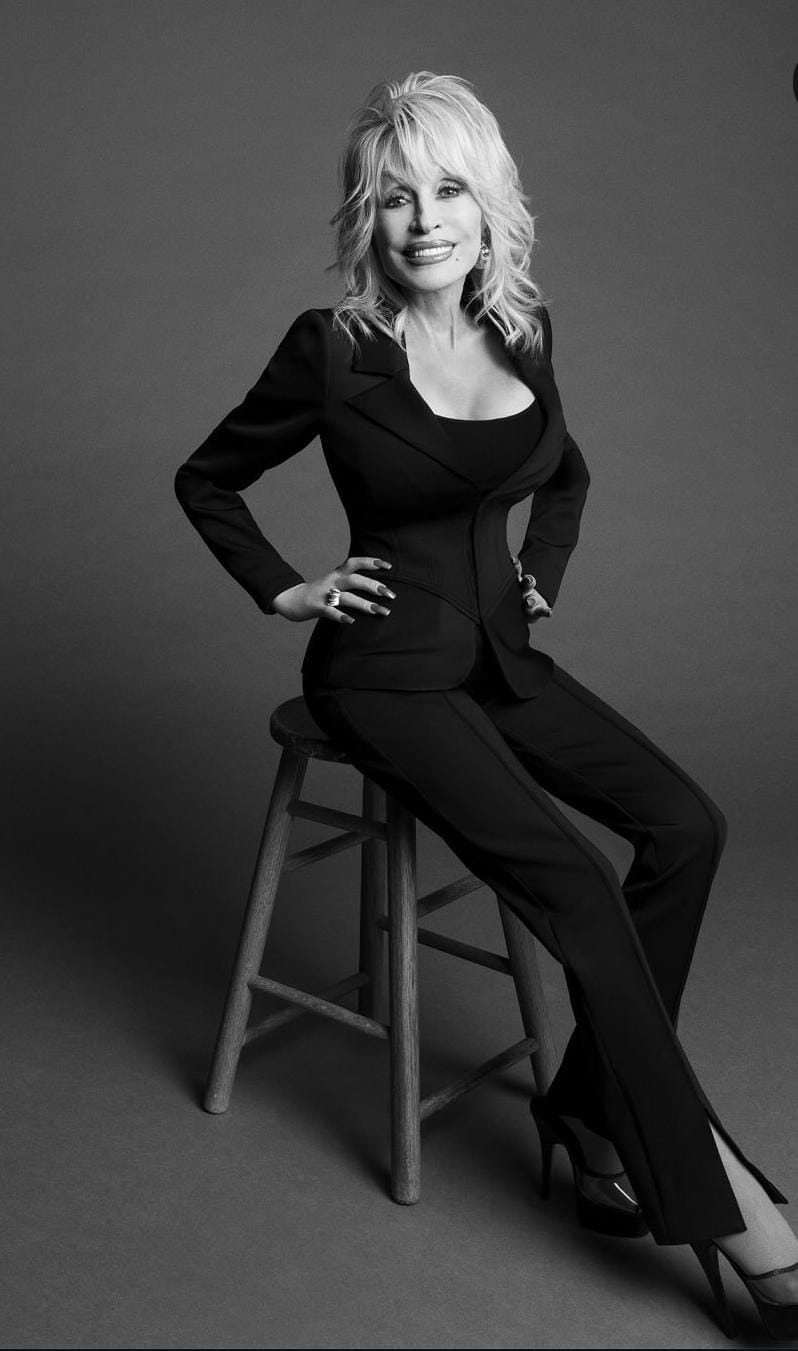
In Nashville, the city that became synonymous with her rise, fans gathered to remember the woman whose music had travelled from the hills of Tennessee to virtually every corner of the world.
Her final journey may now belong to history, but her voice does not.
Jolene will still be played.
9 to 5 will still make people sing along.
I Will Always Love You will still break hearts.
And somewhere, a child will open a book made available through a programme created by a woman who believed that stories could change lives.
Dolly Parton spent more than six decades becoming one of the biggest stars America ever produced.
But the reason her death feels so personal to so many may have little to do with the Grammys, the record sales, the films, the theme parks or even the flags flying at half-staff.
It is because, for generations of people who never met her, Dolly Parton had managed to feel familiar.
Like a voice from another room.
Like someone who had always been there.
And now, suddenly, the world has to imagine what it feels like without her.
For millions, as Taylor Swift put it, that world still does not feel entirely possible — or real.
The Legacy In One Word: Dolly
There will be other country stars.
There will be other crossover artists.
There will be other singers who sell millions of records and other celebrities who build businesses worth fortunes.
But Dolly Parton's achievement was bigger than any one of those things.
She created a cultural identity so distinctive that her first name alone became enough.
Dolly.
And for a woman who once turned heartbreak into song, poverty into ambition, glamour into comedy and fame into generosity, perhaps that is the most fitting legacy of all.
Not merely that she was famous.
But that, in a world filled with stars, there was never anyone else quite like her.


