




North Korea mandates automatic nuclear strike if Kim Jong-un is killed: Report
Updated: May 10th, 2026


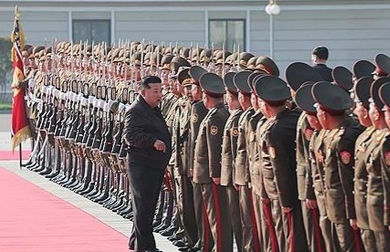
North Korea has reportedly revised its constitution to mandate an automatic nuclear strike if leader Kim Jong-un is assassinated or incapacitated by a foreign adversary, according to a report by ‘The Telegraph’ citing a briefing by South Korea’s intelligence agency.
The report said the constitutional amendment followed recent joint US-Israeli strikes on Iran that reportedly killed supreme leader Ali Khamenei and several senior advisers, developments said to have alarmed the North Korean leadership.
According to South Korea’s National Intelligence Service (NIS), the amendment was adopted during the first session of North Korea’s 15th Supreme People’s Assembly, which opened in Pyongyang on March 22.
The changes were publicly disclosed during an NIS briefing to senior South Korean officials on Thursday.
Under the revised Article 3 of North Korea’s nuclear policy law, a retaliatory nuclear strike must be launched “automatically and immediately” if hostile attacks threaten the country’s nuclear command-and-control system.
While Kim Jong-un retains direct authority over the country’s nuclear forces, the amendment reportedly formalises procedures for retaliation even if he is unable to issue orders.
Observers have compared the move to the Soviet Union’s Cold War-era “Dead Hand” system, officially known as Perimeter, which was designed to automatically launch a retaliatory nuclear strike if Soviet leadership structures were destroyed in an enemy attack.
Professor Andrei Lankov of Kookmin University in Seoul reportedly said North Korea likely already possessed contingency plans of this nature but had now chosen to formally codify them following the strikes on Iran.
“Iran was the wake-up call,” Lankov was quoted as saying, adding that Pyongyang appeared concerned about the possibility of a decapitation strike targeting its leadership.
Experts, however, believe carrying out such an operation in North Korea would be significantly more difficult than in Iran due to the country’s tightly controlled borders, restricted foreign access and limited surveillance infrastructure.
Kim Jong-un is known for maintaining extensive personal security measures and rarely travels by air, instead frequently using an armoured train accompanied by heavy security.
Lankov also said North Korea’s main concern was likely advanced satellite surveillance technology and suggested that any retaliatory strike would probably target the United States rather than South Korea.
The constitutional amendment comes amid heightened tensions on the Korean Peninsula despite recent peace overtures from Seoul.
North Korea has repeatedly described South Korea as its principal enemy and has removed references to Korean reunification from its constitution.
Separately, North Korean state media outlet Korean Central News Agency (KCNA) reported that Kim recently inspected production of a new 155-millimetre self-propelled gun-howitzer at a munitions factory.
According to KCNA, the artillery system has a range exceeding 37 miles and is expected to be deployed this year near the inter-Korean border, placing central Seoul and parts of Gyeonggi province within striking distance.
North and South Korea technically remain at war as the 1950-53 Korean War ended with an armistice rather than a formal peace treaty.
