

'I Wasn't on the Ballot': Donald Trump Blames Slate for Republican Setbacks in Familiar Post-Election Deflection

Summarized by AI; it may make mistakes. Check important info
Summarized by AI; it may make mistakes. Check important info

As early election returns and exit polls paint a challenging picture for the Republican Party across key battleground states, Donald Trump has turned to a familiar playbook to explain away the losses: blame the ballot, insulate the brand, and refuse to concede any personal defeat.
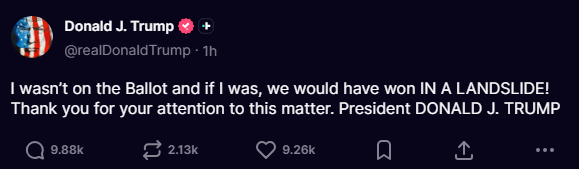
In a candid post on Truth Social that immediately sparked debate across Washington and international political circles, the former US President sought to distance himself from the emerging results, claiming the outcome would have been drastically different had his own name been listed.
"I wasn’t on the Ballot and if I was, we would have won IN A LANDSLIDE! Thank you for your attention to this matter," Trump declared to his millions of followers.
The sudden shift in tone marks a dramatic departure from his recent campaign trail messaging, where he explicitly urged his loyal base to treat the elections as a personal referendum on his leadership, instructing rally crowds to vote as if he were directly on the ballot.
A Familiar Script from the 2020 Playbook
For political observers in New Delhi and across global capitals tracking American political stability, the latest outburst feels like an unmistakable echo of the fallout following the 2020 US presidential election. Rather than evaluating shifts in voter sentiment, local candidate quality, or economic pressure points, Trump’s immediate instinct has been to project personal invincibility while casting doubt on the legitimacy of the vote itself.
Political analysts note that the rhetoric serves a dual purpose: it shields his influence within the Republican leadership while offering his supporter base an alternative narrative to digest as key seats slip away.
By framing the election returns not as a democratic verdict on his party's policy platform, but merely as an electoral byproduct of his absence from the voting slip, Trump has reaffirmed a core tenet of his political identity—in his ecosystem, a legitimate defeat simply does not exist.
Strategic Shift Ahead of Future Races
The timing of the statement comes at a sensitive moment for the Republican establishment, which had counted on Trump’s endorsement machinery to pull off crucial victories in contested congressional and gubernatorial races. Instead, as initial projections highlight significant Democratic momentum, senior strategists are quietly voicing frustration over the former president's swift exit from collective responsibility.
Critics point out that by disowning the results within hours of polls closing, Trump is attempting to preserve his political clout for upcoming elections while leaving down-ballot candidates to absorb the damage. Whether party loyalists buy into the deflection remains to be seen, but one thing is clear: Donald Trump is determined to keep his personal winning streak alive, even if only on social media.


