




Harvard stopped receiving donations from Epstein in 2008, but ties quietly extended for years: report
Updated: Feb 19th, 2026


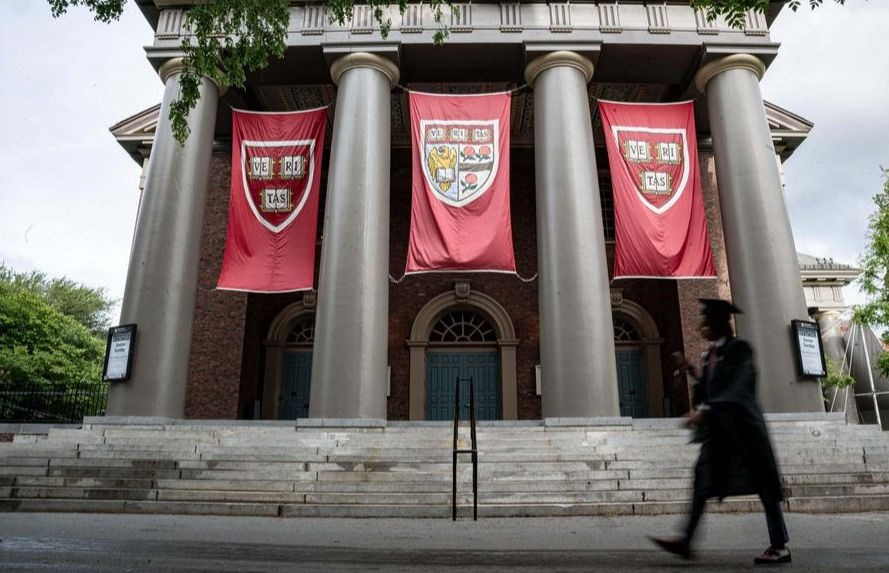
Harvard University’s links with disgraced financier Jeffrey Epstein continued years after it decided to stop accepting his donations in 2008, with newly released US Justice Department emails revealing previously unreported financial arrangements and sustained academic connections, according a CNN news report.
In 2008, following Epstein’s conviction for soliciting prostitution, including from a minor, Harvard determined it would refuse future donations from him. By that time, Epstein had contributed an estimated $9.1 million to the university over the preceding decade, noted the report by US media house.
However, as per the reports, emails and public records now indicate that Epstein remained involved with certain Harvard academics and sought to channel funds towards scientific research, particularly in genetics — a field in which he had long expressed interest.
Among those named in the reported correspondence is renowned geneticist George Church, who leads a department at Harvard’s Wyss Institute for Biologically Inspired Engineering.
Emails allegedly suggest that Epstein and Church discussed setting up an investment company, Georgarage, which would ostensibly be run by Church but funded and controlled by Epstein. The company was later registered in Delaware by Epstein’s lawyer, cited the report.
Church, a prominent biotechnology entrepreneur known for his efforts in gene-editing research, including projects aimed at reviving the woolly mammoth, has not been accused of wrongdoing in relation to Epstein’s criminal activities.
Although, Church apologised in 2019 for his association with Jeffrey Epstein and confirmed they had six phone calls in 2014.
However, newly released US Justice Department emails suggest a closer relationship, including discussions about a previously unreported $10 million investment venture and a planned lunch in December 2018, weeks after a major investigation exposed Epstein’s crimes.
As per reports, emails show Epstein encouraging Church to set up an investment company, later named Georgarage, which was registered in Delaware by Epstein’s lawyer, Darren Indyke. The two reportedly discussed potential investments in biotech firms, including eGenesis, though the company said it received no funding from Epstein or Georgarage.
There is no evidence in the released files that Epstein ultimately invested in the companies discussed. Delaware records show Georgarage is now inactive due to unpaid taxes.
 |
The files also shed light on Epstein’s relationship with Harvard evolutionary biologist Martin Nowak. A 2003 donation of $6.5 million from Epstein helped establish the Program for Evolutionary Dynamics, led by Nowak. In a will dated August 8, 2019, days before his death in custody, Epstein left Nowak $5 million.
According to CNN report, a 2020 internal investigation by Harvard found that Epstein had assisted Nowak in raising funds to maintain office space in Harvard Square and that he frequently used Nowak’s office as a base during visits to Boston. The report stated that Nowak had granted Epstein key card access to Harvard facilities as late as 2018.
Harvard sanctioned Nowak in 2021 over his connections with Epstein. While Nowak expressed regret over facilitating Epstein’s association with the university, neither he nor Church was dismissed, and both remain employed at Harvard.
The 2020 report concluded that although then-President Drew Faust decided in 2008 that Harvard would no longer accept Epstein’s gifts, members of the university’s development office were aware that he continued indirectly orchestrating millions of dollars in donations between 2010 and 2015. Epstein was also reportedly invited to campus events during that period.
The documents indicate that Epstein maintained contact with nearly a dozen Harvard affiliates. They also reveal efforts to promote positive media coverage of scientific work funded through his foundation, apparently in an attempt to bolster his public image following his conviction.
In 2012 emails, an unidentified correspondent informed Epstein that press releases highlighting funding for Nowak’s research had been picked up by major news outlets, with further publicity planned involving Church and other scientists. The exchanges suggest an effort to counter negative search results linked to Epstein’s criminal record.
Following the release of additional files last November, Harvard announced a new review into the conduct of several current and former affiliates named in the documents, including former Harvard president Larry Summers, who has since stepped aside from teaching duties and publicly expressed regret over his association with Epstein.
As per reports, Harvard has not clarified whether the latest review includes Nowak and Church.
Harvard theoretical physicist Lisa Randall was revealed to have visited Epstein's private island in the Caribbean in 2014 and exchanged emails joking about his house arrest.
Furthermore, the connections between late sex offender Jeffrey Epstein and the scientific community were "deeper than previously known" and "unheard of" in extent, according to a recent report by the journal Nature.
Citing newly released documents from the US Department of Justice, the Nature report revealed that Epstein invested millions of US dollars in science projects and "maintained a list of nearly 30 top scientists".
Despite Epstein's initial conviction for sex crimes in 2008, some scientists continued to associate with him and accept his funding. For instance, Epstein donated $800,000 to the Massachusetts Institute of Technology (MIT), a move that eventually led to the resignation of two scientists and the suspension of another.
The latest batch of files disclosed new details regarding interactions between Epstein and the scientists. Lawrence Krauss, a theoretical physicist whose science-outreach organisation received $250,000 from Epstein, was advised by the financier via email to offer "no comment" as Krauss responded to media inquiries about an investigation of sexual misconduct that led to Krauss's ousting from Arizona State University in Tempe.
In 2013, Nathan Wolfe, then a virologist at Stanford University, proposed that Epstein fund a sexual-behaviour study of undergraduate students to test "our horny virus hypothesis".
The US Department of Justice began releasing this latest batch of documents on January 30. Totalling more than 3 million, it is the largest batch of files made public by the US Department of Justice since Congress passed the Epstein Transparency Act late last year.
Epstein, who died in a New York jail in 2019 while awaiting trial on federal sex trafficking charges, had cultivated ties with a number of elite academic institutions, including Columbia University, which recently removed two faculty members over their links to him.
The newly disclosed records have intensified scrutiny over the extent of Epstein’s involvement with academic institutions.
(with inputs from the syndicated feed)
