




Global nuclear arsenal modernisation accelerates as arms control weakens: SIPRI
Updated: Jun 8th, 2026


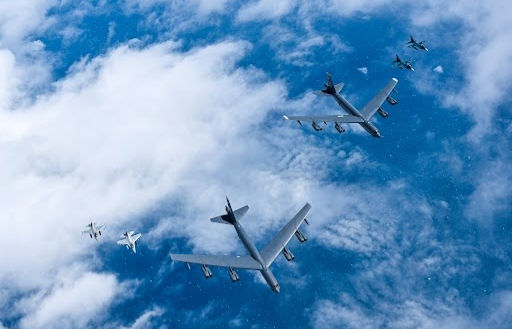
All nine nuclear-armed states continued to modernise and strengthen their nuclear arsenals in 2025, while most deployed new nuclear-capable or nuclear-armed weapon systems, according to the SIPRI Yearbook 2026 released on Monday by the Stockholm International Peace Research Institute (SIPRI).
The report said the United States, Russia, the United Kingdom, France, China, India, Pakistan, North Korea, and Israel are all pursuing extensive nuclear modernisation programmes amid growing geopolitical tensions and a weakening global arms control framework.
SIPRI estimated the global nuclear inventory at 12,187 warheads in January 2026, of which around 9,745 were held in military stockpiles for potential use. Approximately 4,012 warheads were deployed with missiles and aircraft, while the remainder were kept in central storage.
Between 2,100 and 2,200 deployed warheads remained on high operational alert, primarily belonging to Russia and the United States, with smaller numbers attributed to France and the United Kingdom. SIPRI noted that China and India may now occasionally deploy a limited number of nuclear warheads mounted on missiles during peacetime.
India was assessed to have slightly expanded its nuclear arsenal in 2025 while continuing to develop longer-range delivery systems capable of reaching targets across China. Pakistan also continued to develop new delivery platforms and accumulate fissile material, indicating potential growth in its arsenal over the coming decade.
SIPRI noted that the brief armed conflict between India and Pakistan in May 2025 involved strikes on facilities believed to have nuclear-related roles, although both sides took steps to prevent escalation.
SIPRI Director Karim Haggag warned that growing reliance on nuclear weapons was increasing global risks.
"Influential voices, including some world leaders, are advocating nuclear weapons as a guarantee against attack by a hostile state. But making national defence and security strategies dependent or more dependent on nuclear weapons could significantly increase nuclear risks," Haggag said.
He added that advances in weapon technology, the erosion of arms control agreements and rising geopolitical tensions were making the nuclear landscape increasingly dangerous.
According to SIPRI, the long-standing trend of a declining global nuclear inventory may soon reverse. Since the end of the Cold War, the dismantlement of retired warheads by Russia and the United States had generally outpaced the deployment of new warheads. However, the pace of dismantlement is slowing while new deployments are accelerating.
Hans M. Kristensen, Associate Senior Fellow with SIPRI's Weapons of Mass Destruction Programme, said evidence was mounting that nuclear-armed states were moving away from disarmament commitments.
"The evidence is growing that the nuclear weapon states are sidelining, and even walking away from, their disarmament commitments and are instead flexing their nuclear muscles," Kristensen said.
Russia and the United States together continue to possess around 83% of the world's operational nuclear warheads, although this share is gradually declining due to the expansion of arsenals in other countries.
The report said both Washington and Moscow maintained relatively stable stockpiles in 2025 but were likely to increase the size and diversity of their arsenals through ongoing modernisation programmes.
The United States' nuclear modernisation programme continued to face planning and funding challenges, while Russia's efforts encountered technical setbacks and economic pressures linked to the war in Ukraine and Western sanctions.
China remained the fastest-growing nuclear power, with SIPRI estimating its arsenal at around 620 warheads. Beijing has rapidly expanded its missile infrastructure and could potentially possess as many intercontinental ballistic missiles as Russia or the United States by the end of the decade.
However, SIPRI noted that even if China's arsenal exceeds 1,000 warheads by 2030, it would still amount to only about one-quarter of current Russian and American stockpiles.
The report said the United Kingdom was expected to increase its operational warhead stockpile in future years, while France continued to modernise its submarine and air-based nuclear forces and announced plans for a new nuclear airbase.
North Korea continued pursuing its goal of rapidly expanding its nuclear capabilities. SIPRI estimates that Pyongyang has assembled around 60 nuclear warheads and possesses sufficient fissile material to produce at least 30 more.
Israel, which neither confirms nor denies possessing nuclear weapons, is also believed to be modernising its arsenal, with increased activity observed at the Negev Nuclear Research Center near Dimona.
The report highlighted growing concern over declining transparency among nuclear powers, warning that strategic ambiguity, reduced diplomatic engagement and increasing authoritarianism in some nuclear-armed states could heighten the risk of miscalculation during crises.
SIPRI also pointed to signs that several non-nuclear states, particularly in Europe, were increasingly considering a greater role for nuclear deterrence in their security strategies.
The institute warned that the global nuclear non-proliferation regime was weakening, noting that the 2026 Review Conference of the Nuclear Non-Proliferation Treaty (NPT) concluded without a final consensus document for the third consecutive time.
Haggag said the absence of a successor agreement to the New START treaty, combined with ongoing nuclear modernisation and plans to expand deployments, could further undermine confidence in the global non-proliferation framework.
The SIPRI Yearbook 2026 also highlighted broader concerns over global security, citing the resurgence of conflict between technologically advanced states, growing geopolitical fragmentation and the increasing weaponisation of trade, technology, supply chains and energy resources.
According to the institute, these trends are contributing to a deteriorating international security environment and raising fresh concerns about strategic stability in the years ahead.
