





Witch hunt or new playbook? ACB’s tactics could hit conviction rates further
Updated: Jun 26th, 2024


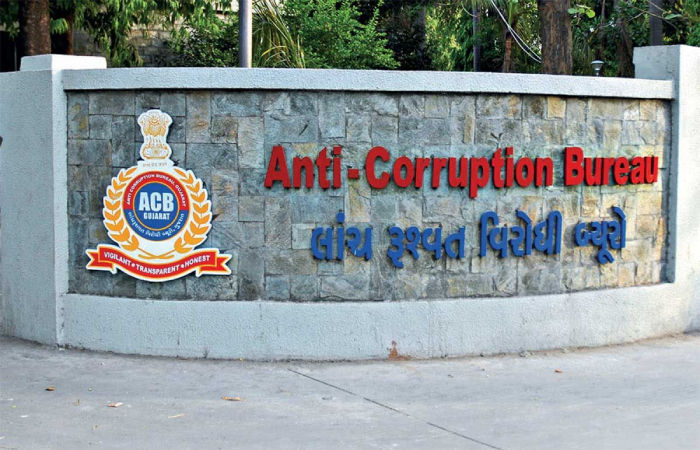 |
| Anti-Corruption Bureau |
Is the Anti-Corruption Bureau (ACB) straying from its mandate? The body, initially meant to prevent graft and improve morale, now seems to be on a witch hunt, targeting specific officials over disproportionate assets. Further, recent cases have seen the ACB ignore standard operating procedures (SOPs), in a move that could potentially lead to fewer convictions. This is bad news given the already abysmal conviction rate of 37%.
This month alone, persons close to the development shared that the ACB has filed at least three targeted cases of disproportionate assets.
For instance, on June 12, a case was registered against Ajay Chauhan, former captain of Gujarat State Aviation Infrastructure Co. Ltd (GUJSAIL), alleging disproportionate assets worth ₹72 lakh. On June 19, it filed a case against planning officer MD Sagathia, an accused in the Rajkot TRP Gamezone fire, alleging disproportionate assets worth more than ₹10 crore. And, on June 21, it filed a case of disproportionate assets of ₹4.7 crore against Ruchi Bhavsar, then executive accountant of Gujarat Informatics Ltd.
According to the SOP, the ACB needs the state government’s approval before checking the assets of Class 1 officers. If it gets this approval, ACB officials then make inquiries regarding the assets in question, both with the accused and with private sources. They also seek information—in writing—from the Regional Transport Office (RTO) and revenue officials regarding vehicles and land owned by the accused. And also reach out to banks. insurance companies and the Bureau of Immigration to gather information on investments, financial transactions and foreign travel.
A crime is registered only if an analysis shows that the officer’s assets are more than 10% greater than their income.
Even then, the police are expected to consult the ACB’s chartered accountant after their initial investigation and—in the case of any discrepancies—come to a consensus on the total amount of assets before filing an FIR.
The problem here is that none of the three cases mentioned above followed the prescribed SOP, leading to questions of fairness and the motivation behind such hurried filings. In addition, by not following the proper procedures, the bureau may well be setting itself up for failure once these cases reach the courts.
Given that Indian law considers the accused innocent until proven guilty, the burden of proof lies entirely with the prosecution. This means that the prosecution needs to be able to conclusively prove that the accused's wealth exceeds their known sources of income. Without following proper procedures, building a robust case becomes challenging.
Evidence that is not collected legally and systematically may be ruled inadmissible in court. Similarly, not following SOPs could give defence counsel opportunities to challenge the investigation's validity, potentially leading to case dismissals or acquittals.
Further, since many cases depend on precedent, the loss of even one high-profile case could snowball into more losses for the ACB, weakening any future actions against corruption and undermining its credibility.
And last, but not least, such lapses would lead to wastefulness, since investigations and cases both take a lot of time and other resources.