

Unjha Jeera and Fennel Receives GI Tag

Summarized by AI; it may make mistakes. Check important info
Summarized by AI; it may make mistakes. Check important info

Unjha Jeera and Fennel Receives GI Tag
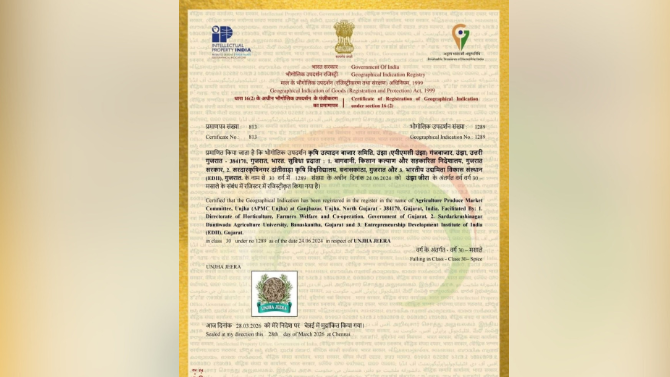
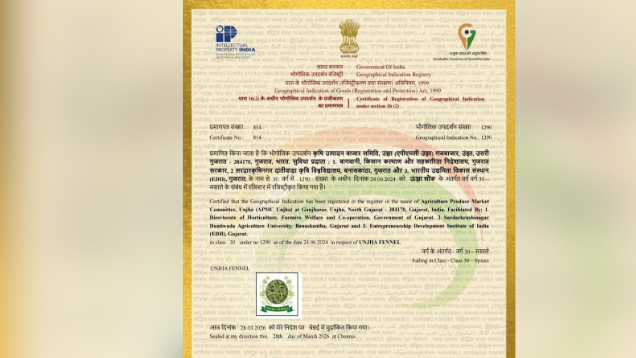
Unjha Jeera and Unjha Fennel, two of Gujarat’s most prominent spice products, have been granted Geographical Indication (GI) tags. The certificates were issued by the Geographical Indication Registry of the Government of India on March 28, 2026.
The GI tags have been registered in the name of the Agriculture Produce Market Committee (APMC), Unjha, under Class 30 (Spices). The initiative was facilitated by the Directorate of Horticulture, Farmers Welfare and Co-operation, Government of Gujarat, Sardarkrushinagar Dantiwada Agricultural University, and the Entrepreneurship Development Institute of India (EDII).
The GI recognition is expected to strengthen the unique identity and quality standards of Unjha’s jeera and fennel in domestic as well as international markets. It is also likely to help local farmers and traders secure better market value and brand recognition.
Unjha is considered one of India’s largest spice trading hubs, and the cultivation and trade of cumin and fennel form a significant part of the region’s economy.
Unjha Jeera Certification
Unjha Fennel Certification
What is a GI tag?
A Geographical Indication (GI) tag is an intellectual property right granted to products that originate from a specific geographical region and possess unique qualities, reputation or characteristics linked to that place. In India, GI tags are issued by the Geographical Indication Registry under the Geographical Indication of Goods (Registration and Protection) Act, 1999.
The tag helps protect products from unauthorised use, preserves traditional knowledge and boosts market value by certifying the authenticity of the product


