




Trump tariffs threaten Gujarat industries, put jobs at risk
Updated: Aug 28th, 2025


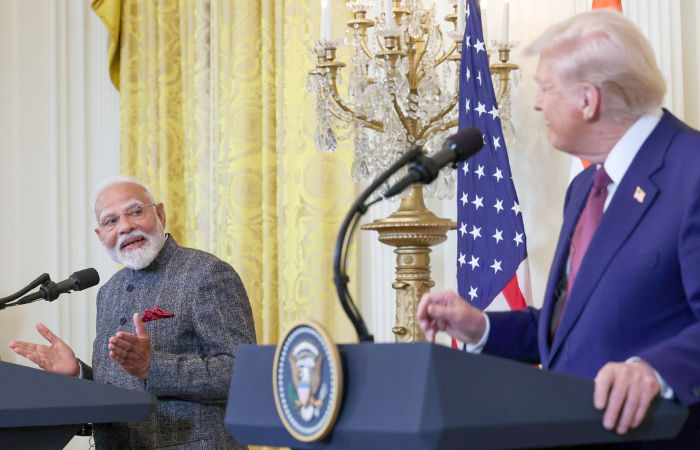
US President Donald Trump’s 50% tariff on Indian imports has raised alarm across several industries in Gujarat, with exporters warning of potential job losses and economic setbacks. The measures are expected to affect gems and jewellery, textiles, and seafood products, sparking calls for timely government intervention to protect livelihoods.
Gujarat has long been a hub for export-oriented industries, with a significant portion of its workforce employed in sectors directly linked to international trade. Sudden increases in import tariffs can therefore ripple quickly through local economies, affecting not only factory owners but also artisans, workers, and allied service providers.
Diamonds, gems and jewellery hit hardest
Small diamond factories in Surat face significant losses as the US accounts for roughly 30% of the city’s diamond trade. The diamond industry in Surat, known for both its scale and intricate craftsmanship, has been navigating fluctuating global demand even before the tariffs. Factories and small workshops often operate on thin margins, meaning any disruption in exports can have immediate consequences for workers and their families. An industry already under strain is expected to feel the impact sharply.
The state government recently announced fee assistance for the children of diamond workers, following advocacy from the workforce. Meanwhile, the Gem and Jewellery Council of India has demanded an immediate relief package, citing potential job losses exceeding 50,000.
India exports gems and jewellery worth $13.30 billion annually, with $4.8 billion directed to the US. Industry sources estimate that 40% of Surat’s 8–9 lakh gem artisans and 40% of Gujarat’s total 15 lakh gem artisans could lose employment due to halted exports.
The potential unemployment could affect not only the artisans themselves but also supporting industries such as logistics, retail, and local vendors who depend on the flow of export work. A slowdown at this scale may ripple through Surat’s economy, reducing household incomes and consumer spending.
Krish Diam, a diamond factory in Katargam, laid off 100 artisans on the day the tariffs came into effect. The firm, which employed over 300 workers, reported no work for several days prior, prompting the layoffs.
While the gems and jewellery sector faces immediate disruption, other labour-intensive export industries in Gujarat are bracing for similar challenges. Textiles, long a cornerstone of the state’s industrial output, rely heavily on American buyers for sustained demand.
Textile sector faces order cancellations
Textile exporters are also confronting a steep decline in demand. US tariffs could lead to a 50% reduction in orders from American buyers, translating to an expected ₹40,000 crore loss.
Compared with India, tariffs on China, Turkey, Pakistan, and Vietnam remain lower, creating a competitive disadvantage for Indian exporters. Manufacturers in Tiruppur (Tamil Nadu), Noida (Uttar Pradesh), and Surat (Gujarat) have reportedly halted production amid worsening cost competitiveness.
Fisheries exports under pressure
Shrimp and fish exports from Gujarat to the US are facing significant disruption due to the new tariffs.
Jagdishbhai Fofandi, a Veraval-based fish exporter affiliated with the Sea Foot Export Association, said: “Every year, fish worth ₹5,000 crore is exported from Gujarat, of which Veraval alone accounts for ₹3,000 crore. Of this, shrimp worth ₹1,200 crore and fish worth ₹300–400 crore are exported to the US annually.”
Districts such as Surat, Valsad, Diu, Una, Jamnagar, Bhavnagar, and Gir Somnath account for about 40% of India’s shrimp production, while Porbandar and Mangrol account for a large portion of the state’s shrimp exports.
“The burden of the added tariff on an industry already tackling high freight rates is too much. The USA is a major buyer of India. Now we need to explore other options,” Fofandi added.
Shrimp and fish exports not only support large processing facilities but also sustain thousands of small-scale fishers along Gujarat’s coastline. Any disruption in trade with major buyers like the US could translate into reduced income for families and heightened uncertainty for coastal communities dependent on seafood exports.
The widespread concern among exporters has prompted national-level industry bodies to weigh in, highlighting the urgent need for policy measures and financial support to mitigate the economic fallout.
Exporters call for government support
The Federation of Indian Export Organisations (FIEO) expressed concern over the tariffs. FIEO President SC Ralhan described the duty hike as a “setback,” warning that approximately 55% of India’s US-bound shipments, valued at $47–48 billion, face a pricing disadvantage of 30–35%. This could render Indian goods uncompetitive against products from China, Vietnam, Cambodia, the Philippines, and other Southeast and South Asian countries.
Ralhan highlighted the pressure on labour-intensive exports including leather, ceramics, chemicals, handicrafts, and carpets, citing delays, order cancellations, and eroded cost advantages.
He called for immediate government support through interest subvention schemes, export credit facilities, and low-cost credit access for MSMEs. Ralhan also recommended a one-year moratorium on loan repayments, automatic enhancement of credit limits by 30%, and collateral-free lending under ECLGS schemes.
Further measures proposed include expanding PLI schemes, upgrading infrastructure, investing in cold-chain storage, and diversifying markets through free trade agreements with the EU, Oman, Chile, Peru, the GCC, Africa, and Latin America. He emphasised that urgent diplomatic engagement with the US remains essential.
Across Gujarat, from the diamond workshops of Surat to textile factories and coastal fisheries, the combined impact of the tariffs underscores the vulnerability of export-dependent industries. Experts emphasise that swift government action and strategic diplomatic engagement will be crucial in maintaining the state’s economic stability and protecting the livelihoods of thousands of workers.
(with inputs from syndicated feeds)
