

Three Indie short films backed by Ahmedabad producer makes it to ‘Marché du Cannes’

Summarized by AI; it may make mistakes. Check important info
Summarized by AI; it may make mistakes. Check important info

For India’s independent cinema space, this year’s Marché du Film at the Cannes Film Festival has brought an unlikely but powerful success story. Three independently made short films backed by Ahmedabad-based producer Harshvardhan Patel and directed by first-time independent filmmakers have been selected for screening at the Cannes.
Among the three films, one was shot in Ahmedabad’s newly developed Balvatika amusement park, turning the city into the backdrop of a deeply emotional story about loneliness, survival, and hope.
Mumbai’s Manisha Makwana makes Cannes debut with ‘Gudgudi’
At just 29 years old, Mumbai-based filmmaker Manisha Makwana is set to see her first independent film ‘Gudgudi’ screened at the Marché du Film on May 20.
Born into a military family, Manisha spent nearly a decade working alongside acclaimed creators Raj and DK, contributing to major projects including ‘The Family Man’, ‘Farzi’, ‘Guns & Gulaabs’ and ‘Citadel: Honey Bunny’.
Her short film ‘Gudgudi’, starring Ahsaas Channa which is backed by Mukesh Chhabra, tells the story of Ritu, a young woman secretly working as a mascot at an amusement park to support her family while hiding her exhaustion and emotional isolation behind a cheerful costume. Her life changes when she meets Aarav, a quiet child whose unexpected companionship slowly helps her rediscover her voice and confront her loneliness.
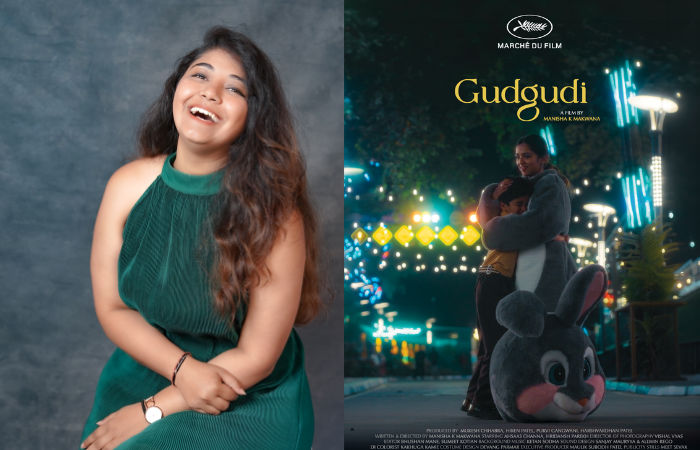
The film, based on a true story, was shot at Ahmedabad’s Balvatika amusement park in just two-and-a-half days, though its pre-production and post-production process stretched over nearly five months. Manisha herself had once worked at an amusement park, and the experiences she witnessed there became the emotional foundation of the story.
“Who would have imagined that my first film would be represented at Cannes?” Manisha said, describing the selection as both surreal and deeply fulfilling. “It also comes with the pressure of representing India.”
For Manisha, the central message of Gudgudi is simple but deeply personal: “It’s a bad day, not a bad life.”
She hopes audiences walk away with hope and a changed perspective on life, loneliness and resilience.
Ahmedabad producer behind all three Cannes selections
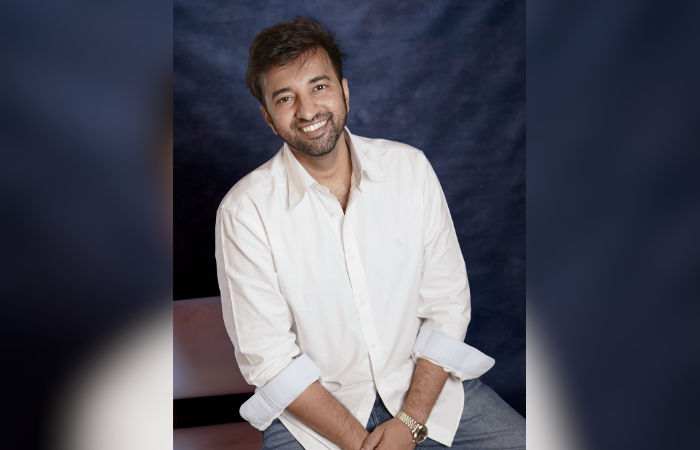
What makes the achievement even more remarkable is that all three selected films have been produced by Ahmedabad’s Harshvardhan Patel.
Harshvardhan's journey into filmmaking hardly followed a conventional route. An engineering graduate, he first worked as a journalist for five to six years before moving into hospitality. A casual conversation with friends about cinema eventually pushed him into film production.
Today, Harshvardhan has produced five short films, several music videos and served as executive producer on both Hindi and Gujarati projects. One of his earlier productions even received a nomination for Dadasaheb Phalke award. But this year marked a completely different milestone all three of his films getting selected for the Cannes market.
“I’m speechless,” Harshvardhan said. “This was the first time we thought of doing something on this scale, and all three films got selected.”
Interestingly, all three films revolve around children and emotional innocence in different ways.
The second film which got selected in Cannes, directed by Ajmer filmmaker Chirag Balani, ‘The Pissing Tales’ is set inside a school in Kashmir.
The story follows Yusuf, a child constantly bullied for wetting his pants, who befriends Ali, a boy who claims he can talk to spirits. Together, the two attempt to reclaim a Superman costume from school bullies after spotting it in a donation box.
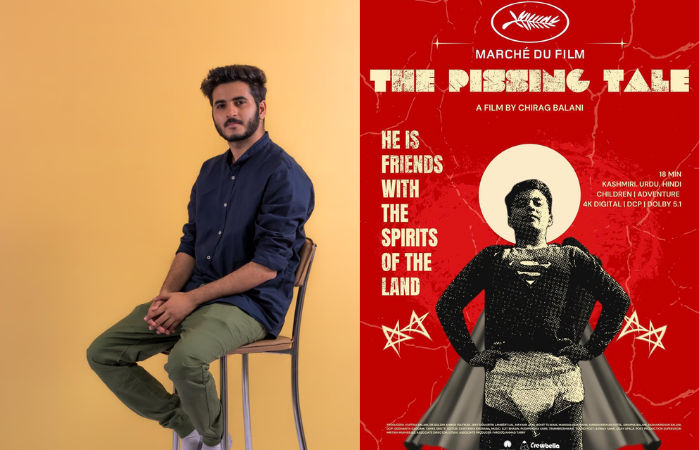
While Kashmir has often been portrayed through geopolitics and violence, Balani’s film approaches the region through childhood vulnerability and innocence.
Shot in Kashmir itself, the film has been described by its creators as a refreshing departure from conventional narratives around the region.
The third film, ‘Dhanki Devi’, directed by Mumbai filmmaker Aashna Singh, examines how modern parents increasingly push children into becoming social media influencers.
The short film focuses on how the innocence of childhood is slowly being replaced by online validation, documentation, and monetisation.
According to the team, the film was already being showcased at Berlinale EFM wherein it got picked up for Cannes Market screening under SFC Marche du screening.
Harshvardhan says the film carries an important message for modern families: not every moment of life needs to be documented online.
“Allow children to remain children,” he said. “Let them stay innocent and live in their own world before exposing them too early to social media pressures.”
Reality of independent filmmaking
Behind the Cannes recognition lies years of uncertainty, rejection and financial risk.
Makwana revealed that ‘Gudgudi’ only went on floors on its third attempt after multiple setbacks and changes in producers. The project was originally planned for Mumbai before eventually moving to Ahmedabad.
“There are moments of restlessness,” she said. “But if you stay patient, your film will eventually find its voice and the right producers.”
Harshvardhan admitted that independent filmmaking often means investing money blindly without any guarantee of return.
“The biggest fear is not getting the money’s worth or failing to reach the correct audience,” he said. “The quality has to satisfy you creatively before anything else.”
He also acknowledged that conflicts between producers and directors are common because films often evolve into something very different from what was initially imagined.
‘This is still a man’s world’: Woman director opens up on industry bias
Manisha also spoke candidly about gender imbalance in filmmaking.
Calling the industry “a man’s world”, she said she is often the only woman on set while still having to lead and “call the shots”.
Despite the challenges, she says surviving and succeeding as a woman filmmaker gives her courage.
“It makes me proud that I am thriving in a man’s world and still leading projects,” she said.
For these filmmakers, Cannes is not merely a festival selection it is proof that deeply personal, small-budget Indian stories can still travel across the world when backed by persistence, honesty and belief.


