





The fall of the ‘sarpanch pati’: Gujarat now has 800 panchayats with independent woman sarpanches
Updated: Jun 27th, 2025


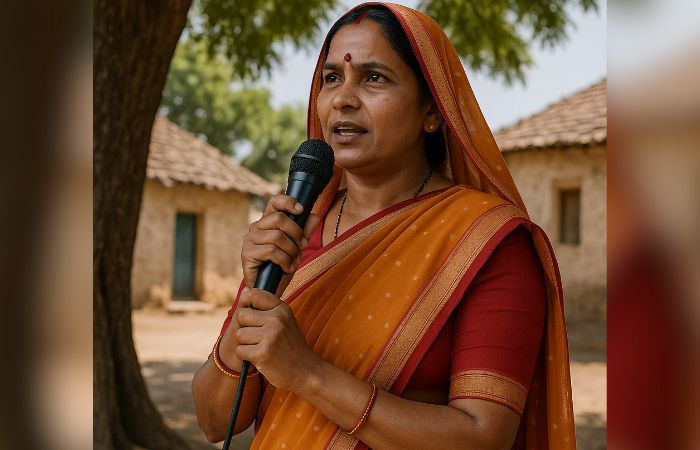 |
| AI generated image |
In Mughal history, Emperor Jahangir is often remembered as a ruler whose administrative affairs were managed by his wife, Noor Jahan, from behind the scenes. In contemporary rural Gujarat, the dynamic is often reversed. In many gram panchayats, women are elected as sarpanches under the 50% reservation policy — but in practice, their husbands exercise control, a phenomenon commonly referred to as “sarpanch pati”, and recently popularised by the OTT series Panchayat.
However, a 2025 survey suggests a significant shift. Roughly 20% of the elected women —in about 800 gram panchayats — now function independently, without interference from husbands or family members.
From figureheads to real leaders
The survey, conducted by a Gujarat-based organisation in partnership with a management institute, highlights changing patterns in grassroots governance. While about 1,600 panchayats continue to operate under the influence of sarpanch patis, the emergence of independent women leaders marks growing political confidence and autonomy among elected female representatives.
In earlier studies, including a 2018 assessment by the same organisation, it was found that nearly 40% of women sarpanches were just figureheads. Their husbands — and in some cases, extended family — handled the administration, decisions, and day-to-day governance.
Rubber-stamp sarpanchs face visible challenges
The gap between symbolic leadership and actual authority becomes apparent during official programmes, training sessions and government events. Newly elected women sarpanchs are often celebrated with public processions or village gatherings when their names are announced. But when it comes to attending state-run workshops or capacity-building camps, women who do not hold real decision-making power face significant hurdles.
In many cases, husbands accompany them to such sessions and intervene in administrative matters, highlighting the ongoing imbalance in rural leadership structures.
Reservation policy and social barriers
Under India’s policy of 50% reservation for women in local governance, approximately 4,000 women were elected as sarpanches in Gujarat’s 8,329 gram panchayat elections. While this measure was designed to promote gender equity in leadership, researchers and policy experts point out that deep-rooted social attitudes still prevent many elected women from exercising independent authority.
In some villages, societal expectations around modesty and gender roles lead to women sarpanches remaining confined indoors, while husbands or male relatives govern in their name.
Training efforts to build capacity
In 2024, the organisation behind the survey began conducting training programmes in rural areas aimed at building leadership capacity among women sarpanchs and reducing proxy governance. These efforts are part of a broader strategy to enable women to take full ownership of their elected roles.
While progress is uneven, the 2025 survey findings suggest that change is under way — with hundreds of women now asserting their administrative authority, navigating local politics, and reshaping rural governance structures from within.
The growing number of independent women sarpanchs suggests that reservation alone is not enough. For real grassroots change, symbolic representation must give way to genuine authority — and more women are beginning to claim it.