





Pilots among few identifiable bodies in AI 171 crash as doctors conduct 274 autopsies in 12 hours
Updated: Jun 18th, 2025


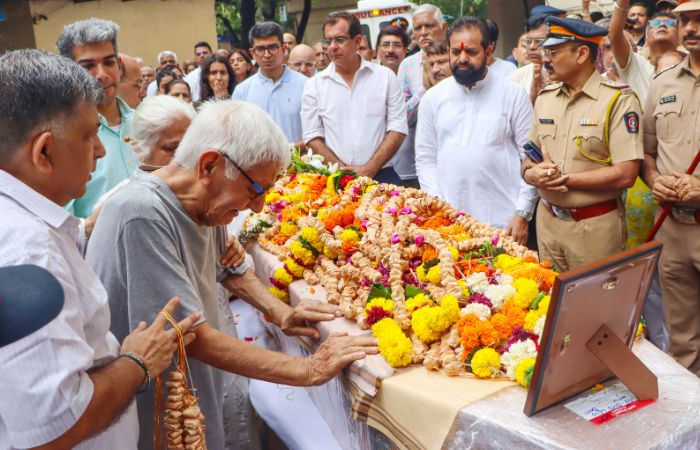 |
| Pilot Sumit Sabharwal's parents |
In the tragic Ahmedabad plane crash of 12 June that killed more than 270 people, all but three bodies were charred beyond recognition, making identification a major challenge for authorities. The only victims whose bodies remained visually identifiable were pilot Sumit Sabharwal, co-pilot Clive Kundar, and one air hostess.
Despite these conditions, a team of 140 government doctors carried out post-mortems on 274 bodies in just 12.5 hours, working through the night to assist with the identification and dignified handling of the deceased.
DNA samples taken from teeth, skull bones
Given the severely burnt condition of most victims, DNA profiling became essential to confirm identities. According to officials at Civil Hospital, samples were collected from teeth, skull bones, hair roots, and muscle tissue. These were then matched with reference samples from family members to establish identity.
Doctors noted that eight to ten bodies did not require DNA sampling, including those of eight doctors from the B J Medical College boys’ hostel, who were among the deceased and identified early.
Post-mortems carried out across three locations
The post-mortem process began at 4.30 pm on the day of the crash and continued uninterrupted until 5.00 am the following day. Procedures were conducted simultaneously at three locations inside the Civil Hospital complex — the trauma centre and two separate post-mortem rooms.
Dr Mahesh Kapadia, who led the team of government doctors from Ahmedabad, Gandhinagar, Kheda, Anand, Mehsana, and Gandhinagar districts, has conducted over 18,000 post-mortems in his career. Yet, he said this was one of the most emotionally difficult experiences he has faced. “Most of the bodies were severely burnt. Performing post-mortems on over 200 bodies at once was no easy task,” he said. One of the deceased was a pregnant woman — a case that particularly moved many in the medical team.
Kapadia, who has previously worked on the Ahmedabad serial bomb blasts, the COVID-19 pandemic, and the hooch tragedy, also played a key role in upgrading the post-mortem facility at Civil Hospital. On average, each doctor conducted post-mortems on three to four bodies. Their swift and coordinated efforts helped ensure that remains could be returned to families with dignity and speed.
It was a daunting challenge, and they were called in immediately.
Separate team handles body identification and handover
As reported earlier, a separate team of health officials, police, and counsellors has been stationed at Civil Hospital to manage the identification and handover process. In addition to the body, families are given the death certificate, post-mortem report, DNA match confirmation, police documentation, and any recoverable personal belongings.
The scale and speed of this operation stand in stark contrast to previous disasters. For instance, during the 2008 Ahmedabad serial blasts, 134 bodies were brought in — and it took nearly 36 hours to complete all post-mortems. This time, 274 were completed in 12.5 hours.