




Mystery deepens in Chandkheda sisters’ deaths, doctor’s input, crime branch probe doubt food poisoning
Updated: Apr 8th, 2026


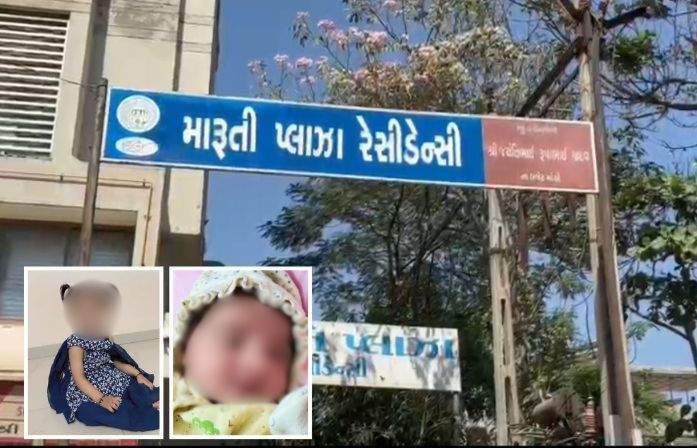
The mysterious deaths of two minor girls in Ahmedabad’s Chandkheda area have taken a dramatic turn, with investigators increasingly questioning the initial suspicion of food poisoning and exploring the possibility of other causes, including foul play or medical factors.
The incident, which claimed the lives of three-month-old Raha and her four-year-old sister Mishri, has triggered an intensive, multi-agency probe involving the city police, the Detection of Crime Branch (DCB), and forensic experts.
The case has drawn particular attention after a treating doctor’s statement raised doubts about whether contaminated food alone could explain the sequence of symptoms observed in the family.
Food contamination theory weakens
Initially treated as a suspected case of food poisoning, the investigation has encountered inconsistencies. Police revealed that nearly 90 kg of batter from the same batch had been sold on the day of purchase, yet no other customers reported falling ill.
“This raises serious questions. If the batter was contaminated, more people should have been affected. Additionally, how the infant was impacted remains unclear,” a senior police official said.
Investigators have also collected samples from the dairy outlet for laboratory analysis. However, the absence of similar complaints from other consumers has weakened the theory of contamination at the source.
Doctor’s observation alters direction
In a key development, a treating doctor reportedly informed the police that food poisoning in the mother would not necessarily explain symptoms such as vomiting in a breastfed infant. This observation has cast further doubt on the assumption that the illness spread solely through contaminated food.
The statement is now being treated as a crucial lead, prompting investigators to examine alternative explanations, including environmental exposure, accidental ingestion, or other medical conditions.
Crime Branch examines all angles
The DCB has joined the probe after preliminary findings suggested the possibility of foul play could not be ruled out. Officials said the investigation has so far not uncovered any financial distress or family dispute that could indicate a motive. The family is described as financially stable, with relatives settled abroad and plans reportedly underway for relocation.
Vimal Prajapati is an LIC agent working with his father, while Bhavanaben is a homemaker. Her father reportedly runs a medical store in the city.
CCTV tracking and timeline reconstruction
Crime Branch officials are analysing CCTV footage from the dairy outlet and along the route to the Prajapati residence to reconstruct the family’s movements. Investigators are attempting to determine whether Vimal travelled directly home after purchasing the batter or made any intermediate stops that could be relevant to the case.
“All movements of the family members are being examined minute by minute,” an official said.
Sequence of events under scrutiny
According to the police, Vimal Prajapati had purchased dosa batter from a local dairy outlet on the evening of April 1 and consumed it the same day. The following day, his wife, Bhavanaben, and their elder daughter also ate dosas made from the same batter.
Soon after, family members began reporting health issues. On April 3, Bhavanaben visited the dairy to complain and later returned the remaining batter, claiming that it had caused illness in the household.
The infant, Raha, died on the morning of April 4, with preliminary reports citing cardiac arrest. She was cremated the same evening. On April 5, Vimal and Mishri were admitted to the hospital with severe abdominal pain; Mishri later died during treatment after experiencing breathing difficulties, while Vimal remains under observation in the ICU. Bhavanaben was admitted the following day after developing similar symptoms.
Forensic probe widens scope
On April 7, a team from the Forensic Science Laboratory (FSL) conducted a detailed search of the family’s residence in Maruti Plaza Society in Chandkheda. Investigators seized bedsheets, clothing, utensils used in preparing the dosa, containers believed to have stored the batter, and medicines administered to the children. The parents' statements have also been recorded as part of the inquiry.
Deputy Commissioner of Police (L Division) D V Rana confirmed that the infant’s body was exhumed in the presence of an executive magistrate and sent for a panel post-mortem examination. “Samples have been collected, and we are awaiting scientific reports,” he said, adding that conclusive findings may take over two weeks.
Awaiting conclusive answers
With multiple agencies working in tandem and no single theory yet substantiated, the case remains unresolved. Police continue to question other customers and are examining all possible angles, including accidental contamination, external interference, and underlying medical causes.
The final cause of death, officials said, will depend on the findings of the FSL analysis and the panel post-mortem reports.
For now, the deaths of the two young sisters remain shrouded in uncertainty, as investigators race to piece together the chain of events behin
d a tragedy that has left more questions than answers.
